
Last Updated on August 17, 2026 by Giorgia Guazzarotti
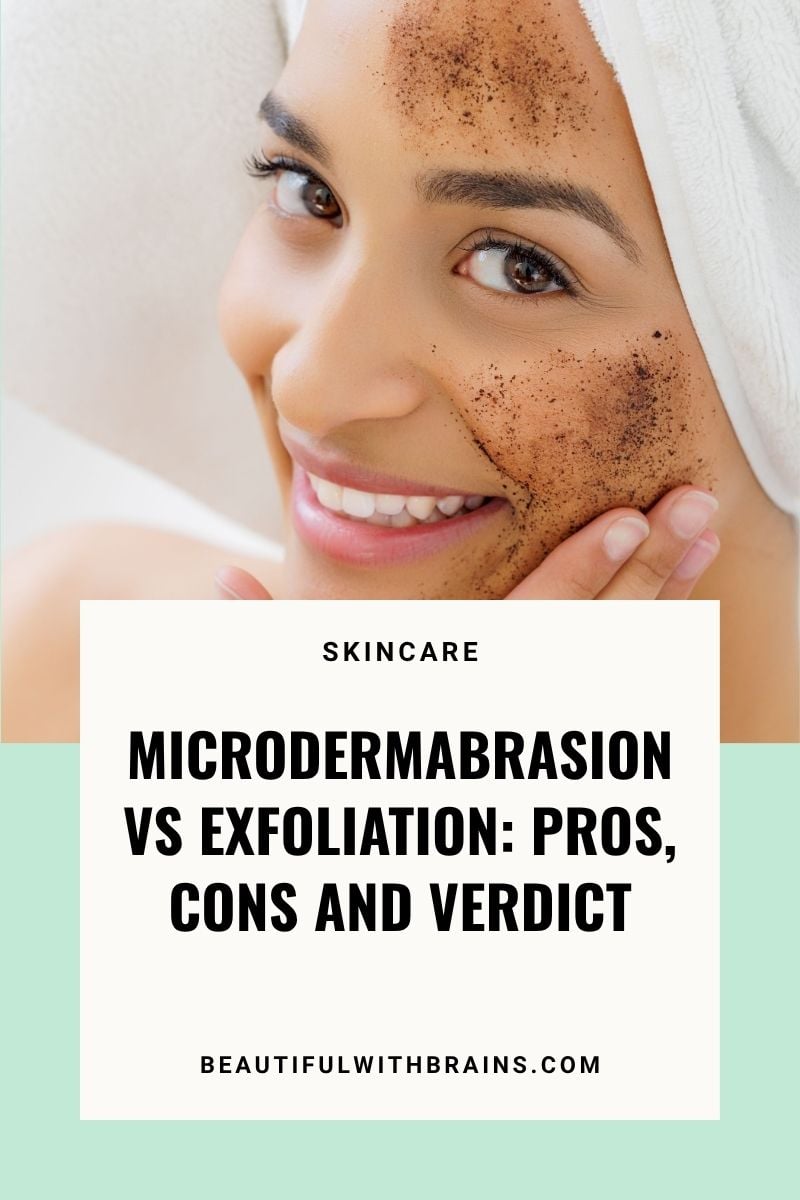
Your bathroom cabinet probably has at least a couple of exfoliating products sitting in it right now. So, is microdermabrasion actually going to do anything they can’t? They’re not as different as they seem. Exfoliation is the process of removing dead skin cells from the surface of your skin, whether that’s with acids, scrubs, brushes or professional treatments. Microdermabrasion is one specific type of physical exfoliation that uses fine crystals or a diamond-tipped wand to buff away dead skin cells, usually with suction at the same time. In this article, I’ll share whereas you need microdermabrasion or if different ways of exfoliating work better, so you can make the best choice for your skin:
- How Each Method Actually Works on Your Skin
- Cost Breakdown: What You’ll Actually Spend
- Which Is The Right Treatment For Your Skin Type And Skin Goals?
- What You Can Realistically Expect: Results and Timing
- Pain, Downtime, And Recovery Time
- Combining Both: Is It Smart or Overkill?
- FAQs
- The Verdict: Which Is The Right Exfoliation Method For You?
How Each Method Actually Works on Your Skin
Exfoliation works in two main ways:
- Physical exfoliation: Scrubs, brushes and tools manually remove the top layer of dead skin cells. Think sugar scrubs, konjac sponges or cleansing brushes. You get that immediately smooth feeling, but it’s also pretty easy to overdo it, particularly if you have dry or sensitive skin.
- Chemical exfoliation: Acids like AHAs (glycolic acid and lactic acid) and BHAs (salicylic acid) loosen the bonds holding dead skin cells together so they can shed more easily. Because you’re not physically scrubbing your skin, the exfoliation tends to be more even. Some acids can also promote collagen production over time, while salicylic acid can get inside pores, which is why it’s so useful for acne-prone skin.

The nice thing about exfoliating at home is that you have control. You choose the product, how strong it is and how often you use it. If your skin hates it, you can stop. If it’s working, you can keep going.
Microdermabrasion takes physical exfoliation a step further. A wand is passed over your skin, using either tiny crystals or a diamond tip to buff away dead skin while suctioning it up at the same time. And because it’s more intense, you’ll probably notice more of a difference after one session. Think smoother, brighter skin and an improvement in things like uneven texture, sun damage and fine lines. There’s also some evidence it can stimulate collagen production too.

The downside? Your skin might not love it quite as much as you do. Redness and irritation can happen, especially if you have sensitive skin, and one session usually isn’t enough if you’re trying to tackle a specific skin concern. You’ll typically need several treatments, spaced around two to four weeks apart. So, is all that actually worth it when you can exfoliate at home? Let’s compare the two.
Related: Physical VS Chemical Exfoliation: Which One Is Best For You?
Cost Breakdown: What You’ll Actually Spend
| Method | Cost Range | Frequency |
| At-Home Physical Exfoliation | $5 to $50 per product | 2 to 3 times per week |
| At-Home Chemical Exfoliation | $10 to $80 per product | Daily to weekly |
| Handheld Microdermabrasion Device | $30 to $200 one-time | Once or twice a week |
| Professional Microdermabrasion | $100 to $200 per session | Every 2 to 4 weeks |
If you’re having a series of professional microdermabrasion treatments, you could easily spend anywhere from $500 to $1,200 over a few months. And that’s before you factor in any maintenance treatments you might want afterwards. At-home exfoliation costs a fraction of that. A decent chemical exfoliant can last for months and give you gradual, consistent results without paying for appointments every few weeks.
So, for most people, I think exfoliation gives you much better value for money unless you have a specific concern that actually warrants microdermabrasion. If you go for a handheld microdermabrasion device instead, just don’t expect it to do what a professional machine does. It sits somewhere in the middle: more intensive than a scrub, but less powerful than an in-clinic treatment.
Which Is The Right Treatment For Your Skin Type And Skin Goals?
EXFOLIATION
Exfoliation can work for pretty much anyone, but you need to choose the right kind.
- If you have oily or acne-prone skin, go with salicylic acid. It’s the only exfoliant that can get inside pores and help prevent them from becoming clogged. It treats blackheads, whiteheads, pimples and pretty much helps with all forms of acne. Check out my fave salicylic acid exfoliants here.
- If you have dry skin, use glycolic acid. It brightens and exfoliates skin. It’s also the best acid to fade dark spots. Discover the best glycolic acid products here.
- If you have sensitive skin, lactic acid is the better choice. It’s the gentlest of the exfoliating acids so it has a lower risk of side effects. Check out the best lactic acid exfoliants here.
The biggest problem with exfoliation? It’s very easy to overdo it. Exfoliating too often or throwing multiple strong products at your face can damage your skin barrier, leaving you with redness, irritation and potentially even more breakouts. Your skin should not feel raw or painfully tight after exfoliating. If it does, you’ve gone too far.
Related: How To Find The Best Exfoliant For Your Skin Type
MICRODERMABRASION PROCEDURE
Microdermabrasion isn’t for everyone, either. If you have normal or oily skin and you’re trying to tackle skin conditions like mild acne scars, sun damage, fine lines or uneven texture, it could be worth considering. But if your skin is already angry? I’d stay away. The rubbing and suction can make things like active acne, rosacea and eczema worse. And if you have sensitive skin, you’re also more likely to end up with redness and irritation afterwards.
The good thing about getting it done professionally is that whoever is doing the treatment can dial the intensity up or down depending on how your skin reacts. You obviously don’t get quite the same control with an at-home device. And keep your expectations realistic. Microdermabrasion works pretty close to the surface, so it’s not going to magically get rid of deep wrinkles or pitted acne scars. For those, you’d need to look at treatments that go deeper, like chemical peels or lasers.
What You Can Realistically Expect: Results and Timing
With consistent at-home exfoliation, you should gradually notice smoother skin, more brightness and fewer clogged pores over the course of a few weeks. Professional microdermabrasion gives you faster results. Even after one session, your skin can feel noticeably smoother. After a course of treatments (usually around four to six sessions) you may see improvements in fine lines, age spots, uneven skin tone and overall texture.
It can also stimulate collagen production, so some improvements may continue after your treatments. But there is a catch: the results aren’t permanent. Your skin is still going to age. You’re still going to accumulate dead skin cells. And unless you suddenly plan to live underground, you’re still going to be exposed to UV. So, if you want to maintain the results, you’ll probably need maintenance treatments every few months.
For long-term maintenance, I think regular exfoliation (particularly chemical exfoliation) makes more sense for most people. It’s affordable, easy to maintain and doesn’t involve constantly booking appointments. Microdermabrasion makes more sense if you want faster results and are happy to spend the extra money to get them.
Pain, Downtime, And Recovery Time
Neither should involve much downtime. Exfoliation is generally pretty easy to fit into your routine. A physical exfoliant might leave your skin slightly pink for a few minutes, while chemical exfoliants can cause some tingling, particularly if you’re using a stronger acid. But exfoliation shouldn’t hurt. If an acid is causing significant burning or leaving your skin very irritated, that’s not a sign it’s “working.” You need to stop using it or switch to something gentler. There’s also no real downtime. You can get on with your day as normal.
Microdermabrasion feels a bit like a scratchy little vacuum being moved across your face. It isn’t normally painful, although certain areas (particularly around your nose and forehead) can feel a little more intense. Your skin may look red and feel tight for a few hours afterwards, and some people get a little peeling over the following days. But most people can go straight back to their normal activities.
Combining Both: Is It Smart or Overkill?
You CAN se both. You just don’t want to use everything at once. If you’re having professional microdermabrasion, you’ll normally need to pull back on your at-home exfoliation before and after your treatment. Microdermabrasion is already exfoliating your skin. Adding more acids, scrubs and exfoliating treatments on top isn’t going to give you best results. It’s just going to damage your skin.
You could, for example, use a gentle chemical exfoliant like a low-strength glycolic or lactic acid as part of your normal routine and then have occasional microdermabrasion treatments if you want something more intensive for sun damage or uneven texture. If you’re using a handheld microdermabrasion device at home, treat that as your exfoliation for the day and skip your other exfoliating products. If you have sensitive skin, stick to lactic acid once or twice a week.
FAQs
Is microdermabrasion safe for darker skin tones?
Yes. There’s no reason to avoid microdermabrasion just because you have darker skin. Research shows it can be safely used on darker skin tones. The only thing I’d watch is how aggressive you go. Darker skin is more likely to develop dark spots after irritation, so gentle exfoliation is better here. You want smoother, brighter skin, not to irritate it so much you end up with more pigmentation than you started with.
Related: How To Treat Post-Inflammatory Hyperpigmentation
Can I use retinol or exfoliating acids after microdermabrasion?
Not straight away. Your skin has just been exfoliated. It doesn’t need another round. Retinol, glycolic acid, salicylic acid and other strong actives can be more irritating immediately after microdermabrasion, so give your skin a break and concentrate on moisturiser and sunscreen instead.Once any sensitivity or temporary redness has gone, you can gradually get back to your normal skincare routine.
Does microdermabrasion remove peach fuzz?
A little, but don’t book microdermabrasion if getting rid of peach fuzz is your main goal. The exfoliation can catch some very fine hairs sitting on the skin’s surface, but it isn’t a hair-removal treatment. If you specifically want to remove peach fuzz, dermaplaning does a much better job because the blade is actually designed to remove both dead skin cells and fine facial hair.
The Verdict: Which Is The Right Exfoliation Method For You?
For most people, I’d save your money and stick with a good exfoliant. You can spend $15 on a bottle of glycolic acid, use it for months and get smoother, brighter skin without having to book an appointment every few weeks. Plus, with chemical exfoliants, you can actually pick one based on what you’re trying to fix, whether that’s clogged pores, pigmentation or dull skin.
So when would I bother with microdermabrasion? If you’ve got stubborn rough texture, age spots or shallow acne scars that aren’t budging with your skincare, it ‘s worth a try. You’ll get better immediate results than you would with an exfoliant at home.