
Last Updated on June 25, 2026 by Giorgia Guazzarotti
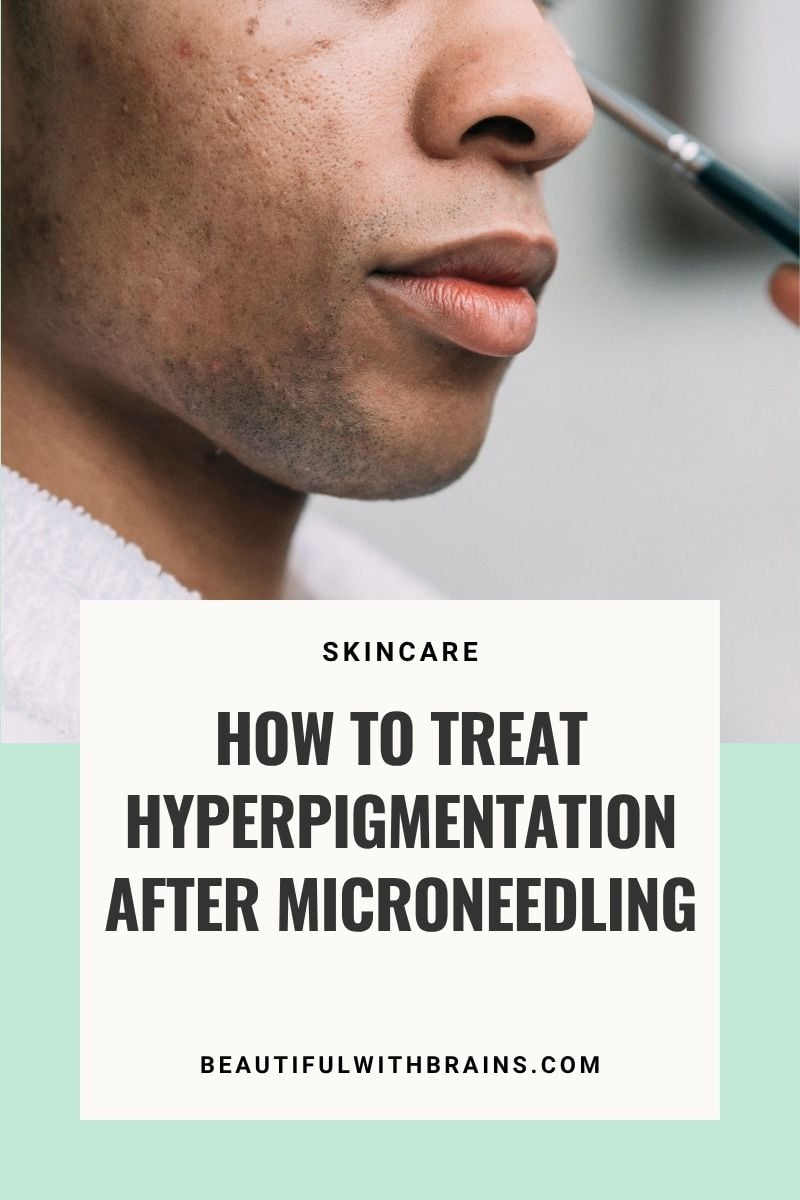
If you’re trying to figure out how to treat hyperpigmentation after microneedling, you already know the particular misery of watching your skin get darker after a treatment that was supposed to do the opposite. You booked it to fix things – maybe acne scars, maybe uneven skin tone, maybe just general dullness that’s been annoying you for years – and now you’ve got dark patches staring back at you that weren’t there before, or were there before but look angrier and more obvious than they did when you walked in.
It’s infuriating, especially when you spent real money on this. The thing is, it happens more than anyone in the industry likes to admit, and it doesn’t mean the treatment doesn’t work or that your skin is broken. It means something specific went wrong in the process, and understanding what that is makes it a lot easier to fix. This article covers exactly why these pigmentation issues happen, who’s most likely to deal with it, and which treatments actually have evidence behind them rather than just vibes.
Why Does Microneedling Cause Dark Spots In The First Place?
The whole point of microneedling is that it hurts your skin a little bit on purpose. The microneedling device creates tiny punctures across the skin’s surface using fine needles, and those micro injuries kick off your skin’s natural healing process, which means inflammation, repair, and eventually the production of new collagen and elastin that makes your skin look better. That’s collagen induction therapy in a nutshell. It works really well for a lot of things: acne scars, fine lines, skin texture, stretch marks. But that inflammation step? That’s where the problem starts.
Your skin has these cells called melanocytes, and their job is to produce melanin (the pigment that gives your skin its colour). When your skin senses damage, melanocytes can overreact, triggering an overproduction of melanin as a kind of stress response, and that excess pigment shows up as darkening of certain areas of the skin. Post-inflammatory hyperpigmentation (PIH, for short) is essentially your skin’s alarm system misfiring. The same thing happens after a bad pimple, a burn, or pretty much any skin injury. Microneedling creates controlled micro injuries, but your melanocytes don’t know they’re supposed to stay calm about it.
One thing that’s worth getting clear on early: the temporary darkening and initial redness you get in the first week or so after a microneedling session is not the same as actual PIH. That’s just healing. It looks a bit like a mild sunburn and it fades. Real PIH is pigmentation that’s still sitting there a month later, or dark spots and dark patches that are visibly worse than before you started. The different matters for an effective treatment that gives you best results.
Related: How To Fade Dark Marks Left Behind By Pimples
Who Is At Higher Risk Of Developing Hyperpigmentation After Microneedling?
Deeper skin tones are at significantly higher risk of getting PIH from the microneedling process, and any provider who isn’t adjusting their entire approach based on your skin tone is doing it wrong. Here’s why. People with darker skin tones (broadly speaking, Fitzpatrick types III through VI, which covers a massive range of medium to deep complexions) have melanocytes that are more reactive to inflammatory triggers. More reactive means more melanin in response to stress, faster. So when a microneedling treatment creates inflammation, the melanin response in melanin-rich skin is just bigger.
A 2024 systematic review looked at PIH treatment across 48 studies and over a thousand patients specifically with darker skin tones, and the honest conclusion was that no current treatment reliably clears PIH completely. That’s not hopeless. It just means you need realistic expectations and a proper treatment plan, not a miracle serum and crossed fingers.
Other things that push your risk up: sun exposure before or after treatment, having active acne when you go in, a needle depth that’s too aggressive for your skin, hormonal changes that are already affecting your melanin production, and – honestly, one of the biggest factors – a provider who uses the same settings on every single client regardless of skin type. If that sounds like your last appointment, that might explain where things went sideways.
Related: Does Microneedling Help Or Hurt Skin?
The Active Ingredients That Treat Hyperpigmentation
TRANEXEMIC ACID
A synthetic amino acid derived from lysine originally developed to reduce clotting during surgery, it also works to target hyperpigmentation. One randomised trial compared 5% tranexamic acid against 20% azelaic acid for acne-related PIH over 12 weeks and found they were equally effective at reducing pigmentation, BUT tranexamic acid had a better safety profile, especially in the first month. Split-face studies comparing microneedling with tranexamic acid versus microneedling with vitamin C found that both worked, but tranexamic acid produced better improvement in pigmentation scores and fewer relapses. How does it actually do that? Tranexamic acid blocks a signalling pathway that tells melanocytes to ramp up melanin production. It essentially interrupts the message that inflammation sends to your pigment-producing cells. It’s also mildly anti-inflammatory itself. And critically, it’s well tolerated by most skin types including deeper skin tones.
Best Picks:
- Paula’s Choice CLINICAL Discoloration Repair Serum ($52.00): This serum uses both niacinamide and Tranexemic Acid to fade away melasma. For other types of dark spots, it doesn’t work as well. Plus, it has natural oils to moisturise dry skin. Available at Cult Beauty, Dermstore, Paula’s Choice, and SpaceNK.
- Skinceuticals Discolouration Defense Corrective Serum ($108.00): This serum contains three different skin-lighteners (Tranexemic Acid, Kojic Acid, and Niacinamide) to fade away all kinds of dark spots. Available at Dermstore and Skinceuticals.
- The Inkey List Tranexemic Acid Overnight Treatment ($14.99): A simple, no-frills 2% Tranexemic Acid serum with a Vitamin C derivative to brighten skin and fade away melasma. Available at Boots, Cult Beauty, Sephora, and The Inkey List.
VITAMIN C
Vitamin C is a legitimate depigmenting ingredient, not just a nice antioxidant bonus in your serum. It actively interferes with melanin production by blocking an enzyme called tyrosinase. A study using microneedle mesotherapy with 12% ascorbic acid over four sessions produced measurable increases in skin brightness and more even pigmentation. As a daily topical during and after the healing phase, it’s not as potent as tranexamic acid for heavy pigmentation, but it layers well and does a lot of other good things for overall skin health at the same time. The catch with vitamin C is that it’s unstable and degrades quickly in poorly formulated products. If you’re using it, look for L-ascorbic acid at around 10–15% in a proper low-pH formula.
Best Picks:
- MaeLove Glow Booster ($27.95): The cheapest Vitamin C serum in this list, it does everything the others do, but it contains a citrus extract that may be irritating for sensitive skin. Available at Maelove.
- Paula’s Choice C15 Booster ($46.75): It’s enriched with Hyaluronic Acid and glycerin to deeply hydrate skin. Available at Cult Beauty, Dermstore, Paula’s Choice, Sephora, and SpaceNK.
- Skinceuticals CE Ferulic ($169.00): The original Vitamin C serum, it costs an arm and a leg, but it works wonders and delivers what it promises. Available at Dermstore and Skinceuticals.
AZELAIC ACID
Azelaic acid doesn’t get nearly enough credit in the pigmentation world. Produced by a yeast that lives on your skin, it has anti-inflammatory properties, it interferes with melanin production, and it’s actually gentle enough to use on skin that’s still recovering from treatment, which makes it really useful in the earlier part of the healing phase when you can’t yet throw retinoids at the problem. Clinical trials at 15–20% concentrations show meaningful improvement in hyperpigmentation with minimal irritation. For anyone with reactive skin or deeper skin tones who needs to be careful about what they’re putting on their face, azelaic acid is a genuinely solid option. The best part? IT’s one of the few skin-lightening ingredients that’s safe during pregnancy too.
Best picks:
- Facetheory Blemicalm Azelaic Acid 15% Clarifying Serum (£26.00): Loaded with 15% Azelaic acid and colloidal oatmeal, it helps treat acne, soothe irritations, and lighten dark spots. Available at Facetheory
- Paula’s Choice 10% Azelaic Acid Booster ($36.00): It includes a touch of Salicylic Acid to unclog pores too. Available at Cult Beauty, Paula’s Choice, and SpaceNK
- The Ordinary Azelaic Acid Suspension 10% ($12.20): A simple, no-frills formula that just works without breaking the bank. Available at Beauty Bay, Cult Beauty, The Ordinary, and Ulta
Related: How To Layer Azelaic Acid For Dark Spots
RETINOIDS
Retinoids work by speeding up cell turnover, essentially hustling the pigmented cells up to the skin’s surface faster so they can shed, while also helping disperse excess melanin. They’re one of the most studied topical treatments for pigmentation conditions full stop, and they appeared as the most commonly used intervention in that large systematic review of PIH in skin of colour, with meaningful improvement rates. But (and this is a hard but) do not put retinoids on skin that’s still healing from a microneedling procedure. The skin’s barrier is compromised after treatment, and retinoids on a compromised barrier mean irritation, and irritation means more inflammation, and more inflammation means potentially more PIH. You’ve gone backwards. Wait until everything has fully calmed down – minimum two to four weeks, and honestly longer if your skin is still feeling reactive – before introducing them. And when you do, start with a small concentration a couple of times a week.
Best Picks:
- Paula’s Choice Resist Wrinkle Repair Retinol Serum ($55.00): An anti-aging serum with 0.1% retinol. It also includes antioxidants, like Vitamin E, to prevent premature aging, and soothing ingredients to reduce irritations. Available at Paula’s Choice and Sephora.
- Peter Thomas Roth Retinol Fusion PM ($65.00): A micro encapsulated 1.5% retinol serum in an oily, moisturising base to fight wrinkles and fade away dark spots. Available at Beauty Bay, Cult Beauty, Peter Thomas Roth, and Ulta.
- MaeLove Moonlight Retinal Super Serum ($39.95): This retinal serum has a niacinamide + ceramide base to counteract the potential dryness and irritation from retinaldehyde. It also has fragrant oils that could irritate sensitive skin. But if your skin doesn’t react badly to them, it’s an effective and affordable option to consider. Available at MaeLove.
HYDROQUINONE
Hydroquinone has been the go-to for hyperpigmentation for decades and at 4% it works. It directly blocks the enzyme involved in melanin production. But there’s a meaningful risk with long-term use particularly for people with deeper skin tones: a condition called ochronosis, which is a paradoxical blue (yes blue!) darkening of the skin that comes from overuse. Research has found that most cases of hydroquinone-induced ochronosis occurred in women with Fitzpatrick types V and VI, often without them even knowing what concentration they were using. If you’re going to use it, use it under professional guidance, don’t use it indefinitely, and keep it at 4% or below. And this is why it’s usually available by prescription only.
Related: Azelaic Acid VS Hydroquinone: Which One Is Better At Fading Dark Spots?
Microneedling Aftercare Instructions To Prevent Hyperpigmentation
None of what’s above will work properly if you’re not wearing SPF every single day. UV exposure directly stimulates melanin production, which means every unprotected minute in the sun is actively working against everything else you’re doing. A broad-spectrum sunscreen, at least SPF 30, every morning, reapplied if you’re spending time outside – that’s the most important part of your treatment plan, not an afterthought at the end of it.
In the weeks immediately after your microneedling procedure, direct sun exposure is something to genuinely avoid as much as you can. Your skin is at its most reactive during the healing phase and sun hitting it during that window can set pigmentation changes that would otherwise have faded on their own. A wide-brimmed hat and some common sense about when you’re outside will do more work than any of the active ingredients.
During the healing phase: simple is better and less is more when it comes to your skincare routine. No glycolic acid, no lactic acid, no salicylic acid, no physical scrubs, no anything that’s going to add more irritation to skin that’s trying to repair itself. Keep it to a gentle cleanser, a good moisturiser with hyaluronic acid and ceramides to support the barrier, and your sunscreen. Introduce actives ( tranexamic acid, vitamin C, azelaic acid) once the initial redness has properly settled, and add them one at a time so you know what your skin is responding to.
The Bottom Line
The dark patches sitting on your face after microneedling are frustrating, but they’re not permanent – and they’re not a sign that your skin is broken or that the treatment failed you entirely. PIH after microneedling is one of the more treatable pigmentation conditions out there, precisely because you know exactly what caused it and when. Tranexamic acid, azelaic acid, vitamin C, religious SPF… these aren’t complicated or expensive interventions and they work. Pick the right ingredients for your skin type, protect yourself from the sun like it’s your actual job, and give it three to six months before you panic.