
Last Updated on September 30, 2026 by Giorgia Guazzarotti
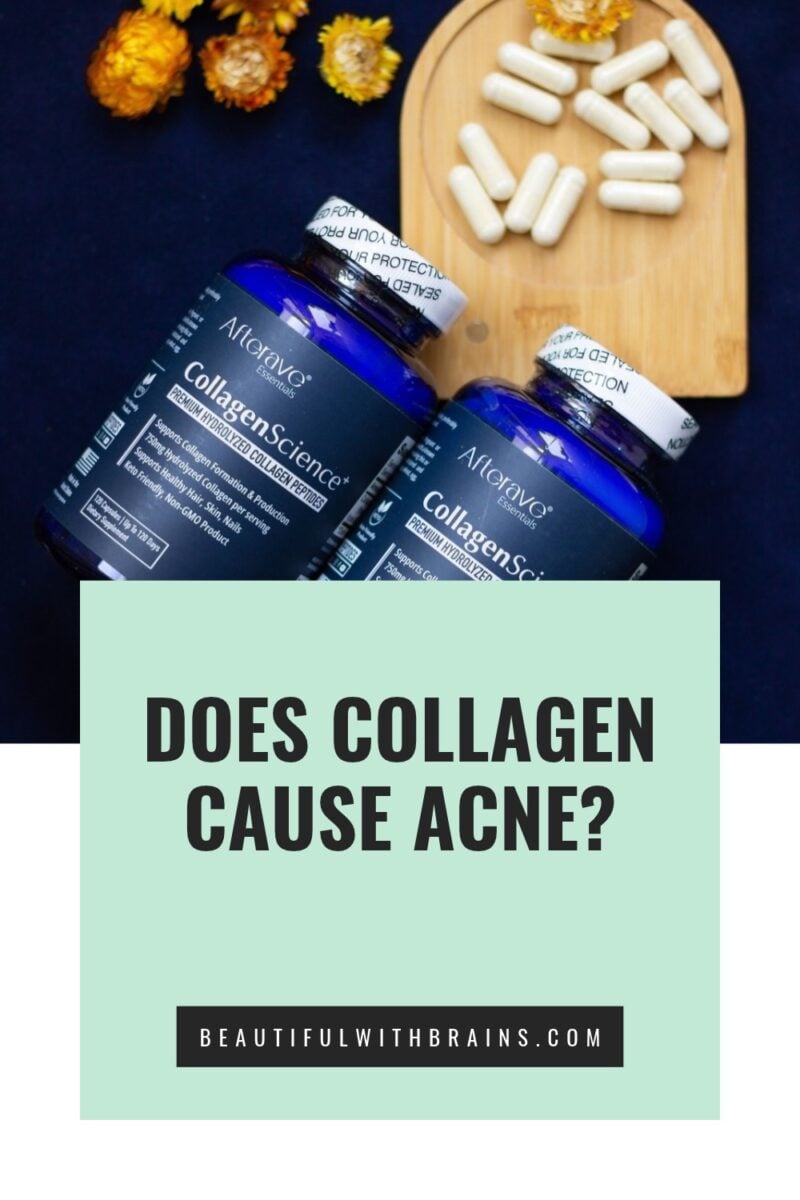
Started taking collagen for better skin texture and fewer fine lines… and got pimples instead? Rude. Collagen is the protein that keeps skin firm, so it makes sense to take oral supplements in the hope of getting the smoother, younger-looking skin they promise.
And then, if your face suddenly starts breaking out after you add collagen to your routine, obviously wonder if collagen is to blame. So does collagen cause acne? The short answer: collagen itself isn’t known to directly cause acne. But some collagen supplements contain other ingredients that may be a much more likely culprit.
In this article, I’ll look at what the research actually says about collagen and acne, which ingredients in collagen supplements may trigger breakouts, and what to do if your skin starts misbehaving after you take one, especially if you have acne-prone skin.
Does Collagen Cause Acne?
Right now, there’s no good evidence that collagen supplements cause acne. A 2023 review that combined the results of 26 randomized controlled trials looked at 1,721 people taking collagen supplements for their skin. If collagen were commonly causing breakouts, acne should have started showing up as a recurring problem. It didn’t.
A 2026 review of 25 randomized controlled trials also looked at how well collagen supplements work and how safe they are. Again, acne wasn’t identified as a known side effect.
That doesn’t mean collagen could never be involved in acne breakouts. It means we don’t currently have evidence showing that collagen itself is a common acne trigger. Just because acne started showing up after popping a pill, that alone isn’t enough to prove it’s the culprit. So what is?
Why Am I Breaking Out After Taking Collagen?
If collagen itself isn’t a common acne trigger, the next place to look is the rest of the formula. Because that innocent-looking collagen powder may be bringing a few frenemies to the party. Here are the additional ingredients that may be messing with your skin.
Sugar In Collagen Supplements
Some collagen powders, gummies and drinks contain added sugar, syrups and other sweeteners. Why does that matter? Because diets that repeatedly spike blood sugar can increase hormones such as insulin and IGF-1, which can encourage your sebaceous glands to increase oil production and make pores more likely to clog.
In a 12-week randomized controlled trial, men with acne who switched to a lower-glycemic diet had a greater reduction in acne lesions than those who kept eating a higher-glycemic diet. That does not mean the few grams of sugar in your collagen powder are automatically responsible for your breakout. The study looked at an entire diet, not collagen supplements.
But if your “healthy skin” powder comes with a generous side of sugar, be careful. While we’re on the topic, artificial sweeteners and flavourings get accused too, but right now, there’s no convincing research showing they directly cause acne.
Added Vitamins In Collagen Supplements
Some collagen supplements come with extra vitamins thrown in, especially the ones marketed for “hair, skin and nails.” Makes sense. The more, the merrier for a youthful appearance, right? Not always.
High doses of vitamin B12, for example, have been linked to acne-like breakouts, with spots appearing after supplementation and improving once B12 was stopped. How is this possible? In a 2015 study, B12 changed the activity of C. acnes, one of the bacteria involved in acne, making it produce more porphyrins (inflammatory compounds that can help turn a clogged pore into an angry red spot). One of the 10 people given B12 developed acne within a week.
Ten people is hardly enough to put B12 on skincare’s most-wanted list. But it’s still more evidence than we have against collagen itself. So if your “collagen” supplement is also sneaking in a hefty dose of B12, collagen may be taking the fall for someone else’s bad behaviour.
Dairy And Whey Protein In Collagen Products
Some collagen powders and drinks also contain milk or whey protein (one of the main proteins in milk). And unlike collagen, dairy actually has enough evidence behind it to earn some suspicion.
A 2022 systematic review found that dairy may make acne worse in some people. Why? Milk can raise levels of hormones such as insulin and IGF-1, which can tell your skin to produce excess sebum and encourage the kind of clogged pores that turn into pimples. In other words, dairy may be giving acne a little too much encouragement.
Whey protein has come under suspicion for the same reason. But the case against it isn’t exactly airtight. In a 2024 randomized controlled trial, men with acne who took 30 g of whey protein every day for six months did not develop worse acne than those taking a non-whey supplement.
So if your collagen supplement contains milk or whey, they’re more plausible suspects than collagen itself. Guilty beyond reasonable doubt? Not even close.
It May Be A Coincidence
And then there’s the deeply unsatisfying possibility that your collagen supplement is completely innocent. Acne can flare because of hormones, stress, your menstrual cycle, changes in skincare, medications, diet or a dozen other things happening at exactly the same time. Lifestyle changes as well as environmental factors play a bigger role than we give them credit for.
So yes, if you started collagen and then broke out, pay attention. But your skin doesn’t operate on courtroom logic. The newest thing you added isn’t automatically guilty just because it was standing near the crime scene.
Does Collagen Make Hormonal Acne Worse?
There’s no good evidence that collagen makes hormonal acne worse. Hormonal acne happens when certain androgens, a group of hormones that includes testosterone, stimulate your oil glands, making them pump out more sebum. More oil means pores clog more easily, and voilà: spots. Collagen hasn’t been shown to raise these hormones, so we no proof it can cause hormonal acne. Hormonal changes are a constant in a woman’s life, and you don’t want your collagen to mess with that. Still, if you’re dealing with hormonal acne, check this post to find out how to treat it.
Can Collagen Actually Help Your Skin?
This is where things get messy. Collagen is the most abundant protein in the human body. Your body literally uses it for everything, including in your skin, joints, bones, connective tissues, and muscles. That’s why collagen supplementation is touted as godsend for pretty much everything from skin elasticity to joint pain, from acne scars to wound healing. A lot of it is, surprise surprise, an exaggeration.
Unfortunately, natural collagen production decreases as we get older. As topical collagen creams can’t deliver this protein deep enough in the skin for it to do anything against wrinkles, brands have started making oral supplements and drinks. But can they give you clear skin… or even youthful skin?
Let’s take a look at what scientific research says about collagen consumption for skin issues. A 2023 review of 26 clinical trials involving 1,721 people found that collagen supplements improved skin hydration and elasticity. Great. Case closed? Not quite.
A 2025 review of 23 clinical trials found that those benefits disappeared when researchers looked only at the better-quality studies. They also disappeared when they excluded studies funded by collagen companies. Yeah. That’s not exactly confidence-inspiring.
What’s going on here? The thing is, your body has no idea you’re taking collagen for your skin. You swallow it, break it down, and use those building blocks wherever they’re needed – including in your skin, joints, bones and muscles. And guess what? Your face doesn’t get priority shipping just because that’s what the tub promised. Now when strengthening your joints, for example, may be more important than your overall skin health, know what I mean?
So can collagen help your skin? There’s no harm in taking collagen supplements. Your body needs it for so many things, having more can always help. Just don’t expect your wrinkles to disappear overnight, though.
Related: The Truth About Collagen Drinks For Skin
What To Do If Collagen Seems To Be Causing Pimples
If your skin starts breaking out after you start collagen, don’t play detective with ten variables at once. Stop the supplement for a few weeks and see what happens. Then read the entire ingredient list. Not just the giant COLLAGEN splashed across the front. Look for added B12, whey or milk-derived ingredients, and lots of sugar to see if you can spot the culprit.
If your skin settles and you still want to take collagen, you could try a plain collagen product with as few extras as possible. Then you’re testing collagen, not collagen + B vitamins + whey + sweeteners + half the supplement aisle. And change one thing at a time. That means your skincare routine too. If you stop collagen, switch cleanser, start retinol and cut dairy in the same week, congratulations: you still have no idea who the culprit may be.
FAQs
Can Collagen Cause Purging?
No. Collagen doesn’t cause skin purging. Purging happens when an ingredient speeds up dead skin cells turnover and brings existing clogged pores to the surface faster – think retinoids or exfoliating acids. Collagen supplements don’t work that way.
Can Collagen Clog Pores?
Oral collagen can’t physically clog your pores. You swallow it. What about collagen un skincare products? Nope, we have no proof topical collagen clogs pores and causes any form of acne, including cystic acne either. Said that, if a collagen cream breaks you out, look at the rest of the formula. Oils, waxes, and emollients can clog pores. Click here for the full list of comedogenic ingredients.
Does Marine Collagen Cause Acne?
There’s no good evidence that marine collagen causes acne. Marine collagen simply means the collagen comes from fish rather than cows or pigs. That changes the source, not the basic question: collagen itself still isn’t a known acne trigger. If you break out after taking a marine collagen supplement (or a bovine collagen one, for that matter), check the rest of the formula before blaming the fish.
Should I Stop Taking Collagen If I Break Out?
If the breakout started soon after you began taking collagen, stopping it temporarily is the simplest way to test the connection. Keep the rest of your routine as consistent as possible and watch what your skin does. If it improves, check the supplement for other possible triggers before deciding collagen itself was responsible. And if you develop severe, painful or persistent acne, don’t keep running home experiments indefinitely. Get a dermatologist involved.
The Bottom Line
Collagen itself probably isn’t giving you pimples. If you started breaking out after taking it, check what else is hiding in the formula first – especially added vitamins, sugar, dairy or whey. Sometimes collagen is the easiest thing to blame simply because it’s the newest thing you added. That doesn’t make it guilty.