
Last Updated on September 25, 2026 by Giorgia Guazzarotti
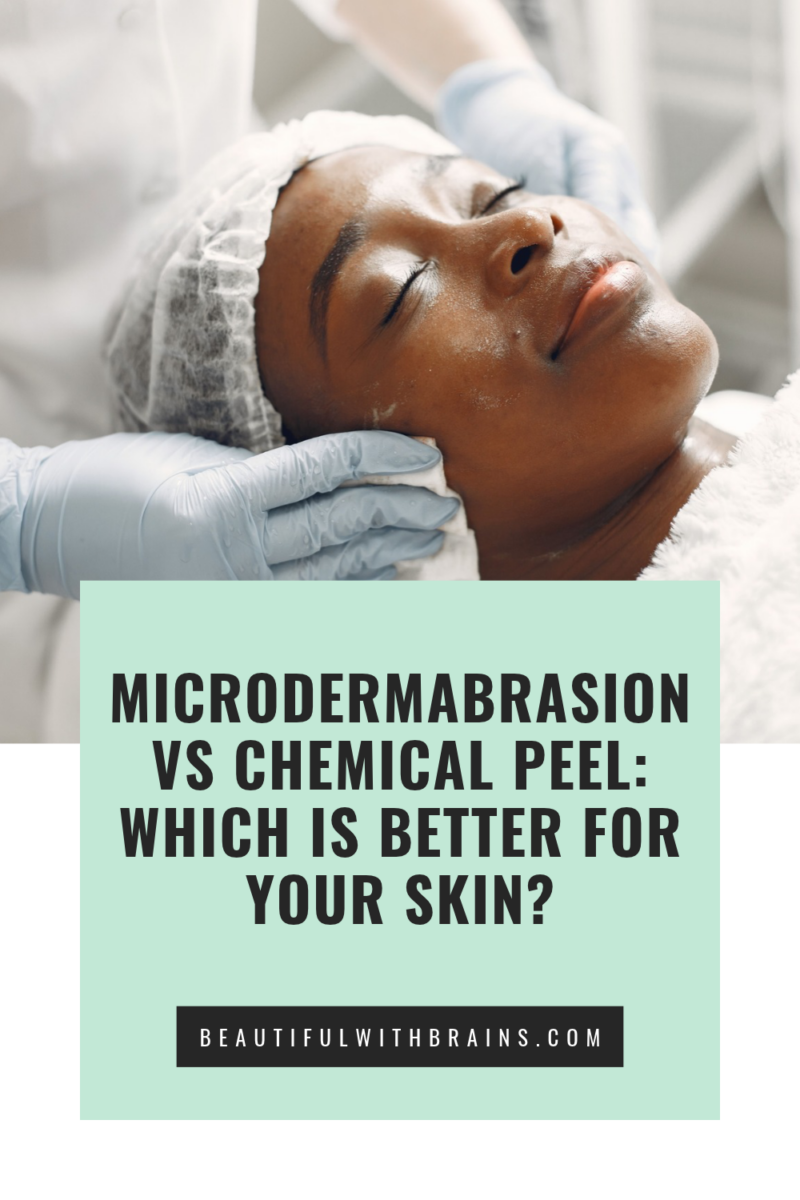
Microdermabrasion and chemical peels are popular skin treatments that promise smoother, more even-looking, brighter skin. But they don’t work the same way – and they definitely don’t deliver the same results. Microdermabrasion physically buffs dead cells off the surface. Chemical peels use acids to loosen them and, depending on the strength, can go deeper.
So, if you’re comparing microdermabrasion vs chemical peel for acne, dark spots, fine lines or rough texture, here’s the short version: chemical peels usually do more. Microdermabrasion is gentler and more superficial; chemical peels are better suited to treating pigmentation, acne and signs of ageing. Here’s how they compare for results, downtime, side effects and different skin concerns – and which one makes more sense for your skin.
Microdermabrasion vs Chemical Peel: The Quick Comparison
| Microdermabrasion | Chemical Peel | |
|---|---|---|
| How it works | Physical exfoliation | Chemical exfoliation |
| Depth | Mostly superficial | Superficial to deep |
| Best for | Dullness, mild roughness | Acne, pigmentation, fine lines, texture |
| Downtime | Usually little | Depends on peel strength |
| Irritation risk | Lower, but not zero | Higher as strength increases |
| Results | Subtle | Can be more noticeable |
| Number of treatments | Usually several | Depends on peel |
| Suitable for sensitive skin? | Sometimes | Depends heavily on acid/strength |
- Microdermabrasion vs Chemical Peel: The Quick Comparison
- What Is A Chemical Peel?
- What Is Microdermabrasion?
- Microdermabrasion vs Chemical Peel: Which Is Better For Acne?
- Which Is Better For Dark Spots?
- Which Is Better For Fine Lines?
- Which Is Better For Rough Or Dull Skin?
- Recovery Time, Side Effects & Sensitive Skin
- So, Which Is Better: Microdermabrasion Or Chemical Peel?
- FAQ
What Is A Chemical Peel?
A chemical peel is exfoliation turned up a few notches. Instead of physically buffing dead cells off your face like a microdermabrasion treatment, chemical peels use acids to loosen the “glue” holding those cells together so they shed faster. Depending on the acid and strength of the peel, they can work just on the surface or go deeper to tackle things like acne, dark spots and sun damage.
The usual suspects are glycolic, salicylic, lactic and TCA (trichloroacetic acid). And no, picking one isn’t like choosing a cocktail. They do different jobs. Salicylic acid is particularly handy for oily, acne-prone skin, while glycolic acid has good evidence for pigmentation and sun-damaged skin. A 2024 review of 24 studies found chemical peel treatments effective for melasma, with glycolic acid performing particularly well.
Related: How To Take Care Of Your Skin After A Chemical Peel
What Is Microdermabrasion?
Microdermabrasion is basically very fancy physical exfoliation with a machine. A handheld device uses either tiny crystals or a diamond tip to buff away dead cells from the surface of your skin, while suction removes the debris. Glamorous? Not especially. Effective for making dull, rough skin feel smoother? Yes.
But microdermabrasion is still a superficial treatment. It works mainly on the outermost layer of skin, so it’s better suited to mild roughness, dullness and uneven texture than deeper concerns like stubborn pigmentation, acne or wrinkles. Studies have found improvements in skin texture and overall appearance after repeated treatments, but the results tend to be modest.
Related: Hydrafacial VS Microdermabrasion: Which One Is Right For You?
Microdermabrasion vs Chemical Peel: Which Is Better For Acne?
Chemical peel. No contest. Acne starts inside the pore, where oil and dead skin cells get stuck together and cause trouble. Microdermabrasion mostly buffs the surface, which is lovely if your skin feels rough, but not particularly impressive when the mess is happening further down. Chemical peels can actually get closer to the problem. Salicylic acid is oil-soluble, so it can get inside oily pores and loosen the gunk clogging them, while glycolic acid helps the top layer of dead skin cells shed faster so they’re less likely to pile up in the first place.
A systematic review of 12 randomised trials found chemical peels improved mild-to-moderate acne, and a 2025 review found particularly good results with salicylic and glycolic acid peels. Microdermabrasion? Fine for rough texture. But if you’ve got red, inflamed pimples, scrubbing angry skin with an abrasive tip is not exactly a genius plan.
Related: Can You Use The Ordinary Peeling Solution On Acne?
Which Is Better For Dark Spots?
Chemical peels. This one isn’t close. Microdermabrasion can help with mild dark spots, age spots, and uneven skin tone by buffing away some of the pigmented dead cells sitting on the skin’s surface. Fine if your pigmentation is superficial. Less exciting if those dark spots have been clinging to your face like they’ve signed a tenancy agreement.
Chemical peels go after pigmentation more aggressively. Glycolic acid speeds up the shedding of pigmented skin cells, which is why chemical peels are commonly used for melasma, post-acne marks and uneven pigmentation. A 2024 systematic review involving 1,075 people found chemical peels effective for melasma, with glycolic acid performing particularly well.
So if you’re choosing microdermabrasion vs chemical peel for dark spots, I’d put my money on the peel. Just don’t go nuclear. A deep peel tends to work faster than a light peel, but a peel that’s too strong for you can irritate your skin and trigger even more pigmentation. Yes, the treatment for dark spots can give you more dark spots if you overdo it. Ironic, right?
Related: Do Chemical Peels Remove Freckles?
Which Is Better For Fine Lines?
Chemical peel, but don’t expect it to give you a new face. Microdermabrasion can make fine lines look a little softer because it buffs away rough, dead skin cells and leaves the surface smoother. The catch? It’s still mostly working on the outer layer of your skin, while wrinkles form deeper down as collagen breaks down. So yes, you may have smoother skin. No, the machine isn’t rebuilding your face. Research on microdermabrasion found only modest improvements in sun-damaged skin.
Chemical peels have more to offer because stronger peels can reach deeper and stimulate collagen production as well as smooth damaged skin, giving it an advantage over microdermabrasion for fine lines, wrinkles and photoageing. Studies on glycolic acid and TCA peels have found improvements in fine lines, skin texture and other signs of sun damage. So if you’re comparing microdermabrasion vs chemical peel for fine lines, I’d pick the peel.
Related: How Soon After A Chemical Peel Can I Use Retinol?
Which Is Better For Rough Or Dull Skin?
Finally, a win for microdermabrasion. If your skin is simply looking dull, rough or a bit meh, microdermabrasion may be all you need. It literally buffs away the dead cells making the outer layer of the skin look uneven, so skin can feel smoother and look brighter pretty quickly. Research has found improvements in dullness, roughness and overall appearance after repeated microdermabrasion treatments. Chemical peels can do the same thing (and more) but that doesn’t mean you need to bring out the big guns every time your face loses its glow. If dullness and rough texture are your only complaints, microdermabrasion does the job. If acne, pigmentation or fine lines have joined the party, a chemical peel makes more sense.
Related: Diamond Vs Crystal Microdermabrasion: Which One Is Better?
Recovery Time, Side Effects & Sensitive Skin
If you want the least drama afterwards, microdermabrasion wins. You might get a bit of redness, tightness or sensitivity, but it usually settles quickly. One study found the skin barrier recovered within about two days after microdermabrasion with a diamond-tipped wand.
Chemical peel downtime is much more of a sliding scale. A light peel may leave you a little pink and flaky. A deeper peel can mean proper peeling, swelling and several days of looking like your face has entered witness protection. A middle peel falls somewhere in the middle. The stronger the peel, the bigger the risk of side effects too, including prolonged redness, irritation, scarring and pigmentation changes.
And if your skin is sensitive, don’t assume microdermabrasion is automatically the “gentle” choice. It’s still abrasion. If your skin barrier is already touchy, rubbing it with a machine may not be the peace offering it needs. Chemical peels can work for sensitive skin too, but this is where strength and acid choice matter more than bravado for your skin goals.
Darker skin tones also need extra care because irritation can trigger post-inflammatory hyperpigmentation. A study of 473 superficial peels in darker skin tones found a low overall complication rate, but pigmentation changes were still among the most common issues. So, in the microdermabrasion vs chemical peel downtime battle, microdermabrasion is usually easier. Chemical peels can do more, but your skin may make you pay for the privilege.
Related: Is Microdermabrasion Good Or Bad For Skin?
So, Which Is Better: Microdermabrasion Or Chemical Peel?
If I were choosing between microdermabrasion and a chemical peel, I’d pick the peel for most specific skin concerns, like acne, dark spots, the appearance of fine lines, sun damage or uneven texture, chemical peels have more range. They can work at different depths and different acids can target different problems.
Microdermabrasion is then best fit when your skin is just dull, rough or looking a bit blah and you want a quick polish with minimal downtime. So the easiest way to think about it is: Microdermabrasion = buff and brighten. Chemical peel = treat and correct. Keep in mind, both require a series of treatments for best results.
FAQ
Which Is Better For Acne Scars: Microdermabrasion Or Chemical Peel?
Chemical peels have more to offer, especially for shallow scars and post-acne marks. Microdermabrasion can smooth the top of an acne scar, but it can’t magically fill in a dent that sits deeper in the skin. Chemical peels can improve some atrophic acne scars, but deeper rolling, boxcar and ice-pick scars usually need treatments that go beyond simple exfoliation.
Can You Have Microdermabrasion And A Chemical Peel Together?
Yes, but this is not a case of “two exfoliators must be twice as good.” Microdermabrasion removes surface dead skin first, which can help a peel penetrate more evenly, and combining the two has produced better results than microdermabrasion alone. The catch? You’re also stacking physical exfoliation with chemical exfoliation, so irritation gets invited to the party too.
How Often Should You Get Microdermabrasion Or A Chemical Peel?
It depends on how aggressive the treatment is. Microdermabrasion and light chemical peels are often spaced a few weeks apart, while stronger peels need much longer recovery. A light glycolic peel every few weeks is one thing; doing the same with a deep peel or even a medium peel would be a terrible little skincare experiment. If your skin is still red, flaky or stinging, it is very clearly not ready for round two.