
Last Updated on October 4, 2026 by Giorgia Guazzarotti
Your acne has finally cleared up. Yay! Except those pesky breakouts have left behind a little souvenir: dark spots, red marks, or acne scars that just won’t budge. Enter adapalene (a.k.a. Differin). It’s a form of vitamin A (a retinoid) that’s commonly used for the treatment of acne. It helps keep pores clear, speeds up skin cell turnover, and stops pimples in their tracks. Brilliant for acne-prone skin. But can it do anything about the scars you’ve already got?
Yes, adapalene can help improve SOME acne scars, particularly shallow, indented ones. It can also help fade those stubborn dark marks pimples leave behind. But before you rush to buy a tube, here’s what adapalene can and can’t do for acne scars and how to deal with common side effects, like skin irritation:
What Kind Of Acne Scars Can Adapalene Help With?
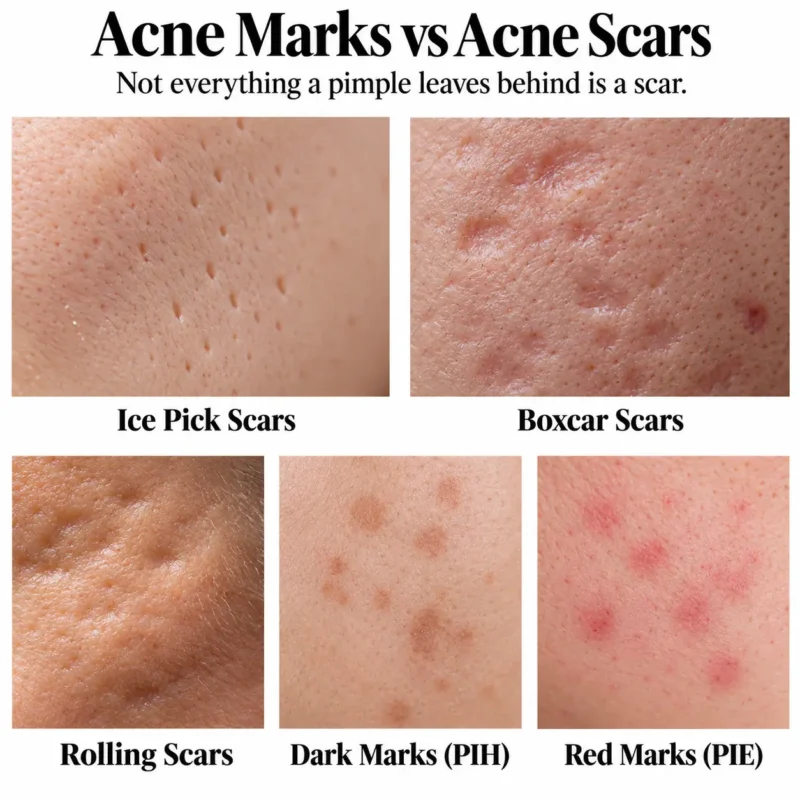
The Internet has an annoying habit of calling everything a pimple leaves behind an acne scar. But there’s a BIG difference between a dark spot and an actual scar. Those pesky dark spots? They’re just extra pigment your skin produces in response to inflammation. Your skin is still smooth, it’s just a different colour. Actual scars are another story. When a pimple damages your skin, your body produces collagen to repair it. If it makes too little, you’re left with dents (a.k.a. atrophic scars). If it makes too much, you get raised bumps. And here’s why this matters: fading a dark spot is a lot easier than fixing a dent in your skin. Here’s what adapalene can (and can’t) do:
| What you’re seeing | Can adapalene help? |
|---|---|
| Brown or dark spots: Flat marks left behind by pimples (post-inflammatory hyperpigmentation). | Yes. Prescription retinoids like adapalene help fade pigmentation and even out skin tone. |
| Red or pink marks: Flat patches of lingering redness. | Maybe, indirectly. Adapalene treats acne, but there’s little evidence it directly fades persistent redness. |
| Shallow, indented scars (atrophic scarring): Small depressions in your skin. | Possibly. Research using 0.3% adapalene has shown improvements in the appearance of depressed acne scars. |
| Deep ice-pick, boxcar, or rolling scars: Noticeable pits and dents in your skin. | Don’t expect miracles. Adapalene may improve appearance of acne scars, but it won’t completely fill in deep scars. |
| Raised scars or keloids: Firm, elevated bumps caused by excess collagen. | No. Adapalene isn’t an effective treatment for these scars. |
Not sure which type you’ve got? The American Academy of Dermatology’s guide to acne scar types has pictures that can help you tell the difference.
Does Adapalene Really Work For Acne Scars? What The Studies Say
You already know adapalene can get rid of pimples. But can it actually do something about the scars they’ve left behind? Let’s see. In a 2018 study on the treatment of atrophic acne scars, 20 people with depressed acne scars used adapalene 0.3% for 24 weeks. The results? After six months of treatment, 50% of participants showed improvements in skin texture and scarring. Not bad for a topical treatment! But before you get too excited, this was a small study without a control group. Promising? Yes. Definitive proof that adapalene gets rid of all acne scars? Not quite.
Another 2018 study tested adapalene 0.3% combined with benzoyl peroxide 2.5% (a common acne treatment ) on 67 people with acne scars. After six months, depressed scars had decreased by 15.5% on the treated side of the face and increased by 14.4% on the placebo-treated side. The catch? These studies used adapalene AND benzoyl peroxide together, so we can’t give adapalene all the credit. Plus, some of the improvement came from preventing new scars.
But What About Differin 0.1%?
Here’s where things get tricky. All the studies I’ve just mentioned used adapalene 0.3%, not the 0.1% strength commonly sold as Differin. Does the lower concentration work on acne scars, too? We don’t know yet. My advice? If you’re already using Differin gel to treat acne, stick with it. With consistent use, it’s an effective option for reducing acne lesions (a fancy term for pimples, blackheads, and whiteheads). And the fewer pimples you get, the fewer new scars you’ll have to deal with.
But if you’re thinking of buying Differin specifically to get rid of old, pitted acne scars, I’d save my money. There’s not enough evidence that the 0.1% concentration can do the job. And using more of it won’t make it as strong as 0.3%. It’ll just irritate your skin. And frankly, if you’ve got deep pits and dents, no retinoid alone is going to make them disappear.
How To Use Adapalene For Best Results
Want to give adapalene a try? Here’s how to get the most out of it without turning your face into a dry, flaky mess:
- Start slowly: If you’ve got sensitive skin or you’re new to retinoids, don’t jump straight into using adapalene every night. Start one or two nights a week and gradually increase the frequency as your skin gets used to it. How quickly you can increase the frequency depends on your skin type and how well your skin tolerates it. There’s no prize for reaching daily use first.
- Less is more: Wash your face with a gentle cleanser, let your skin dry, and apply a thin layer of adapalene to clean, dry skin, usually at night, following your product’s instructions. Differin is designed for use on acne-prone areas, not just individual pimples or scars. Don’t pile extra gel onto individual scars, thinking it’ll make them disappear faster. It won’t. You’ll just irritate your skin.
- Moisturise, moisturise, moisturise: Adapalene can cause dryness, peeling, and irritation, especially when you’re starting out. A moisturiser with hyaluronic acid can help keep your skin hydrated, make dryness easier to deal with, and support your skin barrier.
- Don’t skip sunscreen: UV exposure makes every skin condition worse. Apply a broad-spectrum sunscreen with SPF 30 or higher every morning. Yes, even when it’s cloudy.
- Go easy on exfoliation: Your skin doesn’t need adapalene, glycolic acid, salicylic acid, and a scrub all in the same evening. More isn’t better. If your skin is already irritated, piling on more active ingredients will only make things worse. In fact, stop exfoliating completely. Don’t even use a benzoyl peroxide gel, unless your doctor tells you otherwise. You don’t want to fix acne by destroying your skin in the process.
One important warning: Don’t use adapalene if you’re pregnant or planning to become pregnant. Retinoids can cause birth defects in rats, so dermatologists don’t recommend using them during this precious time of your life.
What Works Better Than Adapalene For Deep Acne Scars?
Got deep acne scars that refuse to budge? I hate to break it to you, but there’s only so much topical treatments like adapalene can do for deep acne scarring. It may help your skin make more collagen, but it can’t physically lift a scar that’s stuck to the tissue underneath. Luckily, a good board-certified dermatologist has access to other options. Here’s what can be included in your treatment plan:
1. Microneedling: Ever wondered why anyone would willingly stick hundreds of tiny needles into their face? Because those tiny injuries trick your skin into repairing itself. As it heals, it makes new collagen that helps fill in some of those pesky dents. Unlike adapalene, microneedling reaches deeper into the skin, where the damage is. Research shows it can improve depressed acne scars, particularly shallower ones. I’ve written a good about microneedling for acne scars here.
2. Laser resurfacing: If your skin looks like the surface of the moon, laser resurfacing may help smooth things out. It uses laser energy to remove or heat damaged skin, stimulating collagen production as your skin heals. It’s a more intensive treatment than adapalene or topical retinoids and can improve deeper scars, too. The catch? Some lasers require considerable downtime and can cause dark spots, especially on darker skin tones.
3. Subcision: Some scars aren’t just missing collagen. They’re actually being pulled down by bands of scar tissue underneath your skin. No amount of adapalene is going to break those bands! But a dermatologist can insert a needle beneath the scar and cut them, allowing the skin to rise. That’s why subcision is particularly effective for rolling acne scars, the ones that give your skin that wavy appearance.
4. TCA CROSS: Got those tiny, deep holes called ice-pick scars? They’re notoriously difficult to treat because the damage goes so deep. With TCA CROSS, a dermatologist applies Trichloroacetic acid directly inside each scar. This creates a controlled injury that encourages your skin to make new collagen, gradually making the hole shallower. Studies show it can improve ice-pick scars, something adapalene alone struggles to do. And no, your bottle of glycolic acid isn’t a DIY substitute. Please leave this one to the professionals.
So, which treatment should you choose? It depends on your scars. Microneedling may work well for shallow dents, while rolling scars often need subcision to release the skin underneath. Ice-pick scars? TCA CROSS may be a better bet. And if you’ve got several types of scars, you may need a combination of treatments. Your skin tone matters, too. Some procedures can trigger hyperpigmentation, so find a dermatologist that knows what he’s doing.
FAQs
Does Adapalene Help With Old Acne Scars?
Yes, it can! Even if those pesky scars have been hanging around for years. In one study, adapalene 0.3% improved the appearance of acne scars that were, on average, 19 years old! The catch? It works best on shallow, depressed scars. If you’ve got deep pits and dents, adapalene may make them less noticeable, but it won’t erase them completely.
Can Adapalene Make Acne Scars Worse?
Adapalene won’t normally make existing pitted scars deeper, but it CAN make those pesky dark acne marks worse if it irritates your skin. Why? Because irritation causes inflammation, which can trigger your skin to produce even more pigment, especially in darker skin tones. Yep, the very thing you’re trying to get rid of! The solution? Start slowly, keep your skin moisturised, and don’t pile on more adapalene thinking it’ll work faster. More irritation doesn’t mean better results.
What Are The Signs Of An Allergic Reaction To Adapalene?
A little dryness, peeling, and redness when you first start using adapalene? Pretty common. But swelling, hives, or severe irritation? That’s another story. These could be signs of an allergic reaction, NOT just your skin getting used to retinoids. Stop using adapalene and seek medical advice. And if your face, lips, or throat suddenly swell, or you have trouble breathing, get emergency medical attention immediately. Don’t wait for your skin to calm down on its own.
The Bottom Line
Can adapalene help with acne scars? Yes, but it depends on what kind of scars you’ve got. If you’re still battling pimples and the dark spots they leave behind, adapalene can help with both. It may even make shallow scars less noticeable, although the strongest research is on the 0.3% concentration, not your usual Differin 0.1%. But if you’ve got deep holes and dents in your skin, don’t waste your time expecting a cream to fill them in. You’re better off seeing a dermatologist about professional treatments that can actually tackle the damage.