
Last Updated on August 11, 2026 by Giorgia Guazzarotti
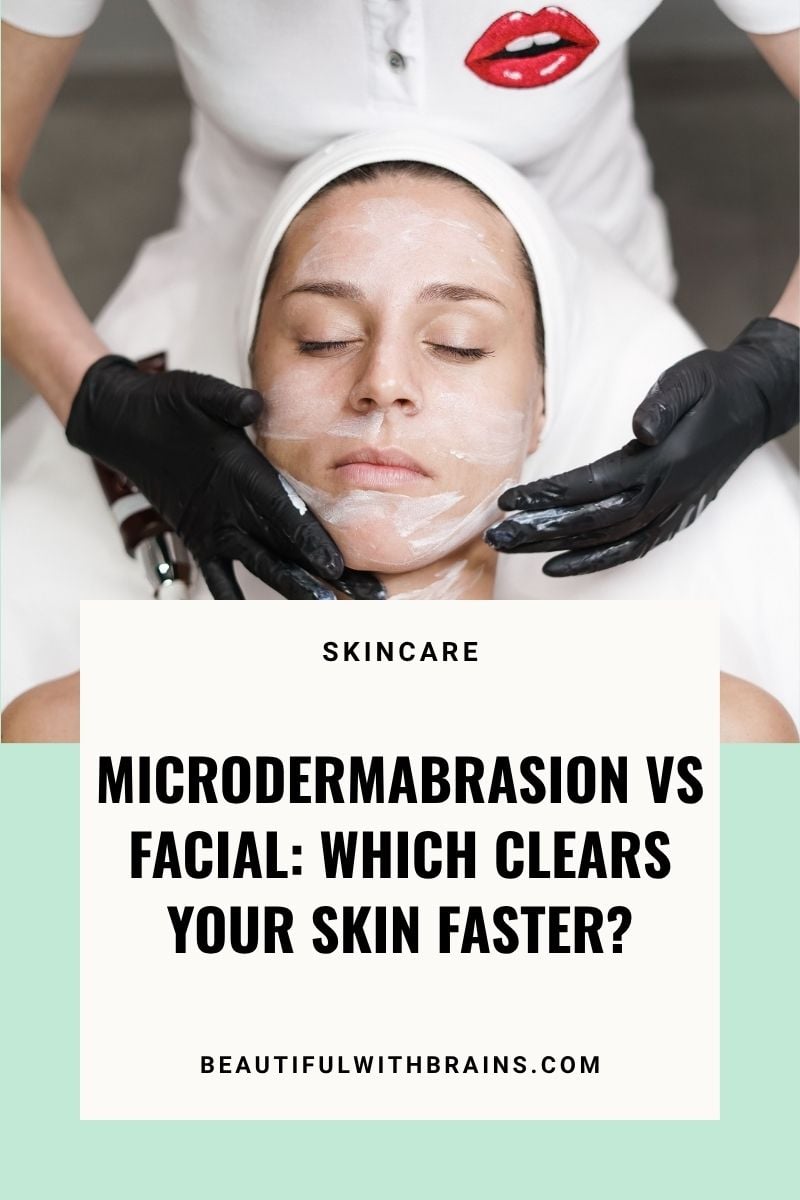
Microdermabrasion vs facial: if you’re looking for smoother, brighter skin, you might wonder whether one is actually better than the other. The problem is, it’s like comparing apples to oranges. Microdermabrasion is a specific type of exfoliation, while “facial” covers a wider range of treatments, from cleansing and extractions to exfoliation and hydration, depending on where you go and what they include in the treatment.
It matters because the treatment that makes sense for dull, rough skin isn’t necessarily the best one for dehydrated or congested skin. And I definitely wouldn’t assume that the more aggressive treatment is automatically going to give you better skin (in skincare, the opposite is often true). So let’s look at what each one actually does, what you can realistically expect from it, and which is likely to be the better choice for YOUR skin.
- Facial VS Microdermabrasion Treatment: What They Do To Your Skin
- Which Specific Skin Concerns Is Each Treatment Better For?
- What The Experience Feels Like And What Happens After
- How Long Do Results Last?
- Price And What You’re Really Paying For
- Who Should Choose Microdermabrasion And Who Needs A Facial?
- Can You Combine Them? Should You?
- The Verdict: Which Treatment Wins?
Facial VS Microdermabrasion Treatment: What They Do To Your Skin
Most people book treatments based on vibes and Instagram photos, not what’s really going on with their skin. That’s how you end up paying a lot of money for results that don’t meet your expectations. That ends here.
Microdermabrasion is physical exfoliation on steroids. A technician uses either fine crystals blasted onto your skin or a diamond-tipped wand to literally scrape off the top layer of dead skin cells. The goal is to injure your skin to trick it into triggering collagen production, the protein that keeps your skin firm. This dual exfoliating and collagen-boosting action smooths texture, and reduces the appearance of fine lines, wrinkles, sun damage and age spots. You’ll see immediate smoothness… but also temporary redness.
A facial, on the other hand, is a multi-step skincare treatment customized to your skin type. It typically includes cleansing, exfoliation (usually chemical, with glycolic acid or enzymes), extractions, a mask, massage, and serums like hyaluronic acid. Some facials target acne, others focus on hydration or anti-aging. The intensity varies wildly depending on what your esthetician chooses (and that should be based on what your skin needs, how sensitive it is…. If an aesthetician doesn’t ask you these questions, RUN!). Recovery time is minimal.
Related: HydraFacial Vs Microdermabrasion: Which One Is Right For You?
Which Specific Skin Concerns Is Each Treatment Better For?
Microdermabrasion works best for:
- Sun damage and age spots:it works by removing the outermost layer of dead skin cells, which are damaged and darker in colour.
- Dull, rough texturethrough aggressive exfoliation.
- Fine lines by stimulating collagen production that firms skin.
- Enlarged pores:it does this through deep exfoliation. Once you remove the gunk that clogs them up and stretches them, pores shrink back to their natural size.
It does NOT work well for cystic acne, rosacea, eczema, or sensitive skin. When your skin is this sensitive, aggressive exfoliation can trigger flare-ups and worsen inflammation. All these skin conditions are caused by inflammation, so you don’t want to make that worse!).
Facials are better at:
- Hydration for dry skin: they often use hydrating masks and serums that deeply hydrate skin. This alone improves the appearance of the skin py plumping it up.
- Blackhead and whitehead extraction: I’m not a huge fan of this cos it could damage skin, hence why it needs to be done by a professional.
- Maintenance glow for people with already healthy skin. It often comes from deeper exfoliation and hydration.
When facials use chemical exfoliation, they can also boost collagen and reduce the looks of fine lines and wrinkles. But again, it depends on what the esthetician uses. It’s not a done deal.
Facials are also the better choice if you want a relaxing experience that improve your skin’s surface. Kinda going to a spa, but make it skincare. The dealbreaker here is skin sensitivity. If your skin reacts to everything, microdermabrasion is a gamble. Facials give your esthetician room to adjust products and intensity in real time for your skin goals.
What The Experience Feels Like And What Happens After
Microdermabrasion feels like sandpaper moving across your face. It’s not painful, but it’s not soothing either. The suction pulls at your skin, and you’ll hear a scratching sound as the diamond tip or tiny crystals get to work. The session lasts 30 to 60 minutes and immediately after, your skin looks pink and feels tight, like a mild sunburn. For the next few days, you’ll notice flaking as dead cells shed. You’ll need to avoid sun exposure, skip retinol, and load up on gentle moisturizer. Once the redness fades (usually within a week), you’ll start to see the smoother skin you paid for.
A facial feels like self-care. Warm towels, massage, soothing masks… Even when extractions happen (which can sting!), the overall vibe is relaxing. Sessions last 60 to 90 minutes. There’s no flaking, no downtime, no special aftercare beyond your normal routine. Some facials include chemical peels, which can cause mild peeling a few days later, but if your aesthetician knows what she’s doing, you shouldn’t experience side effects.
How Long Do Results Last?
Both faical treatments deliver, but in completely different timelines. Microdermabrasion gives you immediate results. Right after the redness fades, your skin feels like velvet. Makeup sits better. Texture looks better. Think smooth skin straight away. But one session won’t fix deep concerns. Sun damage and wrinkles need a series of treatments to see real, lasting improvement. After a full course, results can last six months to a year if you maintain with a good skincare routine.
Facials deliver a glow that peaks 24 to 48 hours post-treatment. Your skin looks plumper hydrated, and just better. But the results are more fleeting. Unless you’ve add chemical exfoliation, LED light or some other cosmetic treatment like that during your facial, results will fade within two to four weeks.
Price And What You’re Really Paying For
The sticker price tells you nothing about value. Microdermabrasion typically costs between $75 and $200 per session. You’ll need multiple sessions two to four weeks apart to see lasting improvement for acne scars or sun damage. If you opt for 5 to 10, which is the minimum recommended, that averages between $375 to $2,000 total. It’s a big commitment.
Facials range from $60 to $300 depending on add-ons, location, and the products used. A basic facial might include just cleansing and a mask. A luxury facial could involve LED light therapy, microcurrent, or high-end serums (my fave clinic uses Skinceuticals). I see facials more as maintenance skincare treatments and, in my 30, I went for one every 3 months. As you get older, you may want to increase frequency. If you go monthly, annual costs can creep up to $720 to $3,600.
The hidden cost most people miss: downtime. Microdermabrasion can leave your skin pink, sensitive, and flaky for up to a week. If you have a busy schedule or an event coming up, that’s a problem. Facials let you go back to your life straight away (sometimes even the same day with makeup on).
Related: Oxygen Facial Vs Microdermabrasion: Which One Works Better?
Who Should Choose Microdermabrasion And Who Needs A Facial?
Choose microdermabrasion if:
- You have visible texture issues like rough patches or bumpy skin
- You’re dealing with hyperpigmentation, sun spots, or uneven skin tone
- You want to jumpstart collagen production and see anti-aging benefits
- You’re okay with temporary redness and a few days of recovery
- You’re committed to a series of treatments, not just a one-time fix
- Your skin isn’t overly sensitive or reactive
- You’re prepping your skin for an event several weeks out and want smoother, more youthful-looking skin
Choose a facial if:
- Your skin is dehydrated, dull, or needs a hydration boost
- You have blackheads, whiteheads, or clogged pores that need professional extraction
- You struggle with sensitivity, rosacea, or conditions that flare with abrasion
- You want immediate glow with zero downtime
- You’re maintaining already healthy skin and want regular upkeep
- You value relaxation and self-care as much as results
If you’re still torn, book a consultation. A good esthetician will assess your skin type, skin goals, and tolerance level before pushing you toward one treatment.
Can You Combine Them? Should You?
Layering treatments sounds smart until it backfires. Yes, you can combine microdermabrasion and facials, but not in the same session and not without strategy. Some people do microdermabrasion every six to eight weeks for resurfacing and get monthly facials in between for hydration and maintenance. This approach works if your skin tolerates both and you have the budget.
The smarter play: Start with one and see how your skin responds. If microdermabrasion leaves you too dry, follow up with a hydrating facial two weeks later. If facials aren’t giving you the texture improvement you want, add microdermabrasion to your rotation. Never do microdermabrasion right before or after a chemical peel, retinol treatment, or any other aggressive exfoliation. Stacking abrasive treatments strips your skin’s protective barrier and increases the risk of irritation, infection, or long-term damage.
The Verdict: Which Treatment Wins?
For most people dealing with texture, scars, or sun damage, microdermabrasion is the clear winner. The downtime is real but manageable, and the results justify the temporary inconvenience. But if your skin is sensitive, already in good shape, or you simply want ongoing glow without the recovery period, facials are the better option. They’re gentler, more customizable, and let you maintain healthy skin without the aggression.