
Last Updated on June 3, 2026 by Giorgia Guazzarotti
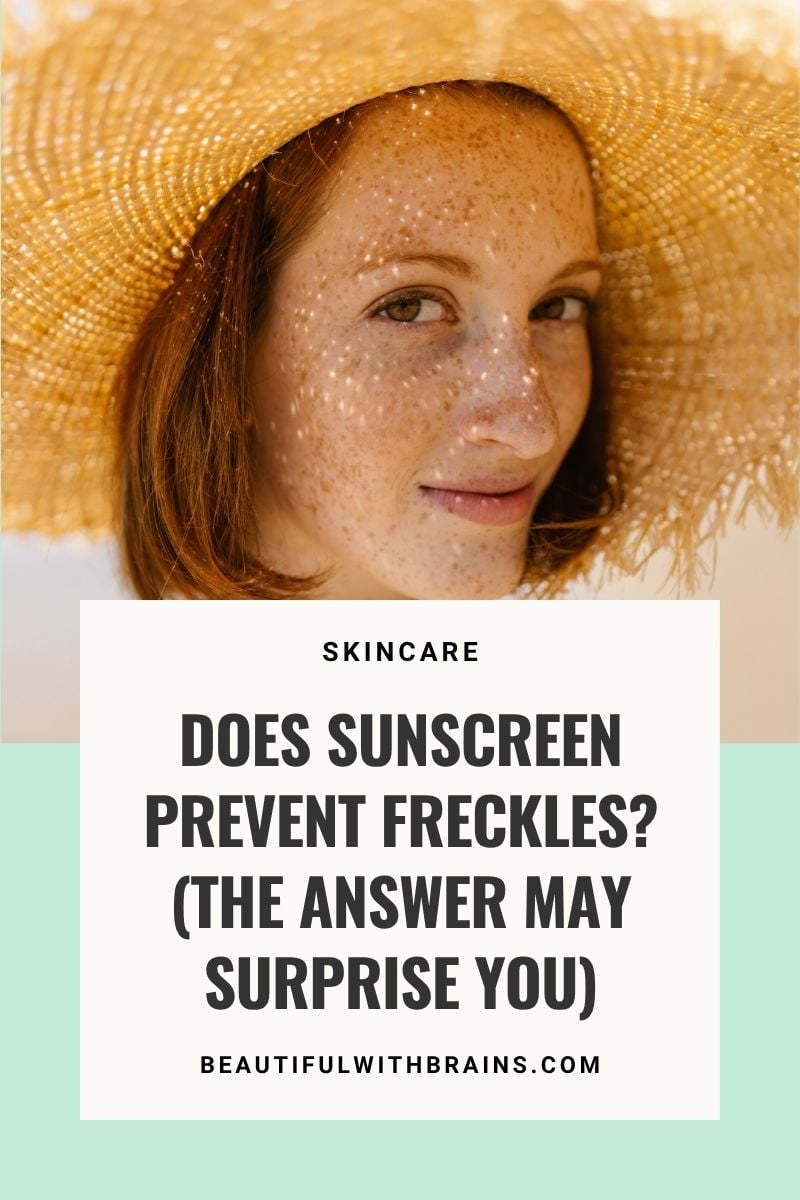
Does sunscreen prevent freckles? If you’re someone who’s been religiously slathering on SPF every single morning like a devoted member of some sun-protection cult, only to look in the mirror in July and discover your nose has somehow acquired twelve new small brown spots since April, this question probably feels a little personal. I feel you. There is something deeply unfair about doing everything right (the SPF 50, the reapplication, the little travel-size bottle in your bag) and still watching your freckles multiply like they didn’t get the memo. Shouldn’t sunscreen prevent the damage? In this article you’ll find the real science behind how freckles form, what sunscreen does and what a protection routine that actually works looks like in practice.
What Is A Freckle?
Freckles, the ones that showed up on your nose when you were seven, are called ephelides, and the most interesting thing about them is that they often darken in summer and fade in the winter months. Not completely, obviously, but enough that it’s noticeable Crazy, right? Here’s what’s going on: your skin has these cells called melanocytes, and their whole job is making melanin (the pigment that gives skin its colour). UV light hits your skin, melanocytes get the signal, and boom, melanin production goes into overdrive.
In people with darker skin this tends to happen pretty evenly. In people with fair skin or light skin (especially anyone with the MC1R gene variant, a.k.a. the actual freckle gene), melanocytes respond to ultraviolet light by dumping melanin in weird uneven little clusters instead of spreading it around nicely. Those clusters are freckles. Your melanocytes are basically just really bad at sharing.
Solar lentigines are different, by the way. Those are sun spots, age spots, liver spots, whatever you want to call them. They show up later in life, they don’t fade in winter, and they’re basically your skin filing a formal complaint about decades of UV exposure.
Freckles, Genetics, And Sun Exposure: What’s Actually Going On
Genetics is genuinely a big part of this. The MC1R variant makes your melanocytes more reactive to UV than average. People with this gene variant tend to make more pheomelanin (light, reddish, pigment that does absolutely nothing to protect you from UV radiation) and less eumelanin, which is the darker pigment that actually shields your skin. This is why fair-skinned redheads tend to freckle easily, burn easily, and have a higher risk of skin cancer. It’s all the same underlying issue.
So yeah, genetics play a significant role, but they’re not the whole story. But the thing that frustrates me about how people talk about genetics and freckles is this idea that if it’s genetic you’re just stuck with it. That’s not how it works. The gene makes your melanocytes more reactive to UV. UV is still the trigger. Which means reducing UV exposure genuinely changes what your melanocytes do, even in people who are totally wired to freckle.
Can Sunscreen Prevent Freckles?
Short answer: sunscreen reduces freckles, but doesn’t reliably prevent them. Sunscreen doesn’t “turn off” freckles or anything dramatic like that. It just cuts down how much ultraviolet radiation gets into your skin in the first place. This matters because freckles aren’t random. They happen when your skin reacts to UV exposure over and over again. Less UV getting through = fewer chances for that reaction to kick off.
It’s also not just about lying on a beach. Most of the UV that adds up in real life is the boring stuff: walking around, sitting near windows, just being outside for short bits of time. You don’t notice it, but your skin still does. So when people say sunscreen “prevents freckles,” what they really mean is: it reduces how often your skin gets pushed into that freckle-making response. And yeah, that’s why two people can use SPF the same way and still end up with totally different results. Life exposure isn’t identical, even if the sunscreen routine looks the same.
What Sunscreen Cannot Do
No sunscreen, not even one with a higher SPF, can get rid of the freckles you already have. I know that’s not what anyone wants to hear, but it’s true. It can prevent them from darkening further during summer months, which makes them less noticeable, but the freckles that are already there won’t disappear just because you start wearing SPF 50 every day. And it can’t change your genetics. If you have those MC1R variants, you’ll always have that predisposition, which means consistent protection is an ongoing commitment, not a cure. So yeah, use sunscreen with a broad spectrum spf in your skincare routine every single day to prevent premature aging, unnecessary skin pigmentation, an lower the risk of cancer. Just do’t expect miracles.
How To Lighten Freckles The Right Way
If you want to actually fade dark spots, including freckles, that are already there, here are the best options for you (in addition to a good sunscreen, of course):
- Vitamin C helps because it interferes with melanin production. UV light triggers an enzyme pathway in your skin (tyrosinase) that makes pigment. Vitamin C slightly slows that process and also reduces oxidative stress from UV, so over time less pigment builds up and existing dark spots can lighten a bit. It’s a gradual effect, not an eraser. Check out the best Vitamin C serums here.
- Chemical peels work by using acids to dissolve the bonds between dead skin cells. Freckles sit in the upper layers of skin, so when those layers are shed faster, you physically remove some of the pigmented cells. That’s why you see quicker fading compared to topical creams alone.
- Laser treatments target melanin directly. The light energy is absorbed by pigment, which breaks it into smaller fragments. Your immune system then clears those fragments away over time. That’s why lasers are the most effective for visible, established freckles.
But none of these change the underlying biology. Melanocytes still respond to UV the same way. So if frequent sun exposure continues, new freckles can still form even after treatment.
Related: The Battle Of The Skin-Lighteners: Which One Gives The Best Results?
How to Actually Protect Yourself
So what does an effective routine look like if preventing new freckles (and other signs of sun damage, including premature aging and increased risk of skin cancer) is what you’re after?
First, use a broad-spectrum sunscreen every single day – not just in summer months, not just when you’re going to the beach. UVA rays, which are the ones most responsible for pigmentation and premature aging, come through clouds and windows year-round. Daily routine is the word. Choose a higher SPF – at least SPF 30 at minimum, SPF 50 if you’re fair-skinned or spending time outside. Reapply every two hours if you’re outdoors. In terms of which sunscreen to choose: both chemical sunscreens and mineral options like non-nano zinc oxide sunscreens offer effective protection when formulated and applied properly. The right sunscreen is the one you’ll actually wear every day and apply in adequate amounts. A thin smear isn’t enough. Most people apply far less than the tested amount, which is one reason real-world protection often falls short of what the label says.
Beyond sunscreen, protective clothing makes a real difference: wide-brimmed hats and long sleeves on high-UV days are not overcautious, they’re sensible. Seeking shade between 10am and 4pm when UV radiation peaks is also worth building into your routine. And if you want additional support for skin tone and skin health, a well-formulated vitamin C serum in the morning can help both with existing pigmentation and as an antioxidant that supports your sunscreen’s protective effects.
The Bottom Line
Sunscreen won’t undo the freckles you already have, but with consistent use (broad-spectrum, adequate SPF, applied properly and daily) it helps reduce new freckle formation, especially in fair and freckle-prone skin.