
Last Updated on April 12, 2026 by Giorgia Guazzarotti
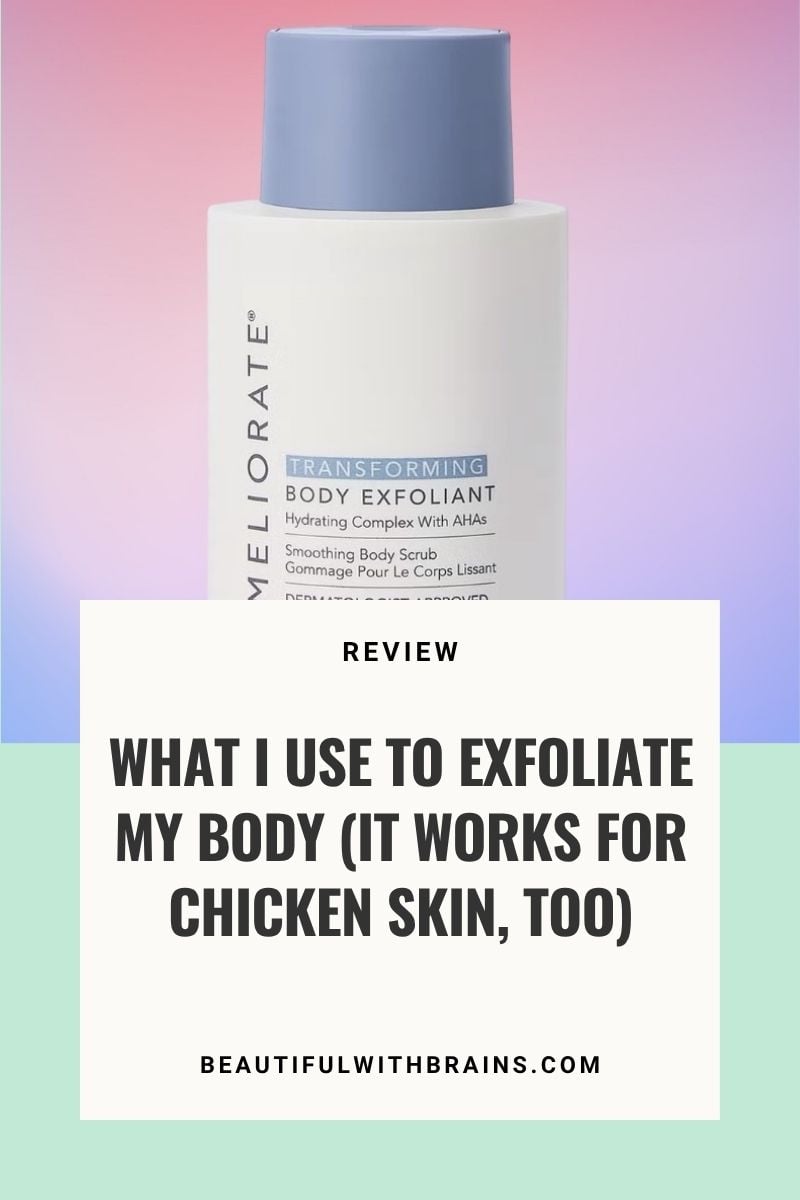
When was the last time you exfoliated your body? If you’re anything like me, you’re slathering your fave acid on your face every other day – heaven forbid those pesky dead cells roughen up your skin and steal its glow. Your body? You even forget you have one. Hidden under layers of clothing for most of the year, you only realise how much you’ve neglected it when the first rays of spring shine through.
Now your skin feels thicker than it should. It’s roughed up in patches. A little dry, too. How do you fix this mess?! Get yourself a lactic acid treatment, like Ameliorate Transforming Body Lotion. In this review, I’m sharing why (oh and it works for Kelatoris Pilaris, too.)
- What’s In Ameliorate Trasforming Body Lotion?
- The Rest Of The Formula & Ingredients
- Texture
- Fragrance
- How To Use It
- Packaging
- Performance & Personal Opinion
- What I Like About Ameliorate Transforming Body Lotion
- What I DON’T Like About Ameliorate Transforming Body Lotion
- Who Should Use This?
- Does Ameliorate Trasforming Body Lotion Live Up To Its Claims?
- Price & Availability
- Do You Need It?
What’s In Ameliorate Trasforming Body Lotion?
AMMONIUM LACTATE TO EXFOLIATE SKIN
The old formula used lactic acid, the gentlest member of the Alpha Hydroxy Acids (AHAs), a family of exfoliants. This one uses a derivative, Ammonium Lactate. It’s made by combining lactic acid with ammonium hydroxide. The latter raises the pH of lactic acid, so your skin tolerates it better (it means you can use it in higher concentrations).
Like lactic acid, Ammonium Lactate works by dissolving the glue that holds skin cells together. Once they slough off, your skin become softer, smoother and brighter. Plus, it’s super hydrating: it attracts water from the air into the skin, increasing its moisture levels throughout the day. Does Ammonium Lactate fare as well?
A 1989 study comparative efficacy of 12% ammonium lactate lotion and 5% lactic acid lotion in the treatment of moderate to severe xerosis (dry skin). According to the paper, “Results showed 12% ammonium lactate lotion was significantly more effective than 5% lactic acid lotion in reducing the severity of xerosis in both the 3-week, twice-a-day treatment period and the following 3-week, no-treatment (regression) period.” So yes, it does the job.
While more hydrating than exfoliating, it alleviates symptoms of kelatoris pilaris, a.k.a. chicken skin. It’s a harmless but annoying condition that shows up as a scattered, patchy rash made up of very small red/tan bumps. Unfortunately, there’s no cure. But exfoliating regularly with ammonium lactate can keep it under control. I say regularly because it can take weeks before you start to see results. Keep at it!
Related: Glycolic Acid VS Lactic Acid: Which One Should You Choose?
SWEET ALMOND OIL TO MOISTURISE SKIN
Out of all the oils out there, Ameliorate Transforming Body Lotion chose sweet almond oil as its base. Wonder why? Sweet almond oil dries quickly. It has a lightweight texture that sinks fast into the skin without leaving a greasy residue behind. Plus, it’s super moisturising. It creates a barrier on the skin that traps moisture in, helping skin stay soft and hydrated for hours.
Struggling to put together a skincare routine that banishes dryness and makes your skin supple and dewy? Download your FREE “Best Skincare Routine For Dry Skin” to get started (it features product recommendations + right application order):
The Rest Of The Formula & Ingredients
NOTE: The colours indicate the effectiveness of an ingredient. It is ILLEGAL to put toxic and harmful ingredients in skincare products.
- Green: It’s effective, proven to work, and helps the product do the best possible job for your skin.
- Yellow: There’s not much proof it works (at least, yet).
- Red: What is this doing here?!
- Aqua/Water/Eau: It’s the solvent that holds everything else together.
- C12-15 Alkyl Benzoate: A synthetic ester that make the formula feel nice on your skin. It gives that silky, non-greasy glide when you apply it so it doesn’t drag or feel sticky.
- Glycerin: One of the most researched humectants in all of skincare, it. works by pulling water from the air and from deeper layers of your skin up to the surface to keep things hydrated.
- Ethylhexyl Palmitate: Another ester, this one derived from palm oil, and again it’s mostly there for texture and skin feel. It makes the formula feel more velvety and luxurious. Some people find it comedogenic.
- Cetearyl Alcohol: I know it says alcohol and your brain goes “drying” but please ignore that instinct because this is a fatty alcohol which is basically the opposite. It thickens the formula, conditions the skin, and acts as an emulsifier to keep the water and oil parts from separating.
- Fragrance (Parfum): This is the catch-all term for whatever scent blend they’ve used and it could be dozens of individual aroma chemicals lumped under one word. It’s there purely so the product smells nice, there’s no skin benefit. If you have sensitive skin or a history of contact dermatitis this is the ingredient you want to be most cautious about.
- Glyceryl Stearate: An emulsifier that keeps the water and oil phases blended and stable so the formula doesn’t separate in the bottle. It also has mild conditioning properties.
- Peg-100 Stearate: Works alongside glyceryl stearate as part of the emulsification system, this one being water-soluble. Together they create a stable emulsion that holds together over the shelf life of the product.
- Dimethicone: A silicone that creates that instantly smooth, slightly slippery skin feel you get right after applying a lotion. It also forms a light film on the surface which helps lock moisture in. Non-comedogenic.
- Phenoxyethanol: A preservative and its whole job is to stop bacteria, mould and yeast from colonising your product and making it unsafe.
- Hydroxyethylcellulose: A plant-derived thickener that gives the formula its body and stops it from being too watery or runny. It also helps everything spread evenly when you apply it.
- Cetearyl Glucoside: A gentle emulsifier made from cetearyl alcohol and glucose so it’s got a plant-derived origin. It helps keep the formula stable and contributes to a smooth texture that doesn’t feel greasy.
- Xanthan Gum: A natural polysaccharide used to thicken and stabilise the formula so it doesn’t separate or go weird over time.
- Sodium Benzoate: A preservative that targets bacteria and fungi in the formula, usually paired with potassium sorbate to cover a broader spectrum.
- Sodium Stearoyl Glutamate: This one’s derived from an amino acid (glutamic acid) and it works as both an emulsifier and a skin conditioning agent. It helps keep the formula stable and has mild moisturising properties on top of that.
- Tocopheryl Acetate: This is vitamin E in its most stable form. It’s in there as an antioxidant to stop the formula from oxidising and going off, but it also has some skin-soothing and barrier-supporting benefits for you directly. Not as potent as pure vitamin E but way more stable in a formula.
- Potassium Sorbate: Another preservative, this one specifically targeting moulds and yeasts. It works as a team with sodium benzoate and together they’ve got the microbial bases covered.
- Pentylene Glycol: This one’s doing a few things at once – it’s a humectant so it draws moisture into the skin, it improves the texture and feel of the formula, and it also helps the preservative system work more effectively.
- Disodium Edta: A chelating agent which basically means it grabs onto metal ions (like calcium and magnesium from water) and stops them from destabilising the formula or messing with the preservatives.
- Hydrolyzed Milk Protein: Milk proteins that’ve been broken down into smaller fragments so they can actually penetrate the skin and do something useful. They help with moisture retention, improve skin texture, and have mild film-forming properties.
- Lactic Acid: An AHA that exfoliates by loosening the bonds between dead skin cells so they shed more easily. At the concentration you’d find in a body lotion it’s more of a gentle resurfacing and pH-adjusting ingredient than a hardcore exfoliant. Regular use does increase sun sensitivity so SPF is a good idea.
- Serine: An amino acid that’s naturally found in your skin’s own natural moisturising factor. It helps the skin hold onto water and contributes to that hydrated, plump feeling.
- Sodium Lactate: The sodium salt of lactic acid and another NMF component your skin already recognises. It’s a good humectant that draws water into the skin and helps keep hydration levels up.
- Sorbitol: A sugar alcohol humectant that attracts moisture and helps keep skin feeling soft and conditioned. It also smooths out the texture of the formula itself.
- Urea: Honestly urea is so underrated and I will die on this hill. It’s a natural component of the skin’s NMF so your skin already knows what to do with it, and it both attracts moisture and helps break down rough, thickened skin at higher concentrations. At the levels in a lotion it’s more of a hydration and softening ingredient. Great for dry rough patches.
- Benzyl Salicylate: This is a fragrance component, specifically one of the 26 EU-designated fragrance allergens that have to be declared by name on ingredient labels. It’s a naturally occurring compound found in a lot of essential oils and used in perfumery for its floral undertones. If fragrance is a trigger for your skin, this is one to keep an eye on.
- Limonene: Another declared fragrance allergen, this one a citrus-derived compound that gives that fresh clean scent. It has to be listed separately precisely because it’s a known sensitiser, especially in its oxidised form. Patch test if you know your skin reacts to citrus-heavy products.
- Hexyl Cinnamal: Yet another one from the EU’s fragrance allergen list, a synthetic aroma chemical with a floral slightly spicy profile. It’s there for scent, full stop. If benzyl salicylate and limonene are flagged for you, so is this one.
- Sodium Chloride: It’s literally salt. Used here to adjust the viscosity and help stabilise the emulsion.
- Geraniol: A naturally occurring fragrance alcohol found in rose and geranium oil among others. Like the others it’s on the EU’s declared allergen list which is why it’s broken out separately instead of hiding under “fragrance.” Potential sensitiser if you’re fragrance-reactive.
- Disodium Phosphate: A buffering agent that helps keep the formula’s pH stable and within a skin-friendly range.
- Sodium Phosphate: Works with disodium phosphate to create a phosphate buffer system that stops the formula’s pH from shifting over time.
- Polysorbate 60: An emulsifier derived from sorbitol and fatty acids that helps keep the oil and water components blended. It also contributes to a slightly lighter texture which probably helps this feel more like a lotion than a heavy cream.
- Citral: A naturally occurring aldehyde in citrus essential oils and lemongrass, used here as a fragrance ingredient for that fresh lemony note. Also on the EU allergen list so it has to be declared by name. If citrus-forward scents have ever irritated your skin, this is likely a contributor.
- Allantoin: Genuinely one of the most soothing ingredients you’ll see on a list. It’s derived from comfrey root, it calms irritation, promotes cell turnover, and is really good at counterbalancing any potential irritation from the exfoliating ingredients already in this formula.
- Moringa Oleifera Seed Oil: Oil from the seeds of the moringa tree, which honestly has a reputation for being a bit of a wonder ingredient. It’s rich in oleic acid, has antioxidant and anti-inflammatory properties, and absorbs well without feeling heavy.
Texture
Ameliorate Transforming Body Lotion has a runny consistency that makes it a bit of a pain to apply. If you’re not careful, it can drip everywhere (trust me on this one).
Fragrance
FYI, the cream smells… yoghurty. Kinda makes you wonder what the point of adding citrus oils was. They can irritate skin but hey they smell good. Heres, it’s the other way around. The scent didn’t irritate my skin, but didn’t wow me either.
How To Use It
Every other day, after a shower, all over your body (or any areas that need some special TLC).
Packaging
The new version comes in a round bottle that looks so much better (hey, looks count too!). It’s practical to use, if you’re careful.

Performance & Personal Opinion
Ameliorate Transforming Body Lotion is so lightweight, I doubted it was enough to tackle my very dry skin. I shouldn’t have worried. I applied it in the morning after a shower and a few hours later my skin was still soft and smooth. I like how gentle it is. Unlike scrubs, it doesn’t feel gritty or abrasive when I rub it on. It just smoothes out any bump and rough area without irritating skin or leaving a greasy residue behind. I can get dressed straight afterwards.
Granted, I don’t use it every day. Your body may take more exfoliation than your face, but I’m never been a fan of overdoing it. A couple of times a week is the perfect balance for me. That’s enough to remove the dead cells that accumulate on my body without destroying my skin’s protective barrier. The rest of the week, I slather on a richer moisturizing cream to quench my skin’s thirst. I don’t have keratosis pilaris, so I can’t vouch for that. But if I did, I’d give it a try. Science says lactic acid helps, and there’s plenty of that here. Just don’t expect results overnight.

What I Like About Ameliorate Transforming Body Lotion
- It’s genuinely lightweight but still delivers
- Skin stays soft and smooth for hours after application, not just the first ten minutes
- No grittiness, no abrasion – it smooths out bumps and rough patches without your skin feeling like it’s being attacked
- Zero greasy residue, so you can get dressed straight after without doing that weird waiting-around thing
- Gentle enough to use on the whole body without irritating skin
- Lactic acid content makes it a solid option to try if you have keratosis pilaris, given the actual science behind it
What I DON’T Like About Ameliorate Transforming Body Lotion
- The consistency is quite runny and drips if you’re not careful – application is messier than it needs to be
- Those citrus-derived allergens (limonene, citral, geraniol) are in there for a scent that isn’t even nice – that’s a trade-off that doesn’t really pay off
- Not something you’d want to use every single day, so if you’re looking for a one-product body routine this probably isn’t it
Who Should Use This?
- Anyone with chronically dry, rough, or bumpy body skin who hasn’t found a moisturiser that actually lasts
- People dealing with keratosis pilaris
- People who want gentle chemical exfoliation on their body without committing to a separate scrub or treatment step
- Probably not the one if you have fragrance-sensitive skin, given the allergen load from those citrus and floral fragrance components
Does Ameliorate Trasforming Body Lotion Live Up To Its Claims?
| CLAIM | TRUE? |
|---|---|
| A lightweight, everyday body lotion designed for Keratosis Pilaris that both exfoliates and moisturises. | True. |
| It smooths away bumps, softens and protects skin and intensely moisturises for 24 hours. | Mostly true. It intensely moisturises, but not for 24 hours. |
| 87% agreed that the appearance of their skin had improved and felt softer and smoother * *Tested on 77 people with rough, dry, bumpy ‘chicken skin’ (Keratosis Pilaris) in a 4 week independent consumer trial |
This is impressive but keep in mind that researchers simply asked people if they thought the lotion worked. They didn’t conduct any scientific tests to reach this conclusion. |
Price & Availability
$33 at Boots, Cult Beauty, Dermstore, and Look Fantastic
Do You Need It?
If you have kelatosis Pilaris, this is a great lotion to consider.
Ingredients
AQUA/WATER/EAU, AMMONIUM LACTATE*, C12-15 ALKYL BENZOATE, GLYCERIN, PRUNUS AMYGDALUS DULCIS (SWEET ALMOND) OIL, ETHYLHEXYL PALMITATE, CETEARYL ALCOHOL, FRAGRANCE (PARFUM), GLYCERYL STEARATE, PEG-100 STEARATE, DIMETHICONE, PHENOXYETHANOL, HYDROXYETHYLCELLULOSE, CETEARYL GLUCOSIDE, XANTHAN GUM, SODIUM BENZOATE, SODIUM STEAROYL GLUTAMATE, TOCOPHERYL ACETATE, POTASSIUM SORBATE, PENTYLENE GLYCOL, DISODIUM EDTA, HYDROLYZED MILK PROTEIN, LACTIC ACID, SERINE, SODIUM LACTATE, SORBITOL, UREA, BENZYL SALICYLATE, LIMONENE, HEXYL CINNAMAL, SODIUM CHLORIDE, GERANIOL, DISODIUM PHOSPHATE, SODIUM PHOSPHATE, POLYSORBATE 60, CITRAL, ALLANTOIN, MORINGA OLEIFERA SEED OIL. *FROM LACTIC ACID.
They offer a fragrance free version. You should update this post.