
Last Updated on October 13, 2026 by Giorgia Guazzarotti
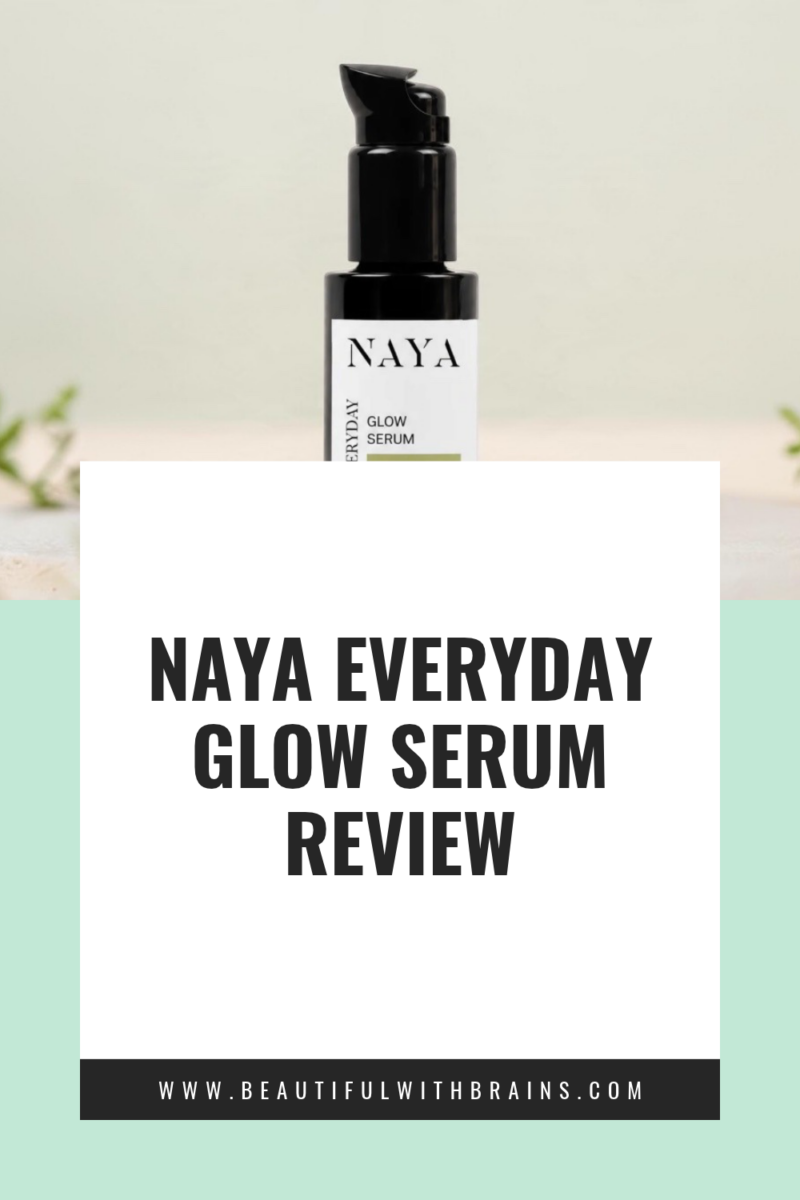
My skincare motto? Less is more. I can’t be bothered to layer 10+ products on my skin to try and fit every IT ingredient in – especially when a lot of these IT ingredients don’t even work! I want a handful of products packed to the brim with powerful actives, in high enough concentrations for them to work their magic on my skin. It’s not too much to ask, is it?
Naya comes to the rescue. The founder, Sarah Zimmer, has my same philosophy: “I wanted a performance driven skincare line formulated with fewer premier ingredients at higher concentration. Products that I could feel good about for their ‘botanical science’, proven effectiveness and seed to skin life-cycle.”
The icing on the cake? Naya uses only plant-based ingredients that have been proven to work. Bonus points, they’re sustainable, too. I’ve had the chance to try their Everyday Glow Serum, a plant-based vitamin C serum that promises to make your skin glow. Does it deliver?
The Verdict
My rating: 3.5/5
Best for: Sensitive and acne-prone skin that wants the benefits of vitamin C without the irritation.
Skip it if: You want serious brightening results or you’re already happy with your L-Ascorbic Acid serum.
What I like: It’s lightweight, sinks in quickly, and leaves my skin soft, hydrated and silky smooth. No greasy mess here.
What I don’t: Where’s the glow?! My skin feels lovely after using it, but I can’t say it looks much brighter.
Bottom line: Naya Everyday Glow Serum didn’t give me the glow it promised. But I wouldn’t write it off just yet. It uses a gentler, more stable form of vitamin C that also helps fight acne. If your skin can’t handle pure vitamin C or you want something plant-based that won’t go bad in a few weeks, this is worth a try. Just don’t expect miracles in the brightening department.
Ingredients In Naya Everyday Glow Serum: What Does The Science Say?
Sodium Ascorbyl Phosphate (Vitamin C) To Fight Wrinkles + Acne
Naya Everyday Glow Serum uses Sodium Ascorbyl Phosphate (SAP), a derivative of L-Ascorbic Acid (LAA), the pure form of Vitamin C. LAA is an anti-aging powerhouse proven to:
- It fights the free radicals that give you wrinkles
- It boosts the production of collagen, the protein that keeps skin firm
- It reduces transepidermal water loss, helping to keep skin hydrated
- It brightens skin and fades away hyperpigmentation
Good news: SAP does convert into LAA in the skin, so you’re getting all its benefits. The catch? It probably works a little less well. So why would you use SAP instead than LAA?
- Longer shelf life: LAA is famous for being unstable. It goes bad when exposed to light, heat and air. Even when you buy a freshly-made LAA serum that’s properly preserved to prolong its shelf-life, it usually lasts only a few short weeks. SAP is way stabler and lasts you for many months.
- Less irritation: High concentrations of LAA can irritate skin, especially if it’s sensitive. SAP is way gentler. All skin types can tolerate it.
- Acne-fighter: Unlike SAP, LAA can’t fight acne. Studies show SAP reduces sebum oxidation (a main cause of acne and inflammation) by up to 40%! It’s also more effective than 5% benzoyl peroxide and 0.1% differin.
If you have acne, sensitive skin or are simply tired of wasting a small fortune on vitamin C serums that go bad after a month, switching to Sodium Ascorbyl Phosphate makes sense.
Related: Is Sodium Ascorbyl Phosphate The Best Form Of Vitamin C For Acne-Prone Skin?
Cacay Oil To Moisturize Skin
Cacay oil is the new darling of the natural skincare world. For a reason. Cold-pressed from the nuts of the Amazonian cacay tree, this non-greasy and fast-absorbing oil is loaded with moisturizing fatty acids and antioxidants.
For starters, cacay oil contains more than 70% linoleic acid, a multi-tasking fatty acid that moisturises skin, soothes redness and irritation and helps treat acne. Plus, it’s also a source of Vitamins A and E, two powerful antioxidants that can neutralise free radicals before they give you wrinkles.
P.S. Cacay oil isn’t the only natural moisturizer in Naya Everyday Glow Serum. This baby also contains sunflower oil and mango seed butter. They create a barrier on the skin that keeps it soft and hydrated for hours on end.
Related: How Linoleic Acid Helps You Fight Acne
Personal Use & Opinion
You can tell Naya Everyday Glow Serum is plant-based. It’s green (it takes its colour from chlorophyll). How cool is that? Although it’s loaded with oils and butters, the texture is very lightweight, spreads easily and absorbs quickly without leaving a sticky residue behind.
I use it in the morning right before sunscreen. Vitamin C can help boost its sun protection and I want to take full advantage of that. The serum adds some extra moisture to my skin, leaving it softer, hydrated and silky smooth. But it didn’t give me too much of a glow. I guess that’s cos I’m used to 20% LAA serums and this is gentler than that.
I don’t think that’s necessarily a downside. Not everyone can tolerate LAA. Or wants to splurge on a serum that will go bad in a few weeks. Or likes to use serums that aren’t all natural.
Naya Everyday Glow Serum is more suitable for people with sensitive/acne-prone skin that are looking for a natural alternative to traditional Vitamin C serums. As the serum helps treat acne (which I don’t have), they will see better results. But every skin type can use it.
Where To Buy
Available at: £69.00 at Naya
Ingredients
Aqua, Caryodendron Orinocense Seed Oil, Sodium Ascorbyl Phosphate, Pentylene Glycol, Polyglyceryl-3 Dicitrate/Stearate, Bambusa Arundinacea Stem Cell Extract, Propanediol, Helianthus Annuus (Sunflower) Seed Oil, Mangifera Indica (Mango) Seed Butter, Salix Alba (Willow) Bark Extract, Tocopherol, Tremella Fuciformis Sporocarp Extract, Capparis Spinosa Bud Extract, Morus Nigra Leaf Extract, Rhodiola Rosea Root Extract, Aloe Barbadensis Leaf Extract, Xanthan Gum, Citric Acid, Chlorophyll.
i use the Ordinary LAA, it is so cheap i can throw it out after a few weeks, still save money
But what about wastage? I just tried the Naya serum as well, and I must agree – I love it! In particular in combination with the day cream. And it is amazing for my sensitive (and acne prone) skin.
Great write up as well! Really informative!