
Last Updated on July 25, 2026 by Giorgia Guazzarotti
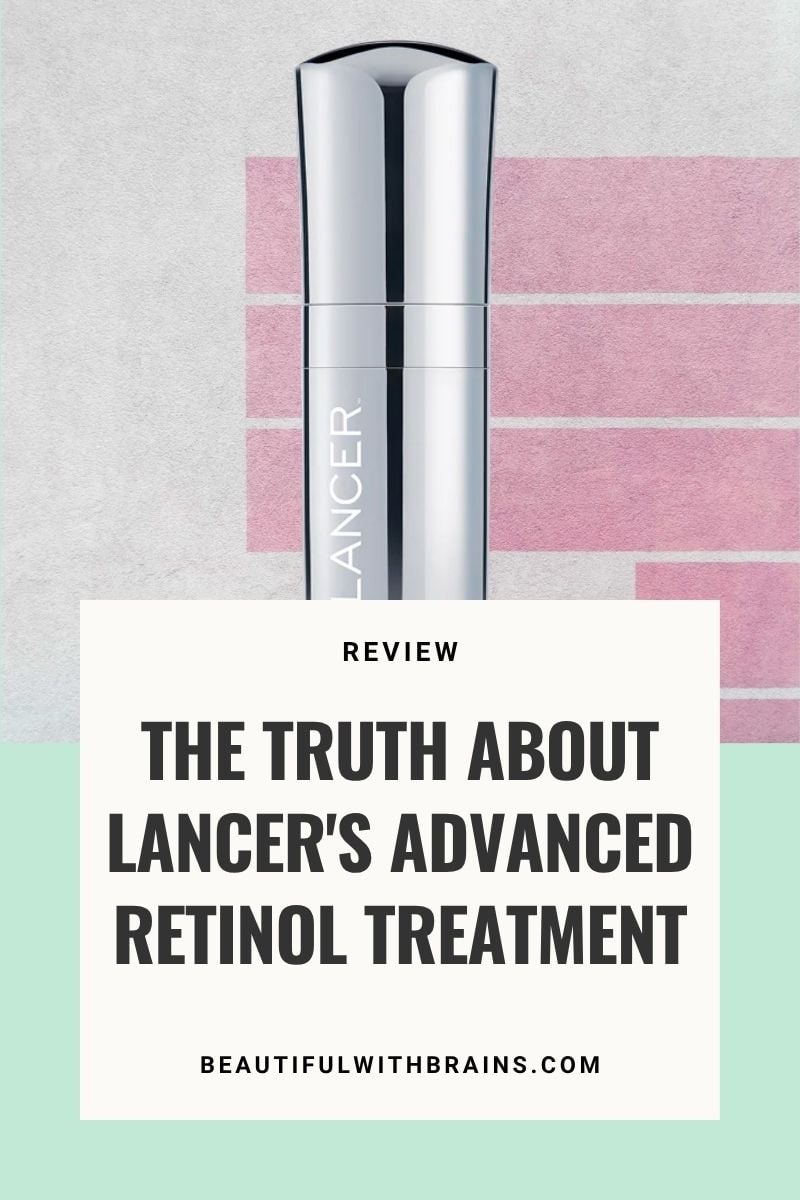
Lancer Advanced Retinol Treatment seems to be one of those skincare products people either love or hate. Love because it does what it says on the tin. 1.25% retinol is super high concentration (yes, really!) that can reduce the appearance of fine lines and wrinkles. It’s also high enough that could trigger excess irritation in sensitive skin. The question here isn’t, “does it work or not?” It does. The question is,”is this the right advanced treatment for you?” Let’s find out.
Key Ingredients in Lancer Advanced Retinol Treatment: What Makes It Work?
RETINOL
Retinol is a form of vitamin A, the gold standard for ant-aging. Once it’s on your skin, your cells convert it into retinoic acid, the form that increases collagen production and speeds up cell turnover (the skin’s natural exfoliating process). The result is firmer skin, smoother texture, less visible wrinkles… Through its exfoliation process, it also helps treat acne and fade away dark spots. Now the part everyone wants to skip: side effects are why most people give up on retinol before it does anything for them. Redness, stinging, flaking, dryness. Totally normal in the first few weeks while your skin adjusts. Go slow. Start with once or twice a week and increase to every other night. And wear sunscreen. Retinol makes your skin more sun-sensitive, no exceptions.
BAKUCHIOL
Bakuchiol comes from the seeds of a plant called Psoralea corylifolia. It’s nicknamed “nature’s retinol” a lot because it works in a similar way. A 2019 trial in the British Journal of Dermatology ran bakuchiol against retinol head to head for 12 weeks, and bakuchiol matched retinol’s results while causing way less irritation. The catch? the bakuchiol group used it twice a day and the retinol group once a day, so it’s not a perfectly fair fight. In a product that already has retinol in it, bakuchiol isn’t there to replace it. It’s backup.
SILICONES
Retinol and bcakuchil take their sweet time to work. In the meantime, you get silicones to temporarily smooth out the texture of your skin. Dimethicone is the main one. It sits on top of your skin and forms a breathable layer that holds moisture in. Plus, it fills in all the nooks and crannies of your skin, so that fine lines, pores, and imperfections look smaller on the naked eye. Side effects here are basically none. And can we kill the myth that silicones “suffocate” skin or trap gunk underneath. Under normal use, that’s not what’s happening, and they’re not comedogenic the way people assume. The real problem with silicones is that their effect is temporary. As you cleanse your skin, they get washed away and your fine lines, large pores, etc are still there.
Related: Are Silicones Bad In Skincare?
SHEA BUTTER
Shea butter is a fat from the nut of the African shea tree. It’s rich in oleic, stearic, and linoleic acids, all fatty acids that closely mirror what’s already in your skin barrier. A 2025 study measured actual water loss and hydration levels and found shea butter cut water loss by nearly 38% and boosted hydration within 24 hours. In this product, shea butter moisturises skin. It also does damage control. Retinol strips moisture and messes with your barrier while it’s doing its renewal work, and shea butter’s job is to feed lipids back in so you don’t end up dry, flaky, and reactive.
Performance & Personal Opinion
This is a serum, not a cream, and it behaves like one: thin, silky, and it sinks in fast without sitting on top of your skin or leaving a greasy film. A little covers a lot of ground; you’re working with one to two pumps for your whole face, neck, and décolleté, not a palmful. If you layer a moisturiser on top, it shouldn’t pill. Apply it at night, to clean, completely dry skin. Not damp, dry. One to two pumps, massaged in with upward strokes across the face, neck, and décolleté. If your skin is new to retinol or you notice redness or mild irritation, start with once or twice a week and slowly increase frequency to every other night (never use it on nights you exfoliate).
It comes in a pump bottle. The pump matters more than it sounds like it should: it controls dosing so you’re not accidentally overusing a retinol that’s meant to be applied sparingly, and it keeps air exposure down between uses, which helps a retinol formula hold onto its potency for longer than an open-jar format would. Don’t expect overnight anything. The realistic timeline is weeks, not days: smoother texture and a slightly more even tone tend to show up first, with fine lines softening gradually over sustained, consistent use.
Price & Availability
$97.00 at Dermstore, Lancer Skincare, Look Fantastic, Nordstrom, and Ulta
The Verdict: Should You Buy It?
This one actually delivers. 1.25% retinol backed up by bakuchiol, with shea butter and silicones keeping your skin from drying out while the retinol gets on with it. But it’s not a gentle ride, so if you’re new to retinol, start once or twice a week and build up. Don’t dive in nightly and expect your skin to just cope. Got sensitised or reactive skin right now? Skip this one. This much retinol is not for every skin type.
Ingredients
Water, Brassica Alcohol, Glycerin, Neopentyl Glycol Diethylhexanoate, Propanediol, Bis-Stearyl Dimethicone, Trimethylpentanediol/Adipic Acid Copolymer, Butyrospermum Parkii (Shea) Butter, Dimethicone, Squalane, Potassium Cetyl Phosphate, Retinol, Polysorbate 20, Caprylic/Capric Triglyceride, Vitis Vinifera (Grape) Seed Oil, Helianthus Annuus (Sunflower) Seed Extract, Rosmarinus Officinalis (Rosemary) Leaf Extract, Oryza Sativa (Rice) Bran Extract, Opuntia Ficus-Indica Extract, Glycine Soja (Soybean) Extract, Saccharomyces Cerevisiae Extract, Hydrolyzed Collagen, Bakuchiol, Sodium Hyaluronate, Polymethylsilsesquioxane, HDI/Trimethylol Hexyllactone Crosspolymer, Caprylhydroxamic Acid, 1,2-Hexanediol, Xanthan Gum, Carbomer, Polysilicone-11, Disodium EDTA, Fragrance