
Last Updated on October 7, 2026 by Giorgia Guazzarotti
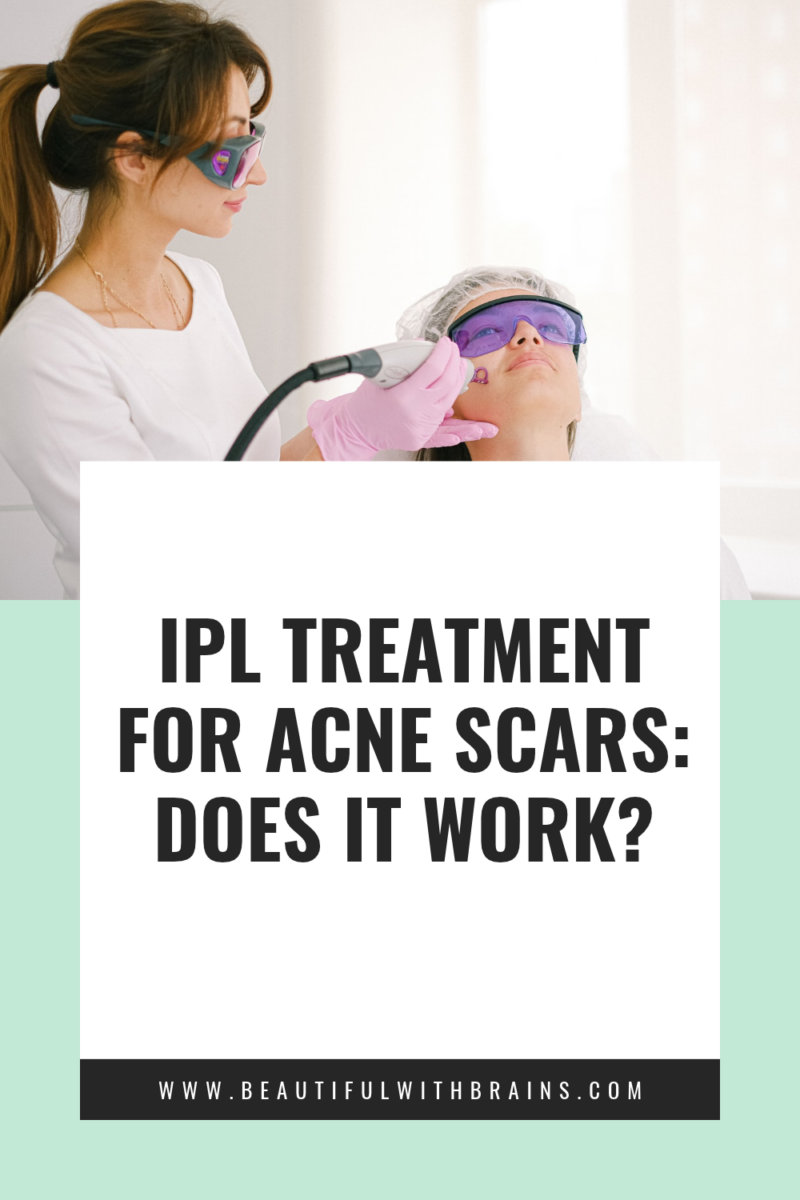
Can IPL get rid of acne scars? Sometimes. But probably not the kind of scars you think. IPL is much better at fading the red and brown marks acne leaves behind than fixing the appearance of acne scars. And yes, there’s a difference. Red and brown marks are discoloration. Your skin is still flat. Rolling, boxcar and ice-pick scars are actual scars. IPL can target colour pretty well. Rebuilding missing skin? That’s a much bigger ask. That doesn’t mean IPL is useless for acne scars. It means you need to know what you’re actually treating before you hand over your money. So, does IPL treatment for acne scars really work? Here’s what the science says.
What Is IPL Treatment?
IPL stands for Intense Pulsed Light. And despite everyone calling it “IPL laser,” it isn’t a laser. Traditional laser treatments usually use one single wavelength of light. IPL uses broad-spectrum light and throws out a bunch of different wavelengths of light at once. Filters then narrow that broad spectrum of light wavelengths down depending on what your practitioner wants to target.
That sounds horribly technical, but all you really need to know is this: different colours in your skin absorb different types of light. Brown spots contains melanin. Redness comes from blood vessels containing haemoglobin. IPL can target both. The light energy targets that pigment, turns into heat and damages it. Your body then clears the damaged pigment away. Voilà: less redness or fewer dark spots.
IPL can also heat the deeper layers of your skin, which may stimulate some collagen production. And that little fact has spawned a LOT of claims about IPL therapy treating acne scars. But here’s the problem: making some new collagen and rebuilding a deep acne scar are not the same thing.
Does IPL Work For Acne Scars?
Before you spend a small fortune on this non-invasive solution for acne scarring, figure out what you’re actually treating.A lot of people call every mark left behind by acne a “scar.” But red marks, brown marks and dents in the skin are three different problems. And IPL doesn’t work equally well for all of them.
| What You Have | What It Looks Like | Does IPL Work? |
|---|---|---|
| PIE | Flat red or pink marks | Yes. This is where IPL shines. |
| PIH | Flat brown or dark marks | It can help, but skin tone matters. |
| Rolling scars | Wavy, depressed skin | Usually not enough on its own. |
| Boxcar scars | Broad, shallow or deep dents | Poor choice for deeper scars. |
| Ice-pick scars | Small, deep holes | No. IPL won’t fill these in. |
If Your “Scars” Are Red Marks: IPL Can Help
Those flat red or pink marks that stick around long after the pimple has gone are called post-inflammatory erythema, or PIE. Fancy name. Simple problem: the skin is still red because tiny blood vessels in the area are dilated. This is exactly the kind of thing IPL is good at targeting. The light is absorbed by haemoglobin, the red pigment in your blood, which helps reduce that leftover redness. And yes, it actually works. In one study, people with stubborn red and brown acne marks had between three and seven IPL sessions. More than 8 in 10 saw at least some clearing of the redness and pigmentation. That makes IPL a pretty effective treatment when the problem is leftover redness rather than a dent in the skin.
Related: Acne Scars Vs Acne Marks: What’s The Difference And How To Treat Them
If Your “Scars” Are Brown Marks: IPL May Help Too
Brown or greyish marks left behind after acne are called post-inflammatory hyperpigmentation, or PIH. Again, these aren’t true scars. Your skin hasn’t caved in. It’s just producing too much pigment in that spot. IPL can target that excess melanin, too, and the same study found that it helped fade brown marks as well as redness. There is one big catch, though: the more melanin you naturally have in your skin, the trickier IPL becomes.
Why? Because IPL can’t magically tell the difference between the pigment you want gone and the melanin that belongs in your skin. That increases the risk of burns and unwanted changes in pigmentation if the treatment isn’t done properly. So if you have darker skin tone, this is definitely not the time to hunt for the cheapest IPL deal on Groupon.
Related: How To Treat Post-Inflammatory Hyperpigmentation With Skincare Products
If You Have Pitted Acne Scars: Not On Its Own
Honestly? It depends on the type of scar you have… and the answer is mostly no anyway.
Rolling scars are those soft, wavy dents that make your skin look uneven from certain angles. They’re often caused by little fibrous bands underneath the skin pulling it down. That’s why subcision works so well for them: it actually cuts those bands. IPL? It can stimulate collagen and may improve skin texture a little, sure. But it can’t cut anything. Save your money.
Boxcar scars look more like little craters. Some are shallow. Some are deep enough to make you wonder what your skin did to deserve this. Shallow ones can respond to treatments that improve uneven texture and encourage new collagen in the skin’s surface and upper layers. Deep ones are much harder to shift and often need stronger treatments than IPL.
Ice-pick scars are the tiny holes that look harmless until you realise they can go surprisingly deep. In fact, they’re often the deepest of the main pitted scar types! That’s why treatment options such as TCA CROSS or punch excision make more sense. They go after the scar itself. IPL is basically waving at it from the surface.
And when researchers actually put IPL acne treatment to the test on pitted scars, the results were pretty underwhelming. In one split-face study, IPL alone was compared with IPL plus a fractional picosecond laser. The combo improved thescars. IPL alone didn’t. That tells you pretty much everything you need to know. IPL may reduce the visibility of acne scars a little if there’s redness or pigmentation around them. But actually lifting the dents? Not really.
Related: How To Treat Acne Scars: The Complete Guide
How Many IPL Treatments Do You Need For Acne Scars?
Don’t expect one IPL session to erase months or years of acne marks. In one study on stubborn red and brown post-acne marks, people had between three and seven IPL treatments, spaced four to six weeks apart. Your treatment plan depends on what you’re treating, how severe it is, your skin tone, your skin type, and the IPL device and settings being used. Some people also need maintenance treatments if redness or pigmentation starts creeping back.
IPL Vs Microneedling For Acne Scars: Which Is Better?
If you have pitted acne scars, I’d choose microneedling over IPL. Why? Because microneedling actually gets your skin to make more collagen where those dents are. The needles create tiny injuries that kick-start wound healing, new collagen production and, over time, smoother skin. Studies show it can works particularly well for rolling scars. IPL is playing a different game. It’s much better at targeting redness and pigmentation around acne scars than rebuilding the scar itself. So if your “scars” are mostly red or brown marks, IPL may be the best option. If you can actually feel the dents in your skin, microneedling makes a lot more sense. And if the scars are deep? Neither may be enough on its own. That’s when you need to look at a combination of treatments, such as microneedling, subcision or fractional lasers, to get the best results.
Related: Everything You Need To Know About Microneedling For Acne Scars
What Are The Side Effects Of IPL For Acne Scars?
Expect slight redness, swelling, tenderness and sometimes crusting or itching for a few days. Dark spots may also look darker before they fade. So no, IPL isn’t risk-free. But in experienced hands, the usual side effects are temporary. Most people can get back to their normal activities pretty quickly, which is one reason IPL is popular for its minimal downtime.
FAQs
Is IPL Safe For Dark Skin?
It can be, but this is not the treatment to gamble on a bargain clinic. IPL goes after pigment. Darker skin has more pigment. See the problem? If the settings are wrong, the light can hit the pigment you actually want to keep and leave you with darker or lighter patches instead. That risk is higher in darker skin tones, so I’d only go to someone who treats darker skin regularly.
Can IPL Make Acne Scars Worse?
The dent itself? Probably not. The rest of your skin? Absolutely, if the treatment goes badly. Burns, extra redness and new dark or pale patches can happen. Pigment changes are a known IPL side effect, so “stronger settings = better results” is not a game I’d play with my face.
Does IPL Treat Active Acne Too?
A bit, yes. Enough to make me ditch proper acne treatment? Nope. Research shows IPL can reduce inflamed pimples, but the results aren’t always long-lasting. If you’re still breaking out all the time, I’d deal with the acne first. There’s not much point fading yesterday’s damage while today’s pimple is busy making tomorrow’s scar.
Who Is A Good Candidate For IPL Acne Scar Treatment?
Someone whose acne has left behind more colour than craters. IPL does a decent job on stubborn redness and pigmentation. If your main problem is deep pitted scars, though, save the IPL money for something that actually has a better shot at fixing them.
The Bottom Line
So, does IPL work for acne scars? For red and brown marks, yes. For actual pitted scars, not nearly as well as the marketing makes it sound. If colour is your problem, IPL can be worth the money. If you’re trying to fill dents, I’d spend that money on a treatment that actually targets the scar.