
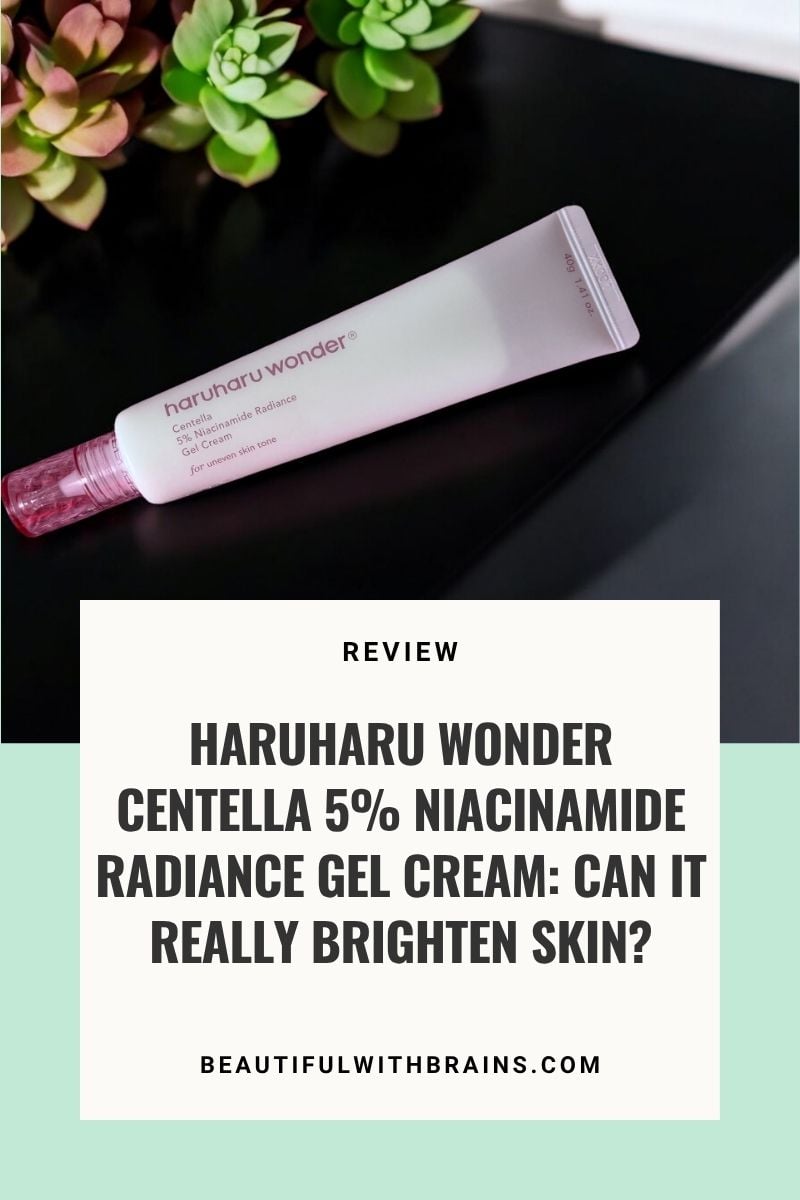
Have you ever wished a cream made you coffee? The full size of Haruharu Wonder Centella 5% Niacinamide Radiance Gel Cream comes in a giant coffee cup, which is kinda cool. The Koreans definitely know how to grab attention. But is the juice inside just as cool? Is it really like coffee for your skin, perking it up and making it radiate… or is jut clever marketing? In this review, I’ll tell you everything you need to know about this cream, including what it really can and can’t do, who it is for, and whether it deserves a spot in your skincare routine. Let’s dive in!
- Key Ingredients In Haruharu Wonder Centella 5% Niacinamide Radiance Gel Cream: What Makes It Work?
- The Rest Of The Formula & Ingredients
- Texture
- Fragrance
- Packaging
- How To Use It
- Performance & Personal Opinion
- What I Like About Haruharu Wonder Centella 5% Niacinamide Radiance Gel Cream
- What I DON’T Like About Haruharu Wonder Centella 5% Niacinamide Radiance Gel Cream
- Who Should Use This?
- Does Haruharu Wonder Centella 5% Niacinamide Radiance Gel Cream Live Up To Its Claims?
- Price & Availability
- The Verdict: Should You Buy It?
Key Ingredients In Haruharu Wonder Centella 5% Niacinamide Radiance Gel Cream: What Makes It Work?
NIACINAMIDE
Niacinamide is vitamin B3. It’s everywhere in Korean skincare right now (basically every second product has it, lol) and brands love positioning it as a brightener. Here’s the thing though: it does brighten, but not the way most people expect. It doesn’t exfoliate, it doesn’t block melanin production at the source. What it does is stop melanin from getting transferred into your skin cells in the first place.
The difference matters because the effect is slow and subtle. If you’re expecting the kind of visible results you’d get from something like vitamin C, tranexamic acid, or an AHA, you’ll probably be disappointed. Most people using a niacinamide moisturiser aren’t going to notice dramatic brightening. It’s more of a slow, cumulative, effect.
What it’s actually better known for in the research is barrier support. It boosts ceramide production in the skin, which is what keeps your barrier intact and stops water escaping. It also reduces sebum production at around 4-5% concentration, calms redness and inflammation, and has some solid evidence for improving the appearance of enlarged pores over time.
Related: Can You Use Niacinamide With Vitamin C?
CENTELLA ASIATICA LEAF WATER
Centella asiatica (cica, gotu kola, tiger grass, whatever your favourite brand calls it) contains compounds called asiaticoside and madecassoside, which tell your skin cells to make more collagen and stop overreacting to irritation.
The problem is this product uses leaf water, not an extract. Those compounds don’t dissolve easily in water, so leaf water (basically the watery fraction you get from processing the plant) contains very little of them. The studies showing collagen and anti-inflammatory benefits were done on concentrated extracts, not this. So what you’re actually getting here is hydration and maybe some light soothing. Not bad. Just not the impressive stuff centella is actually known for.
SQUALANE
Squalane is a hydrocarbon oil derived from squalene, which your skin actually produces naturally as part of sebum. The version in skincare used to come from shark liver (grim), but most brands now use plant-derived squalane, typically from sugarcane or olives. Phew!
It’s an emollient, which means its job is to sit in the upper layers of skin, fill in the gaps between cells, and stop water from escaping. Plus, it’s lightweight, non-comedogenic, stable, and works on basically every skin type including oily and acne-prone.
The Rest Of The Formula & Ingredients
NOTE: The colours indicate the effectiveness of an ingredient. It is ILLEGAL to put toxic and harmful ingredients in skincare products.
- Green: It’s effective, proven to work, and helps the product do the best possible job for your skin.
- Yellow: There’s not much proof it works (at least, yet).
- Red: What is this doing here?!
- Water: The base of pretty much every water-based skincare formula. It’s the solvent that dissolves and carries all the other ingredients.
- Propanediol: A humectant and solvent derived from corn sugar. It pulls moisture into the skin and helps other ingredients absorb and spread more effectively.
- Glycerin: A classic humectant that draws water from the air and deeper skin layers up to the surface.
- Butylene Glycol Dicaprylate/Dicaprate: A lightweight emollient ester. It softens and smooths the skin’s surface while giving the formula a silky, non-greasy finish.
- 1,2-Hexanediol: A multitasking ingredient that works as both a humectant and a preservative booster.
- Cetearyl Olivate: An emulsifier derived from olive oil. It’s what holds the water and oil phases of the formula together so they don’t separate.
- Panthenol: Also called pro-vitamin B5. It’s a humectant and skin-soother that draws moisture in, supports barrier repair, and has mild anti-inflammatory properties.
- Ammonium Acryloyldimethyltaurate/VP Copolymer: A synthetic polymer that acts as a thickener and texture enhancer.
- Sorbitan Olivate: Another olive-derived emulsifier that works alongside cetearyl olivate. Together they form a stable emulsion system.
- Carbomer: A polymer used to thicken and stabilise the formula. It’s what helps give the moisturiser its gel-like body and ensures it holds together consistently.
- Sclerotium Gum: A natural thickener and texture agent produced by a type of fungus. I
- Tromethamine: A pH adjuster. Ingredients like niacinamide and carbomer need the formula to be at a specific pH to work properly and feel good on skin.
- Helianthus Annuus (Sunflower) Seed Oil: A light plant oil rich in linoleic acid, which is the fatty acid oily and acne-prone skin is often deficient in. Replenishing linoleic acid helps keep the skin barrier healthy and can actually help regulate sebum quality.
- Xanthan Gum: A polysaccharide thickener produced through fermentation. It helps stabilise the emulsion, gives the formula a smooth and consistent texture, and contributes to that pleasant slip on application.
- Madecassoside: A purified active compound extracted from centella asiatica. It promotes collagen synthesis, soothes inflammation, and helps strengthen the barrier.
- Ethylhexylglycerin: A preservative and skin-conditioning agent. It works synergistically with 1,2-hexanediol to keep the formula protected from bacteria and other nasties, and it’s gentler than traditional preservatives.
- Disodium EDTA: A chelating agent that binds to metal ions in the formula. Trace metals can destabilise formulas and cause active ingredients to degrade faster. This prevents that.
- Xylitol: A sugar alcohol that works as a humectant, drawing moisture into the skin. It also has prebiotic properties, meaning it supports the skin’s natural microbiome by promoting beneficial bacteria.
- Ascorbic Acid: Pure vitamin C. At the concentration it’s likely present here, it’s primarily functioning as an antioxidant to protect the formula from oxidation and stabilise other ingredients.
Texture
The cream has a lightweight, lotion-like consistent that spreads easily onto the skin and absorbs in seconds. It’s not runny, but far from thick either and leaves no residue behind. Just the kind of texture oily ski likes.
Fragrance
It’s fragrance-free and that’s just how I like my lotions. Fragrance is the most irritating ingredient in skincare product, so unless your lotion stinks, there’s no reason to add it. Thankfully, the ingredients in this one have a rather inoffensive smell.
Packaging
Full disclosure: I was sent a sample of this cream by the brand’s PR team. The full size comes in a takeaway coffee cup. It’s super cool and totally unique. Leave it to the Koreans to come up with the most innovative packaging. The downsides? It looks quite impractical. I mean, a big takeaway coffee cup takes up quite a bit of space, specially when you’re travelling.
How To Use It
Like all moisturisers, you can use it in the evening, as the last step of your skincare routine. Just pat it on gently. You don’t need a huge amount. You could also use it in the morning, in between serum and sunscreen.
Performance & Personal Opinion
For such a lightweight cream, Haruharu Wonder Centella 5% Niacinamide Radiance Gel Cream is fairly hydrating. Not enough for dry skin, but oily skin craving that extra burst of moisture without a greasy finish or pore-clogging ingredients? This does the trick. It makes skin softer and smoother to the touch, and the niaciamide in it also helps strengthen your skin protective barrier too.
Here’s the thing though: Korean skincare promotes every niacinamide product under the sun as brightening. And to a small extent, it is… It’s true it can help you fade away dark spots, but it won’t you give you that lovely glow you get from exfoliants or plenty of hydration layers. So if that’s what you expect to see, prepare to be disappointed.
One more thing: unless you have oily skin with an intact moisture barrier, this won’t be a match for cold winter weather. Now it’s summer, my combination is lapping it up, but I’ll either be switching to something heavier or adding a few drops of rosehip oil to this one come September.
What I Like About Haruharu Wonder Centella 5% Niacinamide Radiance Gel Cream
- Lightweight gel-cream texture that spreads effortlessly and sinks into skin almost instantly without leaving a greasy film
- Fragrance-free formula, which makes it suitable for sensitive or irritation-prone skin
- Works particularly well for oily and combination skin needing hydration without heaviness or pore congestion
- Leaves skin feeling noticeably softer and smoother after use, even with a thin layer
- Includes niacinamide, which can help support the skin barrier over time
- Versatile use – comfortable both as a morning layer under sunscreen and as a simple evening moisturiser
What I DON’T Like About Haruharu Wonder Centella 5% Niacinamide Radiance Gel Cream
- Hydration level is limited; not rich enough for dry skin or compromised skin barriers, especially in colder weather
- “Radiance/brightening” effect is subtle and may not match expectations set by marketing claims around niacinamide
- Packaging is bulky and not travel-friendly, taking up more space than typical skincare formats
- May feel underwhelming as a standalone moisturiser in winter unless paired with oils or heavier products
- The “instant glow” effect is mild, so results can feel less dramatic compared to exfoliating or more intensive hydrating routines
Who Should Use This?
- This is best suited for oily and combination skin types looking for a light, non-greasy moisturiser that won’t clog pores or feel heavy.
- It’s also a good fit if you prefer fragrance-free skincare and want a simple barrier-supporting step with niacinamide.
- It works especially well in warmer months or humid climates, or as part of a layered routine where hydration comes from multiple products.
- If your skin is dry, very dehydrated, or easily compromised in winter, this alone likely won’t be enough without richer support underneath or on top.
Does Haruharu Wonder Centella 5% Niacinamide Radiance Gel Cream Live Up To Its Claims?
| CLAIM | TRUE? |
|---|---|
| A soft, lightweight gel cream to brighten the complexion and even the skin tone. | Mostly true. It doesn’t do much for brightening. |
| Sensitive skin friendly: Centella leaf water provides calming relief to skin irritation | True. |
Price & Availability
$30 at Anthropologie, Asos, Shein, Stylevana, and Yes Style
The Verdict: Should You Buy It?
If you’re looking for a lightweight hydrating night cream for your oily, combination skin, this is a great option to consider. Just don’t expect much in the brightening department.
Ingredients
Water, Niacinamide(5%), Propanediol, Centella Asiatica Leaf Water (3.8%), Glycerin, Butylene Glycol Dicaprylate / Dicaprate, Squalane (2%), 1,2-Hexanediol, catearyl Olivate, Panthenol, Ammonium Acryloyldimethyltaurate/VP Copolymer, Sorbitan Olivate, Carbomer, Sclerotium Gum, Tromethamine, Helianthus Annuus (Sunflower) Seed Oil, Xanthan Gum, Madecassoside (1,000ppm), Ehtylhexylglycerin, Disodium EDTA, Xylitol, Ascorbic Acid.