
Last Updated on August 31, 2026 by Giorgia Guazzarotti
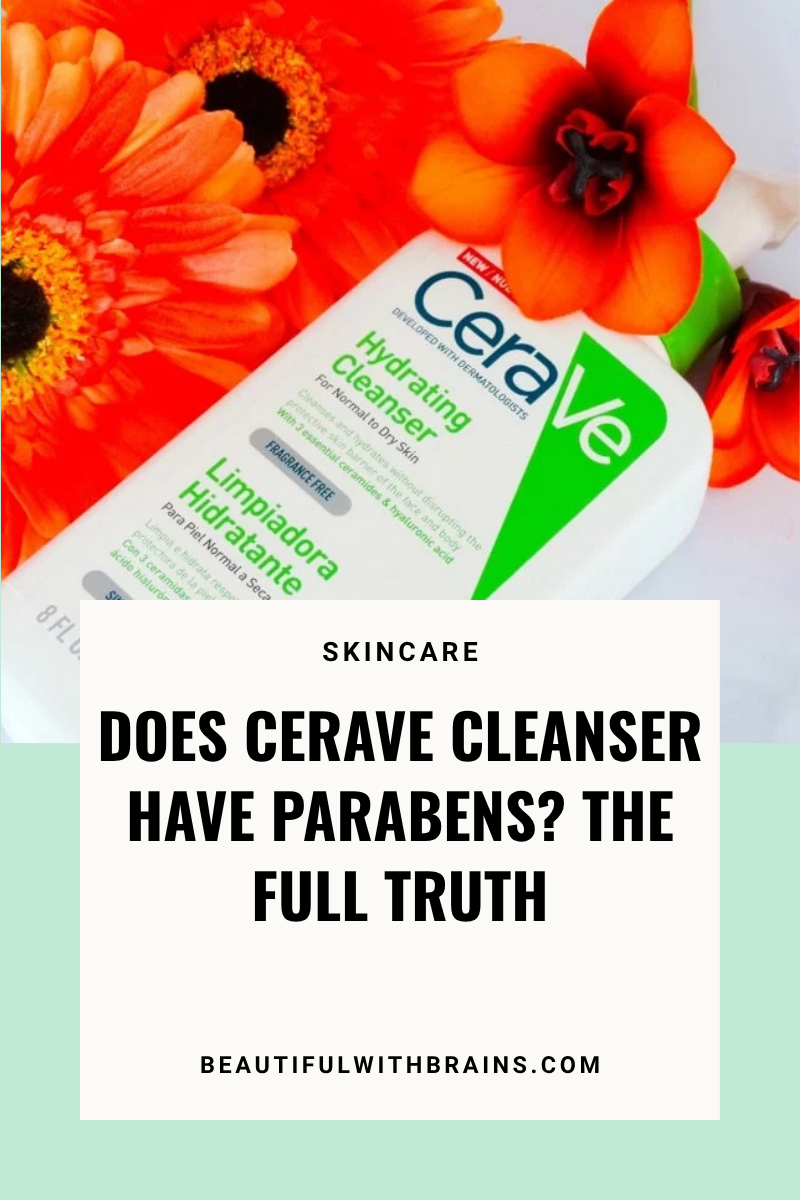
Does Cerave Cleansers have parabens? Parabens have somehow become one of skincare’s biggest villains. But, as usual, the real story is a lot more complicated than the scary stuff you hear online. CeraVe built its reputation on essential ceramides and dermatologist-backed formulas that can heal the driest of skin, but does that mean they ditched parabens completely? And if they did, what are they using instead to keep bacteria from turning your cleanser into a petri dish? The short answer: most CeraVe cleansers are paraben-free. There are exceptions. So, let’s take a look at what’s actually in the most popular CeraVe’s facial cleansers:
What Parabens Are And Why Brands Stopped Using Them
Parabens are preservatives. Basically, they’re the ingredients stopping your cleanser from turning into a tiny science experiment in your bathroom. And yes, you do want preservatives in your cleansers. “Preservative-free” may sound lovely and natural on a label, but microbes don’t care about clean beauty marketing. Without preservatives, they’d grow in your cleanser and give you an infection. Now parabens don’t look so scary anymore, do they?
Parabens became so popular because, quite frankly, they’re really good preservatives: they’ve been used for decades, work at low concentrations, and rarely cause allergies. So how did we get from useful preservative to OMG, get this out of my face cleanser? The natural brigade misread the studies and ran with the scariest interpretation. For example, a 2004 study found parabens in breast tumour tissue. It did not prove parabens caused those tumours (heck, there’s also a lot of water in those tumour samples and no one goes, “let’s ban water!,” know what I’m saying?). But “parabens were found in breast tumours” quickly became “parabens cause breast cancer,” and the ingredient’s reputation never really recovered.
Science hasn’t proven parabens cause breast cancer, so regulatory bodies haven’t banned them. But consumers wanted them gone and brands want to make more money, so they started replacing them with other preservatives and sticking “paraben-free” on the label. Here’s the thing though: paraben-free doesn’t mean preservative-free or automatically safer. Your cleanser still needs preservatives. It’s simply using different ones.
So, what actually happened after the paraben panic?
- 2011: Denmark banned propylparaben and butylparaben in products for children under three (the first major regulatory move against specific parabens).
- 2014: The EU banned five other parabens from cosmetics because there wasn’t enough safety data to support their use. It also restricted the concentrations of propylparaben and butylparaben. Importantly, it didn’t ban parabens as a whole.
- 2019: The American Academy of Dermatology was still pointing out something the clean-beauty world conveniently forgets: parabens have low rates of allergic reactions compared with several preservatives used to replace them.
- Today: Some parabens are banned, some are restricted and others are still perfectly legal to use in cosmetics. In other words, regulators looked at individual parabens and the evidence for each one, rather than deciding the entire ingredient family was toxic.
Which CeraVe Cleansers Have Parabens?
| CeraVe Cleanser | Paraben-Free? | Preservative System |
|---|---|---|
| Foaming Facial Cleanser | ❌ No | Methylparaben + propylparaben + EDTA |
| Hydrating Facial Cleanser | ✅ Yes | Phenoxyethanol + ethylhexylglycerin + EDTA |
| Renewing SA Cleanser | ✅ Yes | Sodium benzoate + phenoxyethanol + ethylhexylglycerin + EDTA |
| Acne Foaming Cream Cleanser | ✅ Yes | Phenoxyethanol + benzoic acid + ethylhexylglycerin + EDTA |
So, does CeraVe cleanser contain parabens? It depends which one you pick up. Here’s how to choose which one to add to your skincare routine.
CERAVE FOAMING CLEANSER
Formulated for oily skin and acne-prone skin, CeraVe Foaming Facial Cleanser uses methylparaben + propylparaben. Why two parabens instead of one? Because combining them can make the preservative system more effective than relying on methylparaben alone. Unlike other preservatives that only protect you from bacteria and fungi, parabens protect you from both. Then there’s EDTA. This isn’t a preservative. It’s more of a wingman: it grabs onto metal ions found in the water and neutralises them before they can spoil the formula. That’s how it helps preservatives work better. Research has found that EDTA can significantly boost the antimicrobial action of preservatives when they’re used together. Harsher than the other CeraVe products here, this foaming cleanser removes excess oil and impurities from skin, leaving it very clean.
Related: Full Review Of CeraVe Foaming Cleanser
CERAVE HYDRATING CLEANSER
Perfect for dry skin, sensitive skin, and eczema-prone skin, CeraVe Hydrating Facial Cleanser is paraben-free, but obviously it still needs preserving. Here, the main preservative is phenoxyethanol. CeraVe pairs it with ethylhexylglycerin, which damages bacterial cell membranes, making it easier for phenoxyethanol to finish the job. In one study, adding ethylhexylglycerin to phenoxyethanol produced a similar effect on bacterial viability as doubling the amount of phenoxyethanol. It has EDTA too to give it the preservative a helping hand. In other words, they work better as a team. It’s also loaded with ceramides to strengthen the skin’s protective barrier, so it can remove all impurities without drying out your skin. It’s the most gentle cleanser on this list and suitable for daily use.
Related: CeraVe Hydrating Cleanser Full Review
CERAVE RENEWING SA CLEANSER
Made for rough, bumpy and congested skin, CeraVe Renewing SA Cleanser is paraben-free and uses a whole team of preservatives instead. There’s sodium benzoate, which works against bacteria, yeast and mould and is particularly effective in more acidic formulas, like this one. The active ingredient is salicylic acid, an exfoliant that has the power to get inside the pores and unclog them from within. It also gets rid of dead skin cells on the skin’s surface and helps with skin conditions like acne. It works way better when left on the skin for hours than in a cleanser where it’s in contact with the skin for a couple of minutes tops. Back to preservatives, it also has phenoxyethanol, a broad-spectrum preservative that’s especially good at keeping bacteria under control and ethylhexylglycerin to give its powers a boost. Disodium EDTA and tetrasodium EDTA lend a helping hand too, binding to metal ions that could interfere with the formula and helping the preservative system do its job. Overall, this salicylic acid cleanser can help your skin if you’re experiencing acne breakouts and your skin can’t tolerate topical exfoliants.
CERAVE ACNE FOAMING CREAM CLEANSER
Made for acne-prone skin, CeraVe Acne Foaming Cream Wash is paraben-free and uses phenoxyethanol + benzoic acid to keep the formula preserved. Phenoxyethanol does a lot of the heavy lifting against bacteria, while benzoic acid helps protect against bacteria, yeast and mould (although its effectiveness depends heavily on the formula’s pH). It also contains ethylhexylglycerin, which gives phenoxyethanol a boost. Tetrasodium EDTA lends a helping hand too, binding metal ions and helping the preservative system work more effectively. But the star of this cleanser isn’t the preservatives: it’s 4% benzoyl peroxide, a proven acne treatment that kills C. acnes bacteria and helps unclog pores. The downside? It works way better when left on the skin for hours. But for oily skin types that produce excess sebum and can’t tolerate topical benzoyl peroxide, this one can indeed be an option for your skin’s needs.
So you’ve basically got two different preservative strategies:
- Foaming Facial Cleanser: methylparaben + propylparaben, with EDTA helping out.
- Hydrating Facial Cleanser: phenoxyethanol + ethylhexylglycerin, again with EDTA helping out.
- Renewing SA Cleanser: sodium benzoate + phenoxyethanol + ethylhexylglycerin, with Disodium EDTA and tetrasodium EDTA helping out.
- Acne Foaming Cream Cleanser: phenoxyethanol + benzoic acid + ethylhexylglycerin, with Tetrasodium EDTA helping out.
What Do All These Preservative Ingredients Actually Do?
| Ingredient | What The Heck Does It Do? |
|---|---|
| Methylparaben | Helps stop bacteria, yeasts and moulds from ruining your skincare products. |
| Propylparaben | Another paraben that can be combined with methylparaben for broader protection. |
| Phenoxyethanol | Particularly good at keeping bacteria under control, but often gets some backup. |
| Ethylhexylglycerin | Gives preservatives like phenoxyethanol a helping hand so they work better. |
| Sodium benzoate / Benzoic acid | Preservatives that fight microbes and work particularly well under the right acidic conditions. |
| EDTA | Not technically a preservative. It binds metal ions and helps the actual preservatives do their job. |
Parabens vs Phenoxyethanol: Which Is Better?
| Parabens | Phenoxyethanol | |
|---|---|---|
| What is it? | Preservative family | Preservative |
| Best at | Particularly good against yeasts and moulds | Particularly good against bacteria |
| Works alone? | Often combined with other parabens | Often paired with preservative boosters |
| Skin irritation risk | Low | Low |
| Synthetic? | Yes | Yes |
| Automatically safer? | Nope | Nope |
| The verdict | Effective preservatives with an undeservedly bad reputation | Effective alternative, but not an “upgrade” from parabens |
Sorry to disappoint the clean beauty brigade, but phenoxyethanol isn’t the shiny new upgrade that came along to save us from evil parabens. They’re both preservatives. They just have different superpowers.
Parabens are particularly good at keeping yeasts and moulds under control. They can tackle bacteria too, but they’re not equally good against every type. Hence why formulators often combine different parabens or pair them with other ingredients. You want a team that covers as many nasties as possible, not one poor preservative trying to do everything.
Phenoxyethanol flips the script. Its big strength is bacteria. It’s effective against both Gram-positive and Gram-negative bacteria and has some activity against yeasts, but again, it doesn’t wipe the floor with every microbe it meets. That’s why you’ll often see phenoxyethanol getting a helping hand from another ingredient.
But here’s where things get messy. You can’t actually crown one of them “the most effective preservative.” How well they protect your CeraVe products depends on the concentration, the formula they’re added to and even which microbes scientists throw at them. One preservative can look like an absolute rock star in one test and considerably less impressive in another. And that’s not me sitting on the fence. A 2026 study directly comparing methylparaben, propylparaben and phenoxyethanol found phenoxyethanol was actually the strongest against the fungi they tested. Other research has found different patterns. Welcome to cosmetic science, where the answer is annoyingly often “it depends.”
What about irritation? This is where parabens’ terrible reputation really doesn’t match reality. Paraben allergies are rare. Phenoxyethanol allergies are rare too. A study looking at preservatives used across 4,737 cosmetic products actually put both parabens and phenoxyethanol among the better choices because they’re widely used but have relatively low sensitising potential. And no, phenoxyethanol isn’t the “cleaner” option. It’s synthetic too.
So if someone tells you phenoxyethanol is better because parabens are toxic, they’re giving you marketing, not science. And if someone tells you parabens are always the better preservatives, they’re oversimplifying too. Both work. Both have weak spots. Both have low allergy rates. Which one works best depends on the formula they’re i.
The Bottom Line
So, does CeraVe cleanser have parabens? Some do, most don’t. But after all the drama around parabens, the funny thing is that the alternatives aren’t automatically any better. Parabens are effective, rarely cause allergies, and haven’t been proven to cause breast cancer. Phenoxyethanol works too, but it has its own strengths and weaknesses. Bottom line? Don’t let a “paraben-free” label choose your cleanser for you. Pick the formula that works best for your skin’s unique needs and let the preservatives get on with their very unsexy but important job: keeping the nasties out.