
Last Updated on June 14, 2026 by Giorgia Guazzarotti
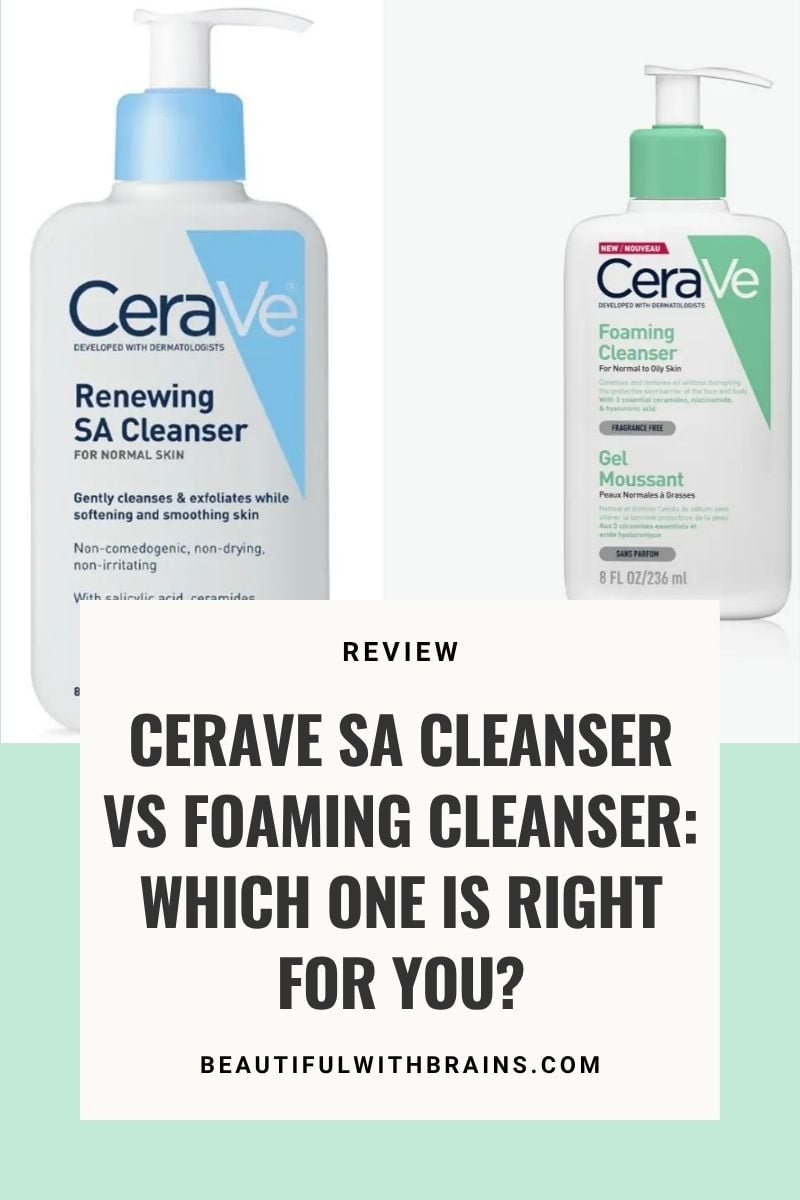
On the surface, CeraVe SA Cleanser and CeraVe Foaming Cleansers look pretty much identical: same pump bottle, same cleansing ingredients, same skin types that’ll benefit from them. Well, actually CeraVe says they’re for different skin types. The former is for acne-prone skin and the latter for oily skin. But oily skin is often acne-prone, so if you’re wondering which one is best for you and which one would be just a compromise, I’ve got you. In this article, I’ll review both formulas, so you can pick the right cleanser for YOUR skin.
What Do These CeraVe Cleansers Have In Common?
SURFACTANTS
Surfactants are what actually clean your skin. They’re molecules with one end that loves water and one end that loves oil, so they can grab onto the sunscreen, sebum, and pollution sitting on your face and rinse it all away. The surfactants in these CeraVe cleansersare all on the gentler end of the spectrum: they clean properly without stripping your skin the way harsher options like sodium lauryl sulphate do. They work better together too. The combination is kinder to skin than any one of them would be alone.
- Cocamidopropyl Hydroxysultaine comes from coconut oil and is one of the mildest surfactants around. It actually tones down the irritation potential of the other surfactants it’s mixed with, which is why you often see it in sensitive skin formulas. It also helps create foam without needing anything harsher to do the job.
- Sodium Lauroyl Sarcosinate is the one doing most of the actual cleaning. It’s derived from an amino acid and is good at cutting through oil and buildup, but it’s not aggressive about it the way SLS (that stands for Sodium Lauryl Sulfate, by the way).
- Sodium Methyl Cocoyl Taurate is also coconut-derived and rounds out the blend nicely. It’s known for being easy on skin and produces a fine, stable lather. Basically it helps the cleanser feel nice to use while keeping the whole formula from tipping into irritating territory.
CERAMIDES
Ceramides are fats that your skin makes naturally. They live in your skin barrier and basically act as the glue holding everything together, keeping moisture in and irritants out. When your barrier is in good shape, you’ve got plenty of them. When it’s not (whether that’s from age, over-exfoliating, harsh products, or something like eczema) ceramide levels drop and your skin starts to feel dry, tight, and reactive. The good news is that putting ceramides back on topically actually works to repair it.
- Ceramide NP is the most common ceramide in human skin and the most researched. It’s the main one responsible for keeping moisture in and maintaining the overall integrity of your barrier.
- Ceramide AP is more involved in how skin cells stick together and shed properly in the outer layers. It keeps the surface cohesive, which matters for how smooth and resilient your skin feels.
- Ceramide EOP is a longer-chain ceramide that helps maintain the organised layered structure of your barrier.
Related: Are Ceramides Key To Healthy Skin?
What Else Is In These Cleansers?
CERAVE FOAMING CLEANSER
- Aqua / Water / Eau: The base of the formula and the solvent everything else dissolves into.
- Glycerin: A humectant that pulls moisture into the skin and stops the cleanser from leaving your face feeling tight and dry after rinsing.
- PEG-150 Pentaerythrityl Tetrastearate: A thickener and emulsifier that gives the formula its body and stops it from feeling like glorified water. It also keeps everything mixed together evenly so the formula stays stable.
- Niacinamide: Vitamin B3, and one of the best-studied ingredients in skincare full stop. In a cleanser it rinses off before it can do its full thing, but it still brings some calming and barrier-supporting benefits while it’s on your skin.
- PEG-6 Caprylic/Capric Glycerides: Helps oil and water play nicely together in the formula. It also contributes to that soft, non-tight feeling your skin has after you rinse.
- Propylene Glycol: A humectant and solvent that helps other ingredients dissolve properly and absorb into skin.
- Carbomer: A synthetic thickener that gives the formula its gel-like texture and helps keep everything suspended evenly.
- Methylparaben: A preservative that keeps bacteria and mould out of the product.
- Sodium Chloride: Salt. Literally just used to thicken the formula and adjust the texture.
- Sodium Lauroyl Lactylate: A gentle cleanser and emulsifier made from lactic acid and a fatty acid. It helps with the cleansing and also has some mild conditioning properties that leave skin feeling nicer after rinsing.
- Cholesterol: Not the kind you worry about at the doctor. In skincare, cholesterol works with the ceramides to repair your skin’s barrier.
- Disodium EDTA: A chelating agent, which basically means it grabs onto metal ions floating around in the formula and stops them from messing with the other ingredients to prevent spoilage.
- Propylparaben: A second preservative working alongside methylparaben.
- Citric Acid: Here to adjust the pH of the formula, not to exfoliate.
- Tetrasodium EDTA: Does the same job as disodium EDTA, grabs metal ions to protect formula stability.
- Hydrolyzed Hyaluronic Acid: Hyaluronic acid that’s been broken down into smaller pieces so it can get into skin a bit more easily. It pulls moisture in and holds onto it. Even in a rinse-off product it adds some hydration while it’s sitting on your face.
- Phytosphingosine: A fat that’s naturally found in skin and plays a role in how your skin barrier stays healthy. It’s also antimicrobial and calming.
- Xanthan Gum: A natural thickener that gives the formula a smooth, even texture and keeps everything distributed consistently.
CERAVE SA CLEANSER
- Aqua / Water / Eau: The base of the formula and the solvent everything else dissolves into.
- Glycerin: A humectant that pulls moisture into the skin and stops the cleanser from leaving your face feeling tight and dry after rinsing.
- Niacinamide: Vitamin B3, and one of the best-studied ingredients in skincare full stop. In a cleanser it rinses off before it can do its full thing, but it still brings some calming and barrier-supporting benefits while it’s on your skin.
- Gluconolactone: A gentle exfoliating acid that also has antioxidant properties and helps skin hold onto moisture. It’s much kinder than something like glycolic acid and it helps loosen the dead skin cells sitting on the surface so they can rinse away.
- PEG-150 Pentaerythrityl Tetrastearate: A thickener and emulsifier that gives the formula its body and stops it from feeling like glorified water. It also keeps everything mixed together evenly so the formula stays stable.
- Zea Mays Oil / Corn Oil: Corn oil, used here as an emollient to add a bit of softness and help skin feel conditioned after rinsing.
- Carbomer: A synthetic thickener that gives the formula its gel-like texture and helps keep everything suspended evenly.
- Calcium Gluconate: A calcium salt that works alongside gluconolactone. The two are often paired together because calcium helps regulate how fast the exfoliation happens, keeping it gentle and controlled.
- Sodium Chloride: Salt. Literally just used to thicken the formula and adjust the texture.
- Sodium Benzoate: A preservative that keeps bacteria and mould out of the product.
- Sodium Lauroyl Lactylate: A gentle cleanser and emulsifier made from lactic acid and a fatty acid. It helps with the cleansing and also has some mild conditioning properties that leave skin feeling nicer after rinsing.
- Cholecalciferol: Vitamin D3. There’s some research suggesting it plays a role in skin barrier function and has calming properties, though the evidence in topical form is still building.
- Cholesterol: Not the kind you worry about at the doctor. In skincare, cholesterol works with the ceramides to repair your skin’s barrier.
- Phenoxyethanol: One of the most common preservatives in modern skincare. It keeps the product free from bacteria and mould, and despite the fearmongering you’ll see online, it’s considered safe and well-tolerated at the concentrations used in cosmetics.
- Disodium EDTA: A chelating agent, which basically means it grabs onto metal ions floating around in the formula and stops them from messing with the other ingredients.
- Tetrasodium EDTA: Does the same job as disodium EDTA, grabs metal ions to protect formula stability.
- Hydrolyzed Hyaluronic Acid: Hyaluronic acid that’s been broken down into smaller pieces so it can get into skin a bit more easily. It pulls moisture in and holds onto it. Even in a rinse-off product it adds some hydration while it’s sitting on your face.
- Phytosphingosine: A fat that’s naturally found in skin and plays a role in how your skin barrier stays healthy.
- Xanthan Gum: A natural thickener that gives the formula a smooth, even texture and keeps everything distributed consistently.
- Ethylhexylglycerin: A preservative booster that works alongside phenoxyethanol to keep the product free from microbial contamination. It also has some mild skin-conditioning properties and helps the formula feel nicer on skin.
WHICH FORMULA IS BETTER?
Honestly, the formulas of these two face washes are more similar than different. Same essential ceramides, same niacinamide, same cleansing ingredients: the core formula is identical. The only real difference is that the SA Cleanser throws salicylic acid and gluconolactone into the mix. Salicylic acid is an exfoliant that’s oil-soluble, which means it can actually get inside your pores rather than just working on the surface. Once it’s in there, it dissolves the mix of oil and dead skin cells that causes blackheads and breakouts. Gluconolactone works differently: it stays on the surface and loosens the bonds between dead skin cells so they shed more easily, which is what makes skin look smoother and brighter over time.
The issue is that in a cleanser, they’re only on your skin for maybe 30 seconds before you rinse them off. That’s not a lot of time. They’ll do something, but not nearly as much as they would in a product you actually leave on your skin. If you have sensitive skin and use this every day, that daily salicylic acid exposure can still add up and irritate you even at a low concentration, so it’s not completely harmless either. But if blackheads are your main concern, you’re better off with a salicylic acid toner or serum that sits on your skin long enough to actually get in there and work. Same with gluconolactone – a leave-on exfoliant will do a much better job on dullness than a rinse-off one ever will.
What’s The Texture Like?
The SA Cleanser comes out as a clear, thin gel that doesn’t look like much in your hand. Work it into wet skin and it builds into a light foam. The Foaming Cleanser starts the same way, as a gel, but foams up more: lighter and airier than you’d expect, not heavy or soapy. Both rinse off clean without leaving any residue or that tight, stripped feeling.
What’s The Fragrance Like?
Both are fragrance-free and you won’t notice any chemical smell either. If you’re someone who’s used to their cleanser smelling like something, these will feel a bit clinical at first. You get used to it fast, and your skin will thank you for it. If you have sensitive skin, yo’ll love this because it won’t irritate your skin (unless you use them too much, but that’s true of any facial cleanser).
What’s The Product Package Like?
The SA Cleanser comes in a pump bottle, which I appreciate for a cleanser. No squeezing, no guessing how much you’re getting, no product exploding out when you’ve had a long day. The Foam cleanser also comes in a similar bottle, it just has green accents rather than blue ones.
How To Use Them
A cleanser is always the first step of your skincare routine. Wet your face with lukewarm water first: not hot, which strips skin, not cold, which doesn’t do much. Pump a small amount into your hands, work it into wet skin using gentle circular motions, and rinse thoroughly. Neither of these needs a lot of product to do its job; a little goes a long way once it hits water. The SA Cleanser works on both face and body, so if you’re dealing with rough or bumpy skin on your arms or chest, you can use it there too. Both are designed for daily use, though if you have drier or more reactive skin, once a day is probably enough. Twice daily with the SA Cleanser especially can tip into drying territory.
Performance & Personal Opinion
The Foaming Cleanser is a straightforward daily wash. It cleans well (removes excess oil, sunscreen, the general buildup of the day) without leaving skin feeling wrecked afterwards. For oily and normal skin types that’s actually harder to find than it sounds, because most foaming cleansers either don’t clean properly or strip everything and leave you tight and flaky. This one manages neither. Skin feels clean but not compromised. The ceramides and niacinamide aren’t going to transform your skin in a rinse-off formula (the contact time is too short for that), but they stop the cleanser from being actively damaging, which is more than most manage. If you have dry skin, this probably isn’t for you. It’s not harsh, but it’s not nourishing enough for a barrier that’s already struggling.
The SA Cleanser is more interesting on paper but trickier in practice. The salicylic acid loosens the bonds between dead skin cells, gets into the pore lining, keeps congestion from building up. For oily or acne-prone skin, or anyone dealing with rough texture or that sandpaper feeling on the arms and chest, skin genuinely does get smoother with consistent use. But this is a rinse-off product. Salicylic acid needs contact time, and you’re washing it off within a minute. Results are there, but they’re subtle. If you’re expecting Paula’s Choice-level exfoliation from a cleanser, you’ll be let down. The dryness is also real. Using this twice a day on anything other than reliably oily skin will dry you out, which triggers more oil production, which defeats the whole point. Once a day, or a few times a week if your skin leans drier, is the smarter approach.
Price & Availability
CeraVe Foaming Facial Cleanser ($15.99): Boots, Look Fantastic, Target, Ulta, and Walmart
CeraVe Renewing SA Cleanser ($15.99): Target, Ulta, and Walmart
Which CeraVe Cleanser Should You Go For?
If you have oily or normal skin and you just want something that cleans properly without wrecking your barrier, the Foaming Cleanser is the one. It’s simple, it works, and it doesn’t ask much of you. No active ingredients to think about, no adjustment period, no risk of overdoing it. Just a solid daily cleanser that does its job and gets out of the way.
If you have oily or acne-prone skin and you’re also dealing with congestion, rough texture, or bumpy skin on your face or body, the SA Cleanser is the more useful option. You’re getting the same barrier-supporting base but with salicylic acid doing extra work on top. Just go in knowing it’s not a replacement for a leave-on BHA – and frankly, you’d get better results using a leave-on BHA exfoliant and a non-exfoliating cleanser.
If your skin is dry, sensitive, or compromised, honestly neither of these is your best option within the CeraVe range. CeraVe Hydrating facial Cleanser is the one you want in your skincare routine. Both of these will be too much.
And if you’re torn between the two and your skin sits somewhere in the middle (combination, dehydrated, sometimes oily, sometimes not) the Foaming Cleanser is the safer starting point. You can always add a separate salicylic acid product later and have more control over how often you use it.
CeraVe Foaming Facial Cleanser ingredients:
Aqua / Water / Eau, Cocamidopropyl Hydroxysultaine, Glycerin, Sodium Lauroyl Sarcosinate, PEG-150 Pentaerythrityl Tetrastearate, Niacinamide, PEG-6 Caprylic/Capric Glycerides, Sodium Methyl Cocoyl Taurate, Propylene Glycol, Ceramide NP, Ceramide AP, Ceramide EOP, Carbomer, Methylparaben, Sodium Chloride, Sodium Lauroyl Lactylate, Cholesterol, Disodium EDTA, Propylparaben, Citric Acid, Tetrasodium EDTA, Hydrolyzed Hyaluronic Acid, Phytosphingosine, Xanthan Gum.
CeraVe Renewing SA Cleanser Ingredients:
Aqua/Water/Eau, Cocamidopropyl Hydroxysultaine, Glycerin, Sodium Lauroyl Sarcosinate, Niacinamide, Gluconolactone, PEG-150 Pentaerythrityl Tetrastearate, Sodium Methyl Cocoyl Taurate, Zea Mays Oil/Corn Oil, Ceramide NP, Ceramide AP, Ceramide EOP, Carbomer, Calcium Gluconate, Sodium Chloride, Salicylic Acid, Sodium Benzoate, Sodium Lauroyl Lactylate, Cholecalciferol, Cholesterol, Phenoxyethanol, Disodium EDTA, Tetrasodium EDTA, Hydrolyzed Hyaluronic Acid, Phytosphingosine, Xanthan Gum, Ethylhexylglycerin.