
Last Updated on June 21, 2026 by Giorgia Guazzarotti
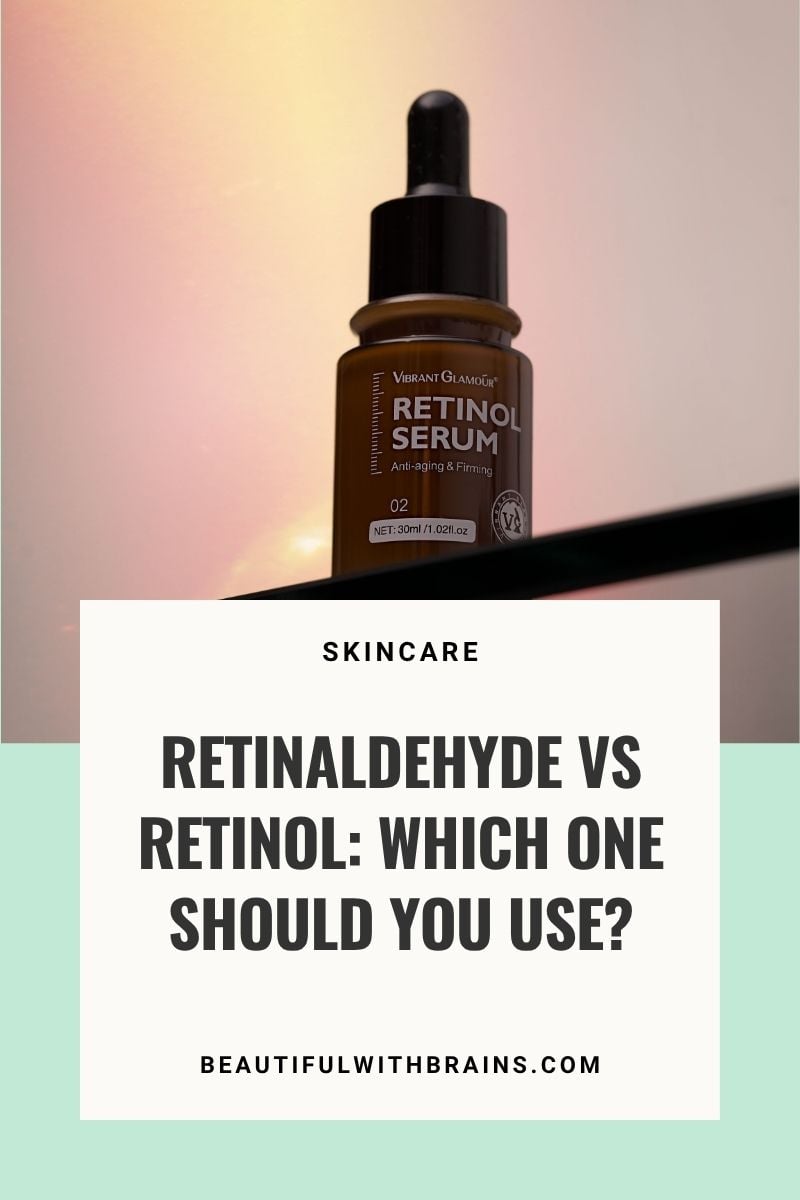
Unless you’ve been living under a rock, you’ve probably seen retinaldehyde getting hyped as the “next level” retinoid. The one that works faster than retinol, hits harder, basically does everything retinol does but better and quicker. Is this really true? I delved into the science to find out the truth about the retinal vs retinol debate, which one if better for different skin types, and which retinoid products to add to your skincare routine. Let’s get started:
What Is Retinol And How Does It Benefit Skin?
Retinol is a form of vitamin A – and most famous member of the retinoid family used in OTC products. Once your skin converts it into retinoic acid (the active form, two enzyme conversions away), it works in three main ways:
- Collagen booster: it blocks MMPs, the enzymes that chew through collagen, while ramping up new collagen production. So it doesn’t just smooth wrinkles that already exist, it slows new ones from forming.
- Exfoliant: it speeds up cell turnover, the skin’s natural shedding process. It’s a fancy way of suing dull, pigmented surface cells shed faster, so texture gets smoother, dark spots fade, and pores stay clearer because dead cells don’t pile up inside them.
- Antioxidants: It fights off the free radicals generated by pollution, sun exposure, and an unhealthy lifestyle to keep wrinkles off your face for longer.
In short: retinol fights existing wrinkles, prevents new ones, fades dark spots, and keeps pores clear. The catch is that “consistent use” part. The adjustment period before you get there usually means dryness, redness, and flaking, especially in the first few weeks. Start with a low percentage a couple of nights a week and build up from there.
Best Picks:
- Paula’s Choice Resist Wrinkle Repair Retinol Serum ($55.00): An anti-aging serum with 0.1% retinol. It also includes antioxidants, like Vitamin E, to prevent premature aging, and soothing ingredients to reduce irritations. Available at Paula’s Choice and Sephora.
- Skinceuticals Retinol 0.3 Night Cream ($80.00): This cream contains only 0.3% retinol but it packs an anti-aging punch. It comes in a moisturising base, but you need to use a separate moisturiser to counteract the dryness of retinol. Available at Dermstore and Skinceuticals.
- Peter Thomas Roth Retinol Fusion PM ($65.00): A micro encapsulated 1.5% retinol serum in an oily, moisturising base to fight wrinkles and fade away dark spots. Available at Beauty Bay, Cult Beauty, Peter Thomas Roth, and Ulta.
Related: Is Bakuchiol Better Than Retinol?
What Is Retinaldehyde And How Does It Benefit Skin?
Retinaldehyde, or retinal, is the same vitamin A family as retinol, but one step closer to active. Retinol needs two conversion steps to become retinoic acid; retinaldehyde only needs one. That missing step changes what it does in three ways:
- Faster, stronger results: less gets lost in conversion, so the collagen and turnover effects above kick in quicker and more intensely than retinol at matching strength. In a split-face trial, retinaldehyde beat retinol on wrinkle depth, hydration, and elasticity after 8 weeks.
- Its own hydration trigger: lab studies show retinaldehyde activates a receptor called CD44 on skin cells more strongly than retinol or retinoic acid do, pushing skin to produce more of its own hyaluronic acid and boosting cell growth.
- Comparable irritation: despite being marketed as gentler, patch testing shows retinaldehyde causes about the same irritation as retinol, sometimes slightly more flaking.
In short: retinaldehyde does what retinol does, faster, plus gives skin an extra hit of its own hyaluronic acid to reduce the appearance of fine lines. The catch: it isn’t gentler than retinol, whatever the marketing says, and it’s pricier with less total research behind it.
Best picks:
- MaeLove Moonlight Retinal Super Serum ($39.95): This retinal serum has a niacinamide + ceramide base to counteract the potential dryness and irritation from retinaldehyde. It also has fragrant oils that could irritate sensitive skin. But if your skin doesn’t react badly to them, it’s an effective and affordable option to consider. Available at MaeLove.
- Medik8 r-Retinoate Ultimate Night Serum ($272.00): Yes, this is outrageously expensive – but truly one of the best retinoid serums you’ll ever come across. It contains two forms of Vitamin A (retinaldehyde and Retinyl Retinoate) to fight wrinkles and signs of aging. Plus, it’s moisturising. Available at Dermstore.
- Murad Retinal ReSculpt Overnight Treatment ($105.00): This retinal serum is enriched with moisturising shea butter and soothing ingredients to treat the signs of aging while keeping skin soft and irritation-free. Available at Look Fantastic, Sephora, SpaceNK and Ulta.
Retinaldehyde VS Retinol: Key Differences
If you’re still confused between these active ingredients in the retinoid family, here are some key differences to help you make an informed choice:
- Speed: the one real head-to-head trial we have showed retinaldehyde beating retinol on wrinkle depth, hydration, and elasticity by week 8, at matching strengths. If seeing change sooner matters more to you than saving money, retinal is the one for you.
- Strength range: retinol’s been on shelves for decades, so there’s a full ladder of strengths to climb, from very low beginner percentages up to 1%+. Retinaldehyde’s range is thinner and skews stronger, so there’s less of a true starter option if you’ve never used a retinoid before.
- Formula stability: retinaldehyde breaks down faster than retinol when it hits light, air, or heat, so it needs more careful packaging, airless pumps, dark glass, encapsulation, to actually deliver what’s on the label. That instability is a big part of why it costs more and why quality varies more from brand to brand.
- Price: because it’s harder to stabilize, retinaldehyde usually costs more than a comparable retinol product at the same strength tier.
So: if you’re new to retinoids, want a gentler on-ramp, or are working with a tighter budget, retinol gives you more room to start low and build slowly. If your skin already tolerates actives, you want faster results, and you don’t mind paying more for a newer ingredient with less brand-to-brand consistency, retinaldehyde is the one to switch to.
FAQ
What’s the difference between retinol, retinaldehyde, and other types of retinoids?
“Retinoid” is the umbrella term for the whole vitamin A family used in skincare: retinol, retinaldehyde, tretinoin, adapalene, retinyl esters, all of it. Within that ingredient family, the different types of retinoids are basically ranked by how many steps each one needs to become active retinoic acid. Retinyl esters need three conversions, retinol needs two, retinaldehyde needs one, and tretinoin, the prescription type, needs zero, it’s already active. So the real answer to “what type of retinoid is this” is “how close is it to retinoic acid already.” The closer it is, the sooner you’ll see results (and the more irritating it usually is).
Is retinol or retinaldehyde better for sensitive skin?
They’re close enough that it doesn’t matter much. Patch testing shows retinol and retinaldehyde cause similar potential irritation, with retinaldehyde sometimes causing slightly more flaking. If you have sensitive skin, the side effects you’re trying to avoid, redness, dryness, a compromised skin barrier, come more from how fast you ramp up than from which ingredient you pick. Low skin tolerance means starting slow, not necessarily switching products to find the “right fit.”
How long does it take to see visible results?
Both need weeks of consistent use before you’ll notice anything. Retinol typically takes 8 to 12 weeks for visible results, longer for long-term results like deeper wrinkles. Retinaldehyde tends to move faster, the one real trial we have showed measurable change by week 8. Either way, this isn’t a once-a-week ingredient, consistency matters more than strength.
What skin concerns can retinoids actually help with?
The big ones with real mechanism research behind them: uneven tone and dark spots, rough skin texture, the appearance of pores, and visible signs of aging like fine lines, thanks to the collagen-protecting effect. They’re also used in acne treatment because they speed up cell turnover.
Can I use retinol or retinaldehyde with vitamin C?
You can, just not necessarily in the same step. Most people do fine using vitamin C in the morning and their retinoid at night, which avoids any pH or stability clashes in the formula. If your skin’s on the reactive side, alternate nights between actives instead of layering everything into one routine.
Can I use retinoids with benzoyl peroxide?
Carefully. Benzoyl peroxide can oxidize and break down some retinoid formulas if applied at the same time, which is part of why acne routines often split them, benzoyl peroxide in the morning, retinoid at night. If a product specifically says it’s stabilized for use alongside benzoyl peroxide, that’s a different formulation, check the label rather than assuming.
Do I need sun protection while using a retinoid?
Yes, non-negotiable. Retinoids increase how sensitive your skin is to UV, and skipping sun protection while using one undoes a lot of what you’re trying to achieve, since UV damage is part of what collagen-protecting retinoids are working against in the first place.
When should I start using a retinoid?
There’s no universal age cutoff. Some people start preventatively in their mid-20s, plenty start in their early 30s once fine lines or uneven tone become more noticeable, and it’s just as useful for mature skin decades later. It’s less about a birthday and more about your actual skincare goals.
Should beginners or advanced users pick retinaldehyde?
Retinol is the smarter choice for beginners, more low-strength counter options to start with and a longer track record. Retinaldehyde is a great option once you’ve built up tolerance and want faster progress, it’s really built for advanced users whose skin has already proven it can handle daily actives. Starting with retinaldehyde isn’t dangerous, it’s just not the best way to ease in.
The Bottom Line
Rretinaldehyde vs retinol? Retinaldehyde wins, technically because it gets you results faster. But “wins” doesn’t mean retinol loses. It just means retinol takes a bit longer to land in the same place, for less money, with less risk of wasting your cash on a badly stabilized formula. It’s up to you which is the best one for your skim conditions.