
Last Updated on May 5, 2026 by Giorgia Guazzarotti
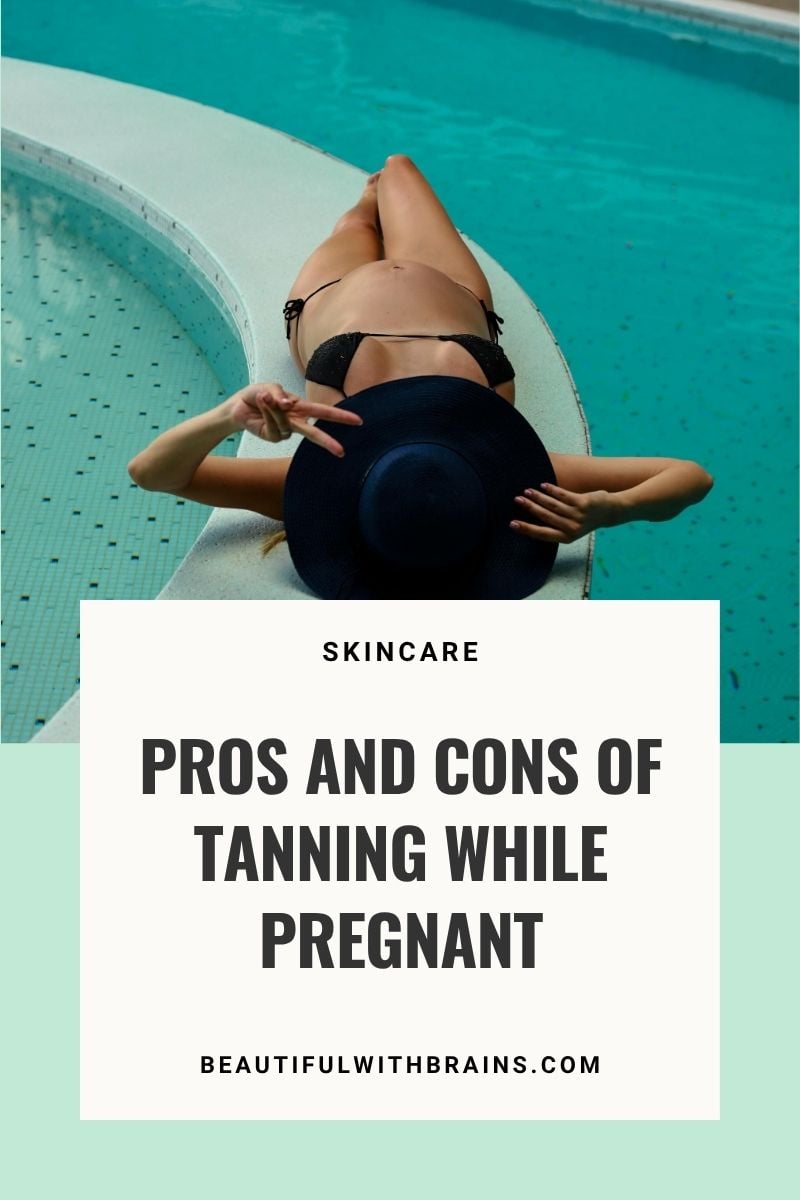
If you’ve ever Googled the pros and cons of tanning while pregnant while sitting in the sun with your bump and a cold drink, wondering if you’re about to ruin everything: firstly, you’re not, and secondly, you’re asking exactly the right question. Pregnancy has a way of making you second-guess things you’ve done a hundred times without a second thought, and tanning is one of those things. Maybe you’ve got a holiday coming up, or it’s summer and you just want to feel like yourself for five minutes, or you’re tired of looking washed out and pasty while everyone keeps commenting on your “pregnancy glow” (which, for the record, sometimes looks more like pregnancy sheen). Whatever the reason, wanting to tan while pregnant is completely normal, and the answer isn’t as terrifying as some people make it sound. But it’s not a simple “go ahead” either. In this article, you’ll find out what the research actually says about sun exposure, tanning beds, self-tanners, and spray tans during pregnancy, so you can make a genuinely informed decision.
What’s Tanning Actually Doing to Your Skin?
Here’s something nobody tells you at the beach: a tan is your skin panicking. When UV radiation hits your skin, it damages your DNA, and your skin responds by pumping out melanin )that brown pigment) as a kind of damage-control response. So the golden glow you’re going for is technically your skin going “oh god oh no” and doing its best. I’m not telling you this to ruin your summer, just to set the scene, because when you add pregnancy hormones into the mix, that whole system gets turned up way too loud. Your skin becomes more reactive, burns faster, and starts doing weird things you didn’t sign up for – more on that in a minute.
Related: A Tan Isn’t Worth Dying For
Are There Any Benefits About Sun Exposure When You’re Pregnant?
Yes, actually. Moderate sun (not a full bake, just regular outdoor time) is genuinely good for pregnant women. The main reason is vitamin D, which your body makes when UVB rays hit your skin. A proper randomised controlled trial found that pregnant women getting around 15 to 30 minutes of sun three times a week had better vitamin D levels, better blood pressure, and their babies had higher birth weights. Vitamin D deficiency in pregnancy is linked to some unpleasant outcomes (pre-eclampsia, gestational diabetes, preterm birth) so the idea that pregnant women should just avoid the sun completely is not supported by the evidence either. Go outside. Enjoy the fresh air. This is fine. The problem isn’t the sun. It’s the amount of sun, and specifically, deliberate prolonged tanning.
What Are the Actual Risks Of Tanning For Expectant Mothers?
Overheating is the biggest concern and it doesn’t get talked about enough. When your body temperature spikes (whether from lying in the sun for too long, sitting in a tanning bed, or getting into hot tubs), the risk to your baby is real, especially in those early weeks of pregnancy when everything is still forming. A meta-analysis that pooled data from 15 studies and over 37,000 women found that maternal hyperthermia (that’s just a fancy word for overheating) nearly doubled the risk of neural tube defects – things like spina bifida, where the spinal cord doesn’t close properly. And tanning beds specifically can push your body temperature above 102°F, which is right in that danger zone.
The timing matters a lot too. Neural tube defects happen in the first few weeks of pregnancy – often before many women even know they’re pregnant – which is exactly why health organisations are so cautious about heat exposure in the first trimester.
Then there’s the folic acid thing. UV exposure (whether from the sun or tanning booths) breaks down folic acid in your body. One study found that high UV exposure accounted for up to a 20% drop in serum folate levels. And folic acid, as any pregnant woman knows, is not optional: low levels in early pregnancy are directly linked to neural tube defects like spina bifida. So you’ve got a double hit here: the heat from tanning raises your NTD risk, and the UV exposure is quietly chipping away at the very nutrient that’s supposed to protect against it. Not ideal.
Your skin is also going to be absolutely feral during pregnancy. Pregnancy hormones basically make your skin a different organ. You’ll burn faster than you used to, you’re way more prone to skin sensitivity, and – here’s the fun one – UV exposure can trigger melasma, also called the mask of pregnancy. That’s the dark patches and dark splotches that appear on your face, and they get significantly worse with sun exposure. Some women get them anyway just from hormones alone, but tanning basically pours petrol on the situation. And melasma is notoriously difficult to get rid of postpartum, so just know that going in.
One more thing that really gets me: tanning beds are sold partly on the idea that they give you vitamin D. They don’t… or at least, not the way people think. Tanning bed bulbs mostly emit UVA radiation, and your body needs UVB to actually synthesise vitamin D. So you’re getting all the harmful UV radiation with none of the benefit you thought you were getting!
What About Self-Tanners And Spray Tans?
Good news: this is where expectant mums can actually relax a bit. Self-tanning lotions, creams, and spray-on tans are considered the safest option by pretty much every health organisation going. The active ingredient DHA (which comes from sugar beets or sugar cane) works by reacting with the dead cells on the outermost layer of the skin. It doesn’t get into your bloodstream. It doesn’t reach your developing baby. It just sits there turning you orange (sorry, golden!) on the surface. It’s been FDA-approved since the 1970s and is widely considered a non-toxic substance.
The one thing to watch with spray tans is ventilation. The concern isn’t DHA on your skin, it’s inhaling it. Because if it gets into your lungs or onto mucous membranes, you’re no longer dealing with a surface reaction. So if you’re at a tanning salon, make sure there’s proper ventilation, hold your breath during the spray, and maybe do a patch test first because pregnant skin can react unexpectedly even to products you’ve used before. Also, do a patch test before you commit to a full-body situation. Nobody wants to discover an allergy the hard way.
Tanning pills, by the way, are a hard no. They’re not approved, the research on them is basically nonexistent, and your healthcare provider will absolutely make a face if you ask about them.
The Verdict: What Should You Actually Do?
If you want sun exposure, keep it moderate, slap on a broad-spectrum sunscreen, drink plenty of water, and take frequent breaks in the shade. The risk of overheating is real and the first trimester of pregnancy is not the time to be testing your limits on a sun lounger. If you want an actual tan-looking situation, self-tanners and spray tans really are the best option here – and honestly the results from a good self-tanning lotion these days are genuinely impressive. It’s a long way from the streaky orange disasters of 2005. Do it right and you’ll have the pregnancy glow people keep assuming you already have, without any of the risks above. And if you’re unsure about anything specific to your pregnancy, talk to your healthcare provider. That’s always the move.