
Last Updated on August 24, 2026 by Giorgia Guazzarotti
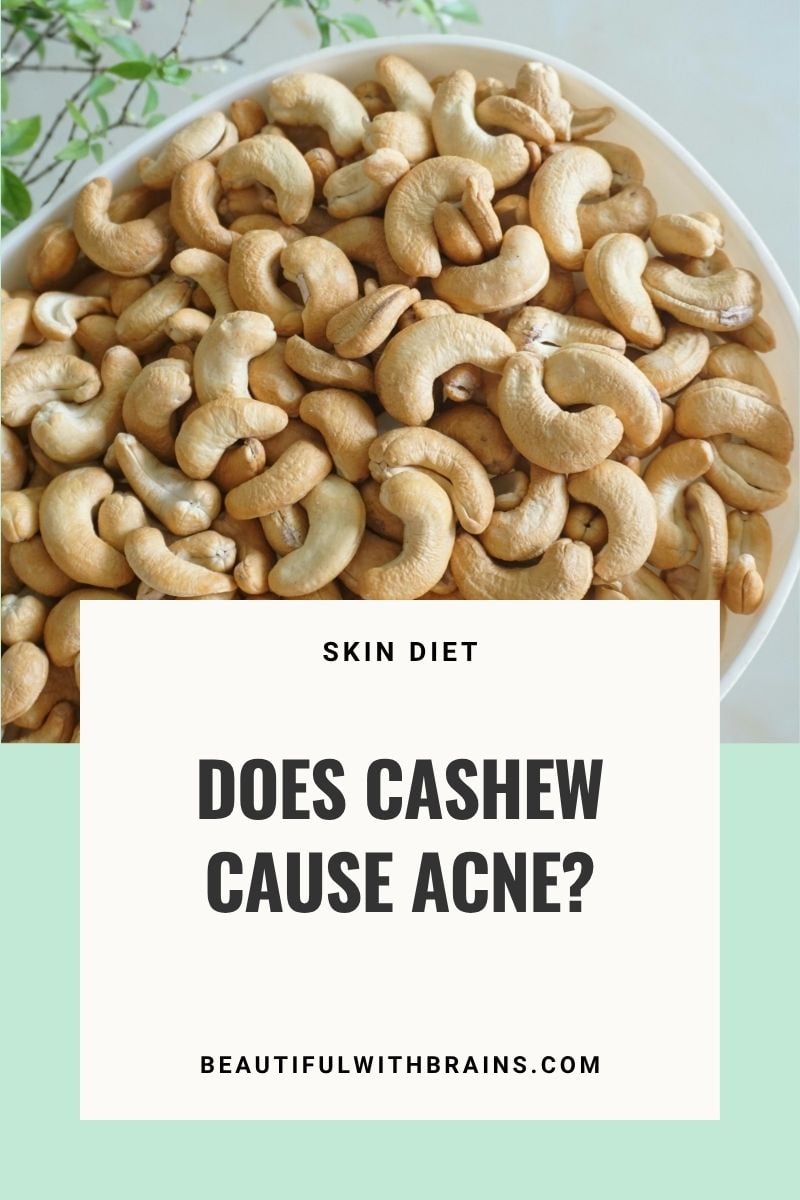
Does cashew cause acne? I saw this question in a Facebook group last week and honestly, it stopped me mid-scroll. Because my first thought was, “wait, cashews? Really? We’re adding cashews to the list of things that are apparently destroying our skin now?” Because here’s the thing. Cashews have always been one of those foods that gets a hall pass. Zinc, magnesium, healthy fats, vitamin E – they’re literally in every “eat this for glowing skin” article ever written. They’re the fancy nut.
The one you pick out of the mixed bag first. So the idea that they might be causing acne breakouts feels a bit backwards, like being told your multivitamin is the problem. But a lot of people with acne-prone skin swear there’s a connection. And I get it. When your skin is doing something you hate, you want answers. So let’s actually get into it, because the truth is more interesting than a simple yes or no, and by the end of this you’ll know exactly where cashews sit in the whole diet-and-acne conversation.
What Causes Acne?
Before we put cashews on trial, it helps to understand what acne actually is. Let’s start with the development of acne. Acne happens when your hair follicles get blocked. Your sebaceous glands (basically your skin’s built-in oil glands) produce sebum, which is just your skin’s natural oil. Nothing wrong with that, your skin needs it.
The problem starts when sebum mixes with dead skin cells, gets stuck inside a follicle, and creates the perfect warm little environment for harmful bacteria to go absolutely feral in there. That acne-causing bacteria is called Cutibacterium acnes, and when your immune system clocks what’s happening, it sends in the inflammation troops. Hence the red, angry spot on your chin the day before something important.
Now the reason diet matters is that sebum production isn’t random. It’s driven largely by your hormone levels – specifically androgens, which are the hormones that tell your oil glands to produce more. And certain foods mess with those hormones in ways that are actually pretty well documented at this point. The two biggest culprits the research keeps coming back to? Dairy products and high glycaemic foods.
Cow’s milk (including skimmed milk, which somehow manages to be worse than full fat in some studies) contains hormones that trigger something called IGF-1, which stands for insulin-like growth factor. IGF-1 basically tells your sebaceous glands to go into overdrive. High glycaemic foods (like white bread, white rice, fruit juice, candy bars, anything with high sugar content) cause a rapid blood sugar spike, which shoots your insulin levels up, which also raises IGF-1.
Same destination, different route. This is why someone who drinks a lot of cow’s milk or lives on fast food and white rice might notice their skin getting significantly worse, and why switching to something like almond milk or whole grains and sweet potatoes can sometimes make a big difference. Keep that in mind as we talk about cashews.
Related: How To Treat Adult Acne
Is There A Connection Between Cashew And Acne?
Here’s the honest answer: there are zero clinical trials specifically looking at cashew nuts and acne. None. So anyone who tells you with total certainty that cashews cause acne is making it up a little bit, and so is anyone who says they’re completely in the clear. What we can do (and what makes more sense anyway) is look at what’s actually inside a cashew and see how that lines up with what we know about the causes of acne.
Good news first. Cashews have a really low glycaemic index, somewhere around 22 to 25. That’s low. That means eating them doesn’t cause the blood sugar spike that sends your insulin levels through the roof and kicks off that whole hormonal chain reaction. So the main dietary pathway to acne? Cashews aren’t using it. They’re also a solid source of zinc, which is useful for acne-prone skin (zinc helps regulate oil production, has anti-inflammatory properties, and supports the skin’s ability to heal – all things that support clear skin). There’s actual research linking low zinc levels to more severe acne. Cashews also contain vitamin E, selenium, magnesium – all things that support healthy skin rather than work against it. So far, so good. But here’s where it gets a bit more complicated.
Do The Omega-6 In Cashews Cause Acne?
Cashews contain omega-6 fatty acids. And there’s a growing body of research suggesting that the balance between omega-6 and omega-3 in your diet plays a significant role in acne development. A big study published in the British Journal of Dermatology in 2025 (and this one used genetic data from nearly half a million people, so it’s not a small sample) found that a higher ratio of omega-6 to omega-3 was associated with a meaningfully increased risk of acne, while higher omega-3 levels were protective.
Now, cashews aren’t the worst omega-6 offender by a long stretch. Vegetable oils, fried fast food, protein bars, sugary foods, most processed snacks – these common foods have high levels of omega-6. But cashews do have more omega-6 than omega-3, and if your overall diet is already skewed heavily in that direction – which most people’s diets are, because modern eating has gone completely off balance on this – then adding a lot of cashews on top of everything else could theoretically push things in the wrong direction. Just a little. The issue is the whole picture, not the cashews specifically.
And honestly, if you’re snacking on cashews that are covered in salt, roasted in vegetable oil, or (God forbid!) coated in sugar or chocolate, you’re adding variables that have nothing to do with the cashew itself. Plain, dry-roasted cashews in sensible portions are a completely different thing to the salted, oily, caramelised kind you get at Christmas.
Do Nuts Cause Acne?
People throw nuts into one category and that’s not really fair because they’re quite different from each other:
- Peanuts (which aren’t even actually nuts, they’re legumes, but whatever) contain compounds that can behave like androgens in the body, which is a more direct acne connection.
- Brazil nuts are extremely high in selenium, which is great in small amounts but a lot of people eat too many thinking more is better and it’s not.
- Walnuts are genuinely high in omega-3 and have solid anti-inflammatory properties, so they’re probably the most skin-friendly option if you’re actively dealing with acne flare-ups.
Cashews sit comfortably in the middle of all this. Not the best choice if you’re really trying to optimise everything, but also nowhere near the level of, say, a whey protein shake or a glass of cow’s milk when it comes to triggering acne.
The Bottom Line
Cashews are not causing your acne. If your skin is breaking out and you’ve been eating cashews, the cashews are almost certainly not the main event. Look at the rest of your diet first – are you eating a lot of dairy products, high sugar foods, fast food, white bread, drinking fruit juice or alcoholic drinks regularly? Those are the things the research actually points to. That said, if you’ve eliminated everything else and you still suspect cashews are a personal trigger (which is possible, because skin is annoyingly individual), then it’s a good idea to cut them out for six weeks and see what happens. Reintroduce them slowly. Keep notes. That’s the only way to know for sure. But please don’t give up your cashews based on a vibe. They’re one of the better snacks out there for your skin, and the science, such as it is, mostly backs that up.