
Last Updated on July 19, 2026 by Giorgia Guazzarotti
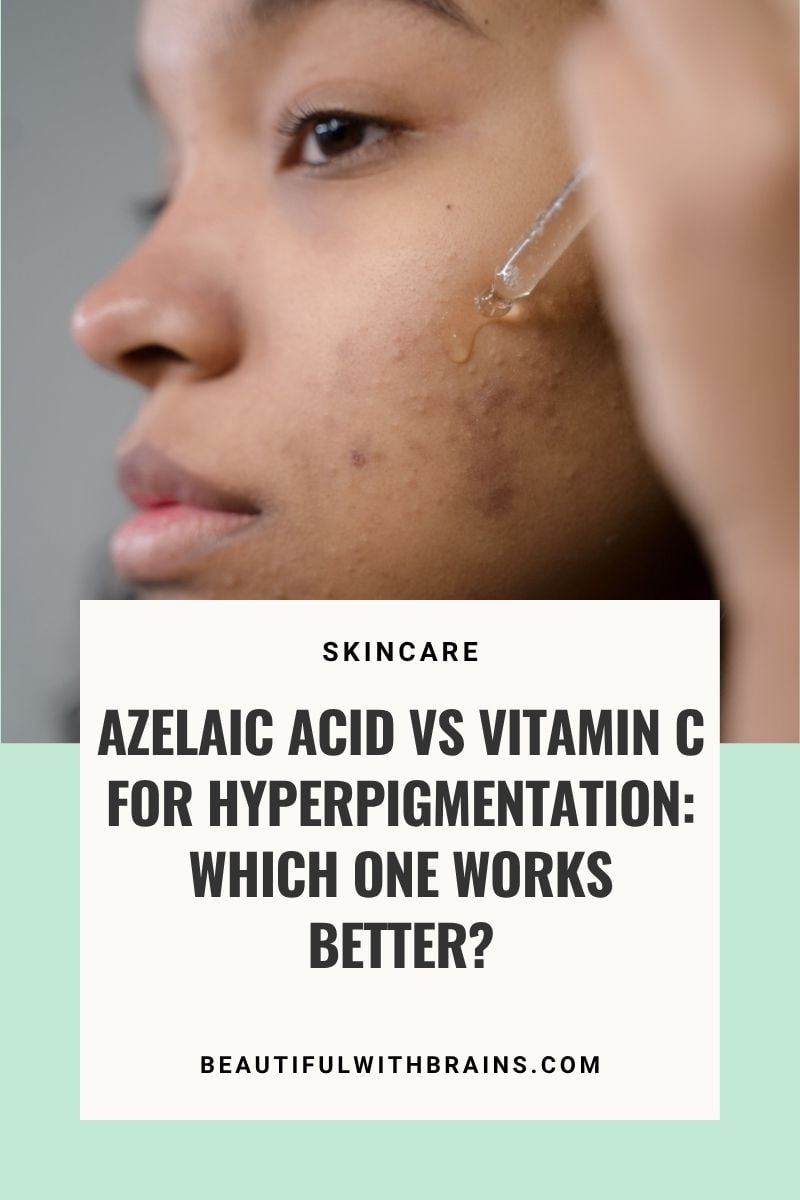
Azelaic acid vs vitamin C: which one actually works better for fading dark spots? Vitamin C is everywhere in skincare, with its promises of brighter, more glowing skin, while azelaic acid is the dermatologists’ go-to for stubborn marks that refuse to budge, especially for sensitive skin or pregnant ladies. So which one should you choose? The truth is, there isn’t a one-size-fits-all answer. The better choice depends on what’s causing your pigmentation, how sensitive your skin is, and what results you’re hoping to achieve. In this guide, we’ll break down the difference between azelaic acid and vitamin C for hyperpigmentation, so you can figure out which ingredient makes the most sense for your skin.
- Azelaic Acid VS Vitamin C At A Glance
- Why Hyperpigmentation Happens
- How Azelaic Acid Fades Hyperpigmentation
- How Vitamin C Fades Hyperpigmentation
- Azelaic Acid VS Vitamin C: Which Works Better For Different Types of Hyperpigmentation?
- Which Ingredient Works Faster?
- Which Is Better For Sensitive Skin?
- Can You Use Azelaic Acid And Vitamin C Together?
- Which Of These Powerhouse Ingredients Should You Choose?
- The Best Azelaic Acid Skincare Products:
- The Best Vitamin C Serums:
- The Bottom Line
Azelaic Acid VS Vitamin C At A Glance
| AZELAIC ACID | VITAMIN C | |
|---|---|---|
| HOW IT WORKS | Tyrosinase inhibitor and calms inflammation | Antioxidant that interrupts melanin production and neutralises free radical damage |
| SKIN CONCERNS | PIH after acne, melasma, rosacea-related redness | Sun-induced dullness, general uneven tone, antioxidant protection |
| EVIDENCE | Strong: decades of clinical trials, some head-to-head against hydroquinone | Moderate: mixed clinical results on visible fading |
| SPEED | 8–12 weeks typically | 8–12 weeks, sometimes longer for visible spot fading |
| SKIN TYPES | All skin types, including acne-prone skin and sensitive skin | Most skin types, but formulation matters a lot |
| SENSITIVE SKIN | Generally very well tolerated | Can sting, especially L-ascorbic acid at higher concentrations |
| PREGNANCY | Considered pregnancy-safe (always confirm with your doctor) | Generally considered safe, but check formulation with your doctor too |
| SIDE EFFECTS | Mild tingling, occasional dryness | Stinging, redness, oxidation issues if poorly formulated |
| CAN BE COMBINED? | Yes | Yes |
Why Hyperpigmentation Happens
Melanin is the pigment that gives your skin its colour. It’s made by cells called melanocytes, which use an enzyme called tyrosinase to convert an amino acid (tyrosine) into melanin. Fun fact: melanin is also your skin’s defence mechanism against UV rays. That’s why sun exposure makes pigmentation worse: UV light tells your melanocytes to ramp up production, basically as a protective response. The problem starts when this process goes into overdrive in specific spots. That can happen because of:
- Sun damage: spending too much time in the sun without adequate protection. Hello, sun spots!)
- Inflammation: pimples, cuts or bag bites cause post-inflammatory hyperpigmentation (PIH)
- Hormonal triggers: common especially during teenager years or pregnancy (melasma is often called “the mask of pregnancy”)
Different types of hyperpigmentation have different root causes, so they don’t all respond the same way to the same skin ingredients. Melasma, for instance, is notoriously stubborn and prone to coming back, because it’s driven by hormones and heat as much as UV. PIH from acne is usually easier because once the inflammation is gone, the excess pigment just needs help clearing. So what should you use?
Related: How To Treat The Dark Spots Left Behind By Pimples
How Azelaic Acid Fades Hyperpigmentation
Azelaic acid (a dicarboxylic acid, for those of you into the science) is a naturally occurring acid: it’s found in grains (like wheat, rye and barley) and it’s also a byproduct of yeast naturally found on your skin. It works by inhibiting tyrosinase, the enzyme responsible for kicking off melanin production. But it doesn’t just block the enzyme across the board. It selectively targets hyperactive and abnormal melanocytes without affecting normal pigment cells. This means that it targets dark spots without lightening other areas that don’t need lightening.
Azelaic acid also has real anti-inflammatory properties, which makes it a great option for mild-to-moderate acne with moderate-to-severe post-inflammatory hyperpigmentation Azelaic acid also calms inflammation, which matters a lot for acne-related dark marks. Darker skin produces more melanin in response to inflammation, so breakouts are more likely to leave a dark mark behind instead of fading on their own. Azelaic acid treats the inflammation causing the mark and fades the mark itself, without lightening the skin around it. A 16-week study on 15% azelaic acid gel confirmed this: it improved both the acne and the marks it left behind.
The evidence for melasma specifically is strong too. A well-known double-blind study comparing 20% azelaic acid cream against 4% hydroquinone cream, both used alongside a broad-spectrum sunscreen, ran for 24 weeks with 329 women and found azelaic acid produced good or excellent results in 65% of cases, with no significant difference between the two treatments in reducing lesion size and pigment intensity. Most importantly, no cases of allergic sensitisation or ochronosis (blue patches of skin sometimes seen with long-term hydroquinone use in dark skin) were reported with azelaic acid. Source:
How Vitamin C Fades Hyperpigmentation
Vitamin C works completely differently. Just because it brightens skin, it doesn’t mean I does the same job as azelaic acid. It doesn’t. Vitamin C (or ascorbic acid) is one of skincare’s best antioxidants. Its main job is soaking up free radicals, the nasty buggers caused by by UV rays and pollution that break down skin and speed up dark spots, fine lines, and signs of ageing. Oh, and it plays a part in collagen production to keep your skin younger-looking. But it does more than that. Like azelaic acid, vitamin C also inhibits tyrosinase to reduce melanin production. It just does it more gently and slowly.
This dual action (protecting skin from damage thanks to its antioxidant properties and slowing down new pigment) is why vitamin C shows up in routines for anti-ageing, calming skin, fading pigmentation, brightening, and sun protection, melasma included. A review of 31 studies found vitamin C is good at stopping new pigmentation caused by sun exposure. So think of it more as prevention than a fix for spots you already have – though it helps with both.
Fading existing spots is where the evidence gets shakier. A 2023 review looked at vitamin C for melasma and sun spots. Under lab measurements, skin genuinely looked lighter. But when real patients rated their own skin, most studies showed no real difference versus a placebo. Researchers think this might partly come down to the fact vitamin C can sting a little, which may throw off how people judge their own results. They also said studies probably need to run longer to catch visible change.
FYI, not all Vitamin C is created equal. The pure form, L-Ascorbic Acid, is the powerhouse antioxidant best proven to work. But it can irritate skin and goes back quickly, so brands are using derivates telling you they work just as well. They don’t. If you want to fade dark spots, you need the pure form for best results. Period.
Related: Types Of Vitamin C Used In Skincare: Which One Is Best?
Azelaic Acid VS Vitamin C: Which Works Better For Different Types of Hyperpigmentation?
- Melasma: Azelaic Acid. In one 24-week study, 65% of women using 20% azelaic acid saw good or excellent results, matching hydroquinone, the go-to prescription option. It’s also gentler on reactive, melasma-prone skin and suitable during pregnancy. Vitamin C helps protect against the sun and heat that trigger melasma, but rarely shifts it on its own.
- Post-Inflammatory Hyperpigmentation (PIH): Azelaic acid, easily. It calms the inflammation causing new marks while fading old ones, and has mild antibacterial action too. Vitamin C can support healing skin, but it’s not doing the heavy lifting here.
- Sun Spots (Solar Lentigines): Vitamin C’s strongest area. Sun spots come from UV damage, so an ingredient that protects against UV and slows melanin production is a natural fit. Layered under sunscreen, it also helps prevent a lot of the damage in the first place.
- General Uneven Skin Tone: Just dull and flat rather than distinct dark marks? Vitamin C wins here. It brightens the whole complexion, not just individual spots, and gives you radiant skin.
Which Ingredient Works Faster?
Neither of these is an overnight fix, and if anyone’s telling you it is, they’re selling you something. Realistically: Azelaic acid typically shows visible change around the 8 to 12 week mark, sometimes sooner for inflammation-related redness, with continued improvement over several months of consistent use. Vitamin C timelines are similar, roughly 8 to 12 weeks for noticeable brightening, though actual dark spot fading (rather than general glow) can take longer. FYI, you need to give both of them a helping hand. To see fast results, you also need to:
- Be consistent: if you use them only every now and then, results will take much longer (duh!)
- Concentration: while lower concentrations work more slowly, higher concentration may irritate skin and cause inflammation. The right dosage is key.
- Sunscreen: it doesn’t matter what you use and how constant you are with it, if you’re skipping daily SPF, you’re just inflating damage faster than you’re treating it.
- How deep the pigmentation sits in your skin: the deeper it is (I’m looking at you, Melasma), the longer it takes.
- Skin type: if you use something that’s too irritating for your skin type, you’ll cause inflammation and make dark spots worse.
Which Is Better For Sensitive Skin?
Azelaic acid. It’s one of the gentlest active ingredients out there, which is why dermatologists often reach for it first with rosacea, sensitive skin, or during pregnancy. You might get mild tingling when you apply it, but it settles fast and fades with use. With Vitamin C, things are more complicated. L-ascorbic acid is the most effective, but also the most likely to sting or irritate skin, especially in higher strengths. You could use more stable forms of vitamin C, but they simply don’t work as well. So you might as well go directly with azelaic acid. Said that, always patch test first. Just in case.
Can You Use Azelaic Acid And Vitamin C Together?
Yes – you just need to do it the right way. I always recommend my clients to use a Vitamin C serum in the morning, just before sunscreen, to boost its sun protection and prevent a lot of sun damage and dark spots in the first place. Then, use an Azelaic Acid product every other night before moisturiser. If you use retinol, use that on nights you don’t use retinol. Always alternate days to avoid overwhelming your skin and causing inflammation. And if you exfoliate, stop. Azelaic acid has mild exfoliating properties, so you don’t need a separate exfoliant in your skincare routine too. That means no glycolic acid, no salicylic acid, no natural exfoliant, no scrub… Azelaic acid is enough.
Which Of These Powerhouse Ingredients Should You Choose?
Use azelaic acid if: your pigmentation followed acne or any kind of skin inflammation, you’re dealing with melasma, your skin is sensitive or rosacea-prone, or you want a treatment that’s safe during pregnancy (though you should always run this by your doctor or midwife first, every pregnancy and situation is different).
Use vitamin C if: you want to brighten dull skin while gradually fading pigmentation, your dark spots are mainly sun-related, or you want the added antioxidant protection against future environmental damage on top of pigment correction.
Use both if: you’re dealing with stubborn, long-standing hyperpigmentation that hasn’t budged with one ingredient alone and your skin tolerates multiple active ingredients without freaking out.
The Best Azelaic Acid Skincare Products:
- Facetheory Blemicalm Azelaic Acid 15% Clarifying Serum (£26.00): Loaded with 15% Azelaic acid and colloidal oatmeal, it helps treat acne, soothe irritations, and lighten dark spots. Available at Facetheory
- Paula’s Choice 10% Azelaic Acid Booster ($36.00): It includes a touch of Salicylic Acid to unclog pores too. Available at Cult Beauty, Paula’s Choice, and SpaceNK
- The Ordinary Azelaic Acid Suspension 10% ($12.20): A simple, no-frills formula that just works without breaking the bank. Available at Beauty Bay, Cult Beauty, The Ordinary, and Ulta
The Best Vitamin C Serums:
- MaeLove Glow Booster ($27.95): The cheapest Vitamin C serum in this list, it does everything the others do, but it contains a citrus extract that may be irritating for sensitive skin. Available at Maelove.
- Paula’s Choice C15 Booster ($46.75): It’s enriched with Hyaluronic Acid and glycerin to deeply hydrate skin. Available at Cult Beauty, Dermstore, Paula’s Choice, Sephora, and SpaceNK.
- Skinceuticals CE Ferulic ($169.00): The original Vitamin C serum, it costs an arm and a leg, but it works wonders and delivers what it promises. Available at Dermstore and Skinceuticals.
The Bottom Line
There isn’t a universal winner here. They’re both superstar ingredients. Azelaic acid wins for melasma, acne-related PIH, and sensitive skin. Vitamin C tends to shine more for sun-induced pigmentation, general dullness, and as a daily antioxidant shield that helps prevent new damage from becoming new dark spots down the line. The best choice depends on what kind of hyperpigmentation you’re dealing with, how sensitive your skin is, and what you’re actually trying to achieve.