
Last Updated on November 8, 2026 by Giorgia Guazzarotti
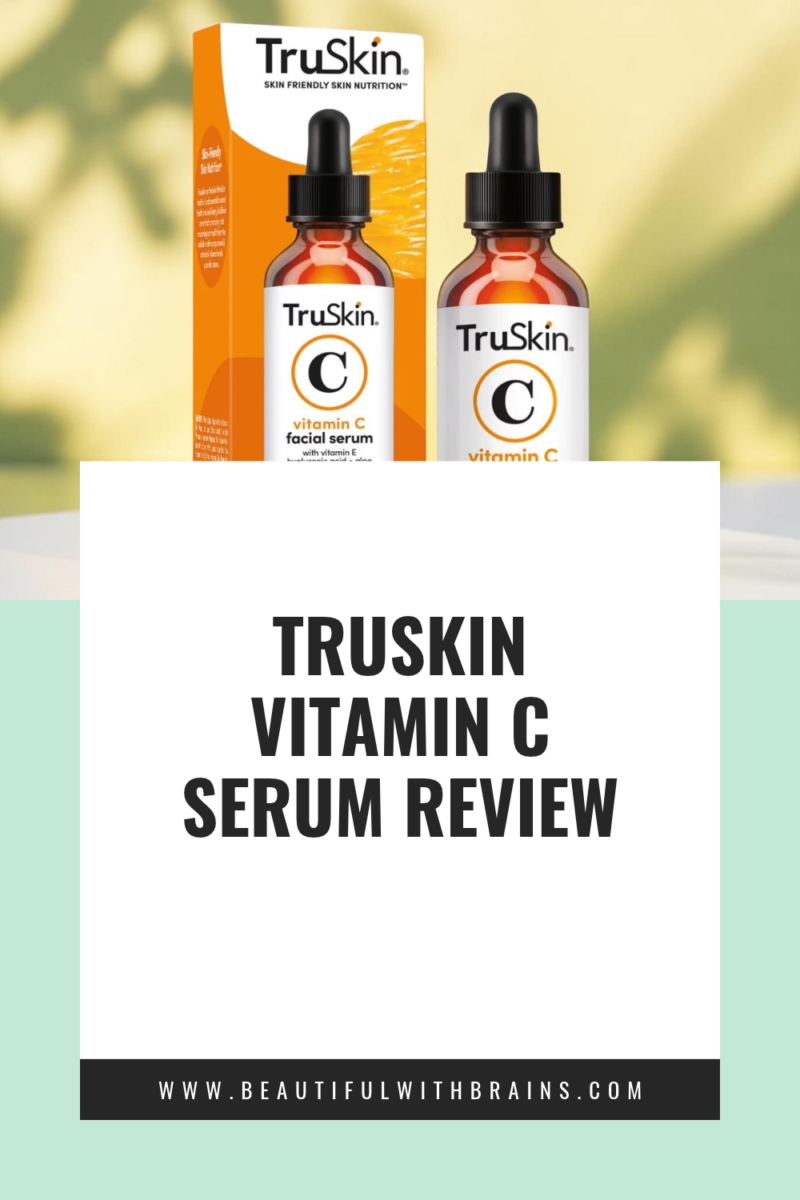
Vitamin C is one of my fave anti-aging ingredients. It fights wrinkles, fades dark spots, and gives dull skin its glow back. What’s not to love? Well, the price tag, for starters. Some vitamin C serums cost more than a fancy dinner out, and the cheaper ones don’t always deliver. Enter TruSkin Vitamin C Serum. It promises all those lovely anti-aging benefits for a fraction of the price. The catch? It doesn’t use pure vitamin C. It uses a gentler derivative instead. So, can it still give you the results you’re after, or are you saving money on something that doesn’t do much? Let’s find out.
The Verdict
My rating: 4/5
Best for: Acne-prone and sensitive skin looking for a gentle vitamin C serum that doesn’t irritate skin and doesn’t cause acne.
Skip it if: Your main concern is deep wrinkles or stubborn pigmentation. This serum isn’t going to work miracles there.
What I like: It makes my skin look brighter and smoother without causing irritation. It’s lightweight, easy to use and doesn’t cost a fortune.
What I don’t: It can feel sticky and tight if I apply too much. It prevents rather than treat dark spots and wrinkles.
Bottom line: TruSkin Vitamin C Serum is a good budget-friendly option if you want to give your skin a healthy glow. It’s gentle enough for daily use and delivers noticeable results without the hefty price tag. Just keep your expectations realistic.
- The Verdict
- Key Ingredients In TruSkin Vitamin C Serum: What Does The Science Say?
- My Experience With TruSkin Vitamin C Serum
- TruSkin Vitamin C Serum vs TruSkin Vitamin C Super Serum: Which Is Better?
- Does TruSkin Vitamin C Serum Live Up To Its Claims?
- Price & Availability
- Should You Buy TruSkin Vitamin C Serum?
Key Ingredients In TruSkin Vitamin C Serum: What Does The Science Say?
SODIUM ASCORBYL PHOSPHATE TO BRIGHTEN SKIN AND FADE DARK SPOTS
I’m a big fan of sodium ascorbyl phosphate (SAP). It’s a vitamin C derivative that doesn’t get nearly as much love as it deserves. It’s true L-ascorbic acid (pure vitamin C) works faster and gives you better results, but it’s notoriously unstable, can be irritating, and may contribute to pimples in oily skin. If you have sensitive or acne-probe skin, this may be the better option for you. Here’s why:
- It’s gentler on the skin: it doesn’t need the very low pH that makes pure vitamin C so irritating.
- It has antibacterial properties that help fight acne-causing bacteria: studies show that a 5% SAP lotion can reduce breakouts.
- It helps fight free radicals: free radicals damage collagen and speed up aging, and vitamin C (especially when paired with Vitamin E, which is here too), can reduce some of that damage.
- It may also help fade dark spots: it works by interfering with melanin production, but it doesn’t work as well as L-Ascorbic Acid for this.
SODIUM HYALURONATE TO HYDRATE SKIN AND PLUMP UP FINE LINES
I’ll never understand why people spend a fortune on fancy anti-aging serums when half the time their skin is just thirsty. Seriously, dehydration can make fine lines look so much worse than they really are.
Enter sodium hyaluronate (the salt form of hyaluronic acid), a moisture magnet that attracts water to your skin and helps it hold onto it. The more hydrated your skin is, the plumper it looks. And when skin looks plumper, those pesky little lines don’t stand out as much.
Now, don’t go throwing away your retinol. Hyaluronic acid isn’t going to rebuild lost collagen or get rid of deep wrinkles. But if dehydration is making your skin look older than it is, a little extra moisture can make a noticeable difference.
ORGANIC ALOE BARBADENSIS (ALOE VERA) LEAF JUICE TO SOOTHE AND MOISTURISE SKIN
Aloe vera is one of those ingredients everyone swears by. Got sunburned? Aloe vera. Irritated skin? Aloe vera. Dry skin? You guessed it, aloe vera. At this point, I’m surprised people aren’t recommending it for a broken heart.
But jokes aside, aloe vera is packed with sugars that attract water, helping to keep skin hydrated. And we all know it soothes skin. A 2014 study found that aloe vera helped reduce redness caused by skin irritation. After six days, the results were similar to those of a hydrocortisone gel.
Related: Everything You Need To Know About Aloe Vera In Skincare
My Experience With TruSkin Vitamin C Serum
One of the things I like most about TruSkin Vitamin C Serum is how easy it is to use. The texture is lightweight, slightly gel-like, and spreads easily on the skin. It sinks in pretty quickly, too. The only catch? If I get a little too generous with the amount, it can leave my skin feeling sticky and tight. A few drops are all I need, and once I follow up with moisturiser, that slight tackiness disappears.
There’s no added fragrance, but the serum does have a faint herbal smell. Nothing overpowering or unpleasant, and it fades quickly enough that I barely notice it. The dark amber bottle comes with a dropper that makes it easy to get just the right amount without wasting product.
But let’s talk about what really matters. Does it actually do anything for my skin? Yes! After a few days, my skin looked brighter and fresher, like I’d finally caught up on my beauty sleep (if only!). Another thing I appreciate? No irritation. Some vitamin C serums can make my skin sting or turn red, but TruSkin has been gentle enough for me to use every day without any drama. My skin feels comfortably hydrated, too.
What about wrinkles? Honestly, I haven’t noticed much of a difference there. My skin looks a little plumper thanks to the extra hydration, which can make fine lines less obvious, but deeper wrinkles aren’t going anywhere.
TruSkin Vitamin C Serum vs TruSkin Vitamin C Super Serum: Which Is Better?
TruSkin Vitamin C Super Serum is basically the original serum on steroids. It has the same vitamin C derivative (sodium ascorbyl phosphate), but adds retinol to fight wrinkles, niacinamide to brighten skin and salicylic acid to unclog pores. Sounds better, right? Not so fast.
TruSkin Vitamin C Serum vs TruSkin Vitamin C Super Serum: Which Is Better?
TruSkin also has a Vitamin C Super Serum, which promises to do everything the original does, plus tackle wrinkles, acne and clogged pores. Is it better? Let’s put them to the test:
- Texture: The original is a lightweight, slightly gel-like serum, while the Super Serum is milkier and creamier.
- Fragrance: The original has no added fragrance, just a faint herbal smell. The Super Serum has a light citrus scent thanks to grapefruit peel oil that smells nice, but can irritate sensitive skin.
- Hydration: Both leave skin feeling softer and smoother, but the Super Serum is a touch more hydrating.
- Brightening and dark spots: Both use vitamin C to brighten skin, but the Super Serum also has niacinamide to help fade stubborn pigmentation. Still, neither works as well as pure Vitamin C.
- Wrinkles and skin texture: Super Serum has the edge. It has retinol, which can actually help reduce wrinkles over time. The original mostly makes fine lines look less noticeable by plumping up skin with hydration. If you’re going for Super Serum, use it no more than 3 nights a week.
- Acne and clogged pores: The Super Serum has salicylic acid, which gets inside pores and helps clear out the gunk that causes blackheads and breakouts. But there’s not much of it here. What makes it better for acne is retinol, which helps treat acne, too.
- Irritation: The original wins, hands down. It’s gentler and you can use it every day. The Super Serum throws retinol, salicylic acid and grapefruit oil into the mix, making irritation more likely.
So, which one would I buy? If your main problems are dullness, dark spots and dehydration, the original does the job without all the extra fuss. The Super Serum makes more sense if you’re also battling wrinkles and clogged pores and want fewer bottles cluttering your bathroom shelf. But if you’re already using retinol, why add another one? Personally, I’d stick with the original and let my dedicated retinol serum do the heavy lifting.
Does TruSkin Vitamin C Serum Live Up To Its Claims?
| BRAND CLAIMS | TRUE? |
|---|---|
| A daily serum made with SAP – a stable, gentle form of vitamin C that visibly brightens, evens tone, and fades dark spots without the irritation. | Every time the brand says “visibly,” it means that as long as skin looks better to the naked eye, the claim is met – even if it’s jut a cosmetic effect. |
| Lightweight, fast-absorbing, spreads easily and dries down completely, no sting, no stickiness | Mostly true. It can feel sticky if you use too much. |
Price & Availability
Should You Buy TruSkin Vitamin C Serum?
Yes, with one caveat: know what you’re buying. TruSkin Vitamin C Serum isn’t going to turn back the clock ten years, but it does a good job of making dull, tired-looking skin look healthier and more radiant. And honestly, for the price, I’m impressed.
TruSkin Vitamin C Serum Ingredients
Water (Aqua), Organic Aloe Barbadensis (Aloe Vera) Leaf Juice, Sodium Ascorbyl Phosphate (Vitamin C),Hamamelis Virginiana (WitchHazel) Water, Dimethyl Sulfone (MSM), Cassia Angustifolia Seed Polysaccharide (BotanicalHyaluronic Acid Alternative)*, Tocopheryl Acetate (Vitamin E), Glycerin (Vegetable Source), Carbomer, Arginine, Centella Asiatica (Gotu Kola) Extract, Equisetum Arvense (Horsetail) Extract, Taraxacum Officinale (Dandelion) Extract, SodiumHyaluronate, Geranium Maculatum (Geranium) Extract, Simmondsia Chinensis (Jojoba) Seed Oil, Phenoxyethanol, Ethylhexylglycerin, SodiumHydroxide (pH adjuster). *Cassia Angustifolia Seed Polysaccharide is a plant-based botanical alternative to Hyaluronic acid.